• About Me
    • EXPLORATION SERVICES
Mineral Exploration Geology  –  finding value in the world around us

ARKENSTONE EXPLORATION – Exploring for the Heart of the Mountain

Mineral Exploration Geology – finding value in the world around us

About Me
Exploration Services
Blog
  • Silver-dominant systems as a pathfinder to Critical Minerals

    November 14th, 2022

    The current 2022 USGS list of Critical Minerals includes 50 minerals (updated from the 2018 list to exclude some curious selections, for sure) that have some implications on exploration efforts within the US. Inclusion or exclusion from the list is variably important to actual exploration efforts as many ore systems include a number of elements found on the list irregardless of inclusion. One example of this is a silver-dominant district (and most likely many others too) found in Central Nevada.
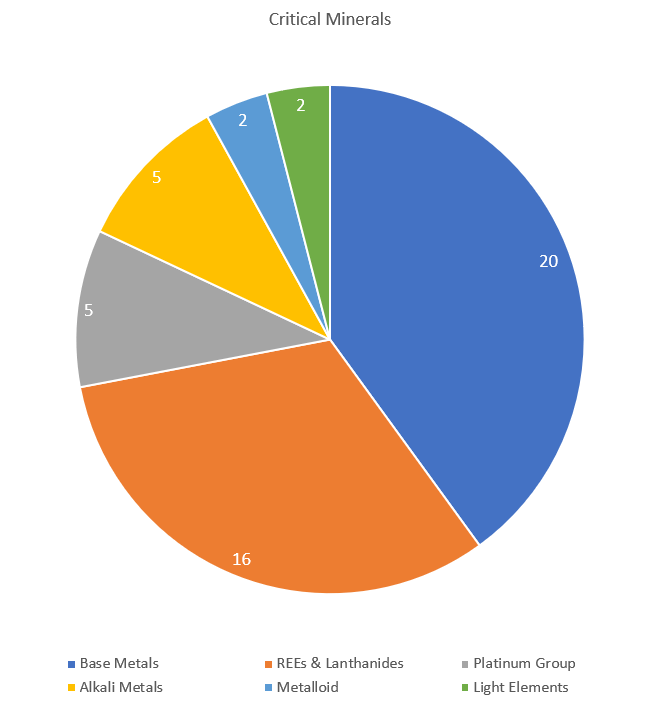
    The critical mineral pie chart above puts all fifty elements into six categories for simpler evaluation. Chief among these categories is the base metal group where one can find such critical minerals as aluminum, antimony, cobalt, manganese, nickel, and zinc (to name a few). Second, the rare-earth and lathanides (seemingly a co-mingled designation with many overlapping elements therein) make up sixteen critical minerals. Third, the platinum group contains five critical minerals. Alkali and alkali earth metals includes evermore important lithium. Lastly there are a handful of metalloids (arsenic & tellurium) and light elements (fluorspar & graphite (Fluorine & Carbon in specfic forms)).

    Silver-dominant ore systems here in Nevada (aka the “Silver State”) can be defined as a precious metal system where the silver to gold ratio is at least 20:1, but more often 100:1, such as Tonopah, Belmont, Austin, Eureka, or the Comstock of Virginia City silver camps. All of these camps date to the 1860’s or thereafter and hearken both to the first days of Nevada statehood as well as Nevada’s historic silver rush. Since this era many of these systems have been overlooked, ruled out, or re-worked as gold systems even though the orginal silver-dominant designation still fits best.

    Geologically, these silver-dominant ore systems are found within volcanic or sediment hosted systems. The style of emplacement can vary between low-sulfidation to high-sulfidation epithermal systems and can also very between inclusion or exclusion of base metals as part of their overall geochemistry. But there seems to be a trend towards base metal inclusion within the sediment-hosted silver-dominant ore systems. These type of ore systems found typically within Paleozoic carbonate sequences across Nevada tend to either epithermal veins, carbonate replacement, or skarnoid.
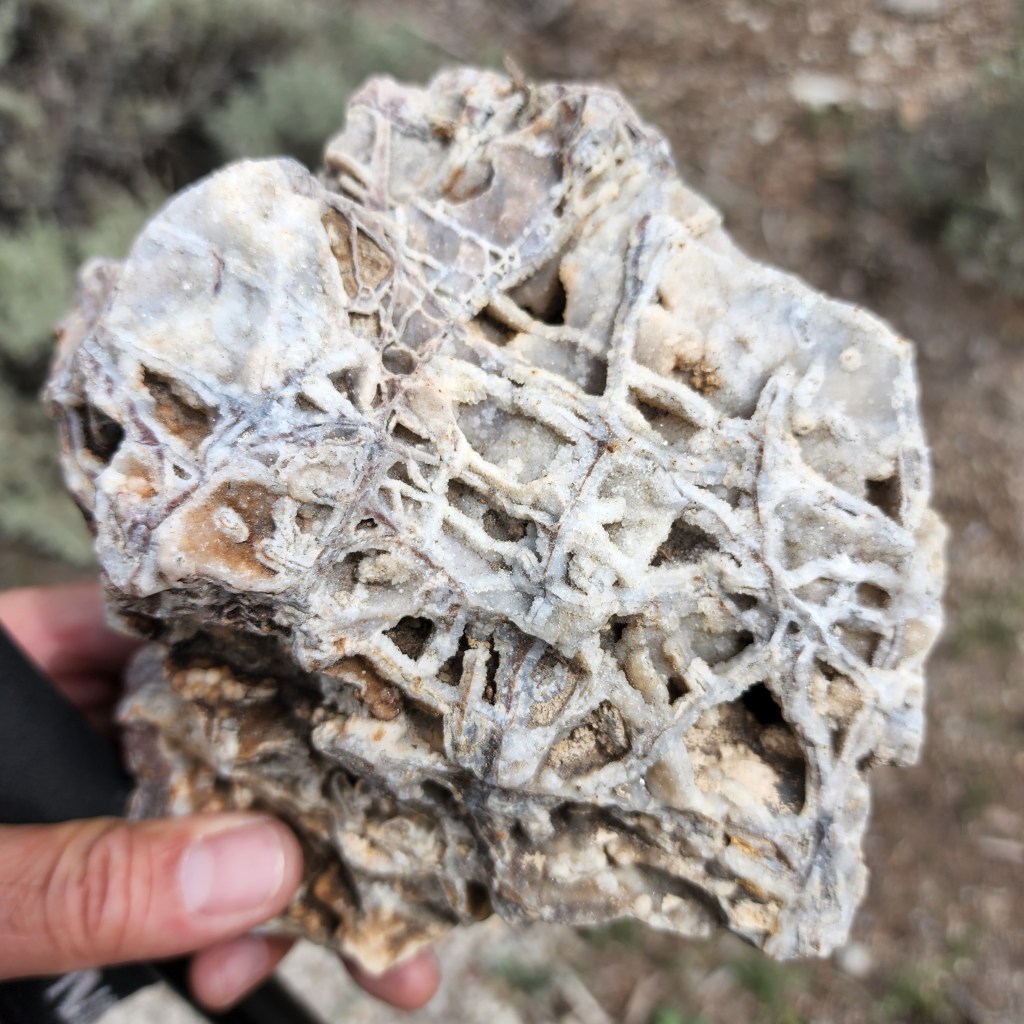
    The above image was taken while prospecting in one of these silver-dominant carbonate replacement ore systems with inclusion of base metals. Eight critical minerals foudn within this silver-dominant system are included in the current critical mineral list from the USGS. The above picture is a “quartz after calcite” vein texture common in these ore systems. The drusy quartz texture is infilled quartz-bearing fluids that came along after earlier calcite veining within the host carbonate rocks. In this case the host carbonate is actually a dolomite, suggesting a much longer history of alteration of the Paleozoic units.

    More commonly these systems have been called silver-lead-zinc deposits. This is due to the relative importance historically for this smaller list of historically critical minerals, especially arising in need during war time. In conjunction with these periodically significant eras, there is more broadly a cyclical nature to these metal markets. The ‘boom/bust’ cycle of precious metals leaves its mark upon the landscape and it mosttly to blame for the fragmentary development of these historic camps across the Western US.
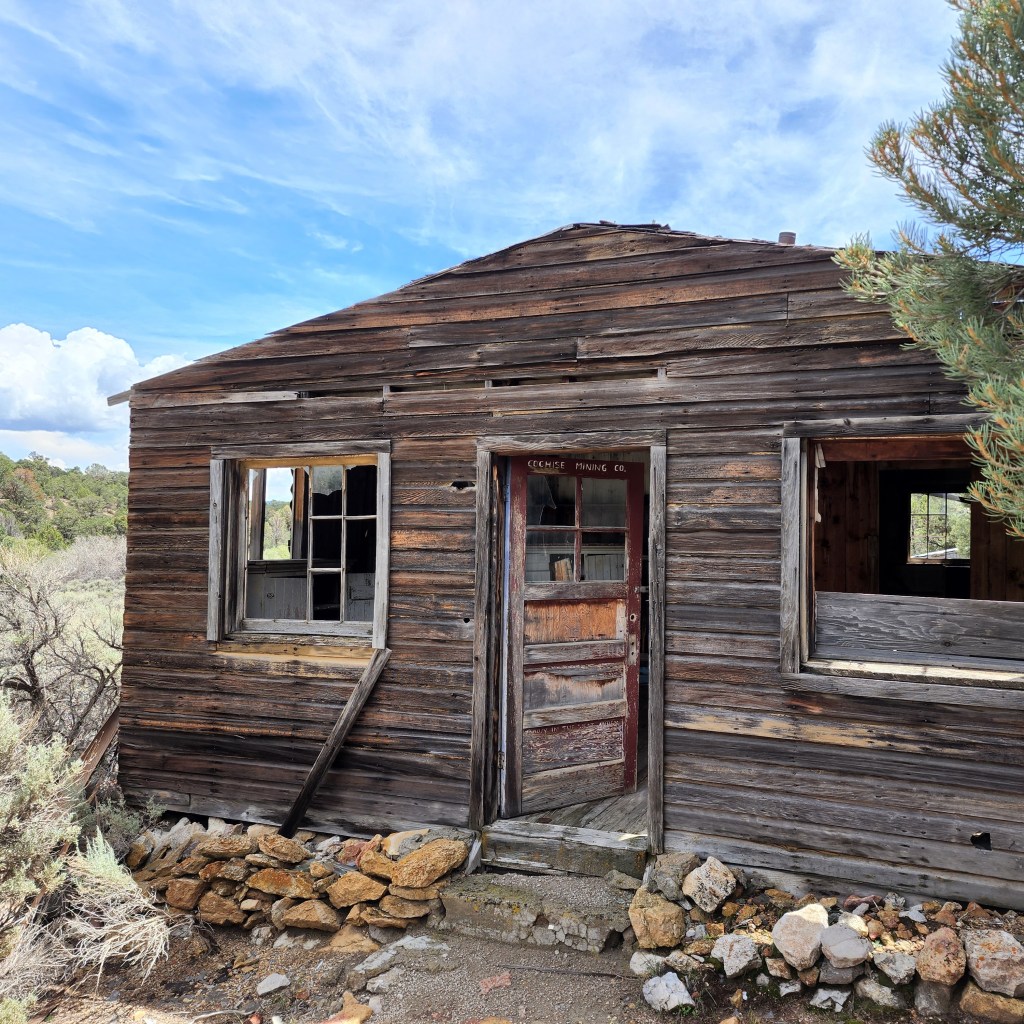
    While prospecting within the un-named silver-dominant ore system in Central Nevada there were found numerous critical minerals either directly associated or adjacent to the silver endowment. One assayed sample came back with a stunning 19.5% aluminum kick. Within this same sample was found manganese, copper, arsenic, nickel, barium, cobalt, zinc, and antimony in anomalous to higher grade values. This could in turn be considered a polymetallic system or even a poly-critical systems (if there is such a term).

    This begs the question of whether or not many (if any) of these systems have ever truly been looked at in this context. From unrealized value within historic districts, to the processing challenges for polymetallic ores, to revitalized exploration for new value chains found within similar to adjacent systems; these aspects of the search for critical minerals within the US open up endless possibilities for the mineral exploration geology field.

    The “new eyes on old rocks” idiom is again reinforced. Many of these legacy districts could benefit from simple re-processing of old tails and dumps, though realistcially such re-processing would only be worthwhile if new mining were to occur in tandum. However, this discussion for me has more to do with a larger picture of mineral development in the US. There needs to be a more predictable path for these mineral endowments to achieve production. Minerals need the support and backing of the US government regardless of politics or cyclical economics. Our competitors, such as China and Russia, are playing the long game. They see the need for and fund a project that might lose money for decades before realizing the long-term gains. Without this level of support it will be difficult to impossible to realize the critical mineral endoment found under our own feet. Until regulations and the NEPA process become streamlined, these ore systems will continue to be overlooked and under-funded.

    These silver-dominant ore deposits can be pathfinders for the critical mineral endowments that the US need at this moment. The only question is whether or not a simple list will turn into an inventory of value for us all.

  • Our Critical Minerals Market – how to create self-sufficiency at home

    November 12th, 2022

    Here in the US we are blessed with both a rich mineral endowment and robust environmental regulations.  However, these two forces that ideally could work together to create a more perfect mineral industry are instead at odds with one another through a series of unfortunate ideological mis-steps.  There is no doubt that legacy mining efforts here in the Western US have left many areas in need of proper reclamation and clean-up, to say the least.  But what the environmental movement chooses to forget is that many of these problems were created prior to the NEPA process and our robust regulations.  So while the US minerals market struggles to navigate modern mining within favorable geologic settings other nations, such as China and Russia, continue to exploit their minerals, and those of other nations, unimpeded and without any true oversight of their methods.  This has created a huge misdirection of efforts to provide the modern world with much needed mining while also conducting this mining in a clean and efficient manner.  Here in the US we can boast robust environmental regulations, yes.  But we can’t boast a robust mining sector that provides for our mineral needs.  We have pushed much of that burden elsewhere and continue to ignore the very real environmental harm done by global mining efforts.

    How do we balance this disconnect?  How can we re-patriate our mineral needs while also adhering to our robust regulations?  This step needs to happen while we still have time.  The US, now more than ever, needs to find cooperative ways to satisfy two seemingly opposing forces: mineral needs and the environment.  If you are reading this on a computer, smart phone, or even on paper contemplate the minerals and industrial processes that went into bringing you these words.  We, as humans, impact the very earth we stand upon each day without much thought put behind our every actions.  The amount of minerals required for each person to thrive in this world is greater than most might realize.  And so we need to educate ourselves and others about these realities and then find creative solutions to meet these needs here at home.  An ounce of local stewardship of our natural resources will be worth more than the pound of consumerism culture the US has become in modern times.  We spend more money pushing the environmental impact of our actions onto other nations when we could have instead realized that growth and benefit for ourselves here in our own backyard.

    So the challenge becomes an ideological one, not a physical one. We have the minerals, the raw materials to build the bright future available to us all. With the rise of EVs, solar power, and the electrification of our world we will require more and more minerals each year. If the goal is to move away from carbon sources of energy then minerals are the only alternative. This means more mining and more infrastructure required upstream to process these raw materials into products, materials, and energy. But this challenge is won or lost before the first drill rig is mobilized or the first ton of dirt moved. This challenge needs to have buy-in from all stake-holders.

    The mineral explorationist needs to see how their actions impact later generations just as much as the environmentalist needs to realize how their obstruction simply pushes the impact onto other jurisdictions. If this mineral production is not done in our own backyard it will be done somewhere else without the oversight our regulations provide. And in the process we will lose out on the economic benefit that comes from producing our own materials for our own needs. The need won’t go away. Humanity will continue to grow. Our only choice is whether or not it will thrive.

    So how should we proceed? What lessons can be learned from the past? The paradigm of ‘us vs. them’ needs to be set aside. There are so many opportunities for cooperative development in the world of mineral development. Many of the issues that are decried by the geologist and environmental activist alike could be addressed through responsible mining of the critical minerals needed to build our modern society. For example, many of the legacy mine sites that require reclamation and clean-up still hold many of the critical minerals we need to produce. The most cost-effective way to clean-up these sites is thru active mining. This may seem counter intuitive but it is true. The money generated by active mining would easily pay for the clean-up required. Typically, the chemicals that are contaminating the aquifer or making the soils toxic are directly associated with the critical minerals that need to be produced. Cooperative efforts such as these could help heal the divide between these seemingly opposing groups.

    But perhaps such simplistic and naïve hope belies the more realistic forces at work today. Perhaps none of these groups are here to be good stewards of our nation’s mineral endowment. For one, there are few and far between US-based mining companies. The vast majority of the venture capital that makes it to our shores comes from either Canada or Australia. We, as a nation, have forgotten what it means to own and produce our own resources. Instead we have become consumers rather than producers. And then on the other hand, environmental activism is rarely as altruistic as it might seem. These environmental groups rarely go after the mining company themselves. Rather, they litigate with the regulatory agency that issued the permit to explore or mine. They attack the very agency that is doing their work for them and then the agency settles this litigation by paying them off. Thus the obstructionist engine is fueled. Allowing them to find the next species or special interest in need of protection.

    This model is unsustainable. If we prioritize mineral production in our backyard we can lead by example. We can realize the rich mineral endowment of the US while also implementing our environmental regulations. This is a true ‘win-win’ that can illustrate our values of self-sufficiency and good stewardship. The alternative is more in-fighting and continued regression into a consumer culture that is blind to the sources of the things we consume. I’d like to say the choice is ours, but realistically these forces are beyond the reach of most of us. The best we can do is to stay educated and strive to educate others. Awareness and intelligent debate will have to take the place of true power until there is such a ground swell to progress past the old ‘us vs. them’ paradigms that the global forces in play choose cooperative compromise in order to realize the bright future already laid out before our feet.

←Previous Page
1 … 5 6 7

Blog at WordPress.com.


Loading Comments...
 

    • Subscribe Subscribed
      • Mineral Exploration Geology - finding value in the world around us
      • Already have a WordPress.com account? Log in now.
      • Mineral Exploration Geology - finding value in the world around us
      • Subscribe Subscribed
      • Sign up
      • Log in
      • Report this content
      • View site in Reader
      • Manage subscriptions
      • Collapse this bar