
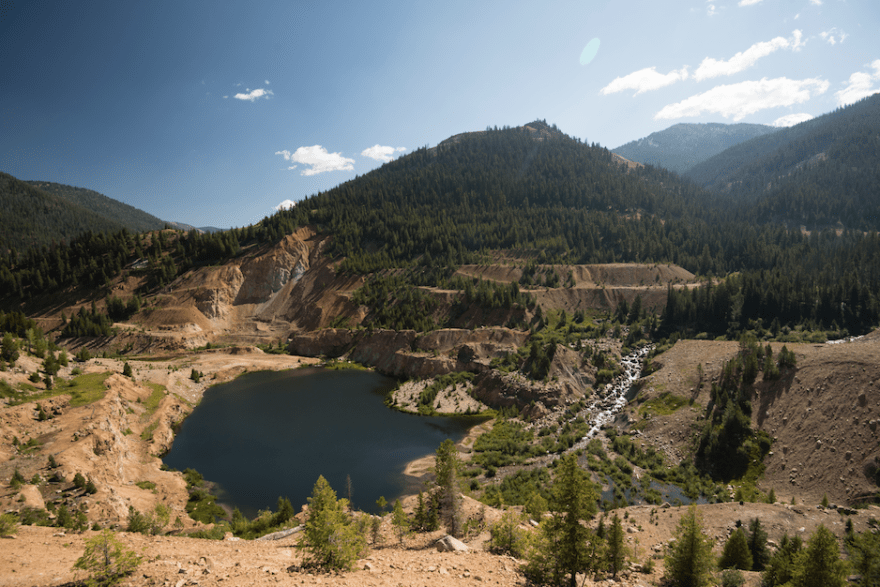
The US has a challenge to face: balancing regulatory oversight with mineral needs and the ability to realize those needs in our backyard.
The US has ample critical minerals, precious metals, base metals, and other natural resources needed for the electrification of the energy and transportation sectors. The US also has robust regulatory oversight and a permitting process (NEPA) that, in theory, should provide a predictable, timely path for a deposit to become a mineral asset for the electrification transition. This is, of course, based on the assumption/need to decarbonize the energy and transportation sectors. In this light, it is a potentially bi-partisan, progressive issue that could provide many collaborative ‘win-wins’. However, in reality this has failed to play out.
The mineral industry across the US has experienced, instead, a protracted permitting process troubled with last-minute changes, litigation, and back-tracking of previously made decisions. This is unsustainable within an industry that already endures a 10 year permitting process whereas other nations with similar environmental laws are seeing this done in a 2 – 3 year window. Current worse case scenarios are seeing permits taking 15+ years with hundreds of millions of dollars spent to only have it all taken away with last-minute, frivilous litigation and back-tracking.
Recently, the US military has been looking to invest in Canadian mining projects, banking on the fact that US permits are more risky than investing in “friendly” neighboring countries. US tax payers are seeing their tax revenue spent to bolster other nation’s mineral wealth. It would be better to keep that money here locally and invest in our own home-grown natural resources. It is a true indictment of our US permitting process when the US military is strategically investing across the border instead of on our own soil.
How can we find common ground and opportunites to mutually benefit from critical mineral production?
Current legislation, such as the Infrastructure Law, CHIPs and Science Act, & the Inflation Reduction Act, are collectively providing $135 billion to build the US electric vehicle future, including critical mineral sourcing and processing and battery manufacturing. And most recently, on October 19th, the White House announced $2.8 billion in grants for domestic critical mineral projects.
So, there is money available, but will mineral projects be able to capitalize on these opportunities in time? There is money available, but will that money actually reach the ground where it is needed? Only time will tell as more often than not the exploration and mineral sector is subject to the whims of one political administration to the next and the already cyclical nature of the sector also has to pay attention to the 4 year election cycle as well.
Nonetheless, the NEPA process already has some baked-in streamlining with MOUs between key federal agencies that in theory provide for non-duplicative work when reviewing a permit. But this is not always followed or policed by a lead agency. And this isn’t helped either by the venture capital markets that tend to bring in outside money from Australia and Canada into the Western US. There are few and far between US-based mining companies and even less of these companies are actively exploring for the next generation’s mineral wealth.
This is a long-term, systemic problem that comes from a simple truth about the mineral industry: a single deposit will be owned by, explored by, & peddled by numerous companies over numerous cycles before it may ever see actual production. These mineral deposits have to run the gaunlet of economic cycles, political cycles, commodity-needs cycles (one cycle’s trash is the next cycle’s treasure), as well as benefit from sound exploration geology to expand upon known mineralization. It doesn’t help if on top of all these systemic challenges the permitting process has become increasingly mired in special interest and unpredictability.
Is it time to play the long-game like China?
Our global competition for these minerals and the ability to process them and make a useful end product is very stiff. China has out-paced and out-performed the US at every turn, all while we continue to be grossly reliant on their mining and manufacturing prowess. We are a consumer nation with little production to call our own. How will we fare if relationships abroad continue to sour? Where will we turn for our resources if we haven’t invested in our own backyard?
China is able to play the long game. They can see the long-term worth in something, take a loss on the project for years, in order to realize long-term gains decades from when they began the project. Where is our will as a nation to come together on such projects? This sort of longview is impossible if we can only plan as far as the next election cycle.
Setting these myriad global/political issues aside we need to come together as an industry, as a nation, and as a people to find common ground between ideological difference. The US can truly benefit from sourcing our mineral needs from within our borders. And no one need lose out in the process. We have the resources, the regulations, and the self-determinating spirit. If we stopped wasteful in-fighting and educated ourselves and the public about our home-grown natural resources we could realize true wealth here in the US.
 Mineral Exploration Geology - finding value in the world around us