
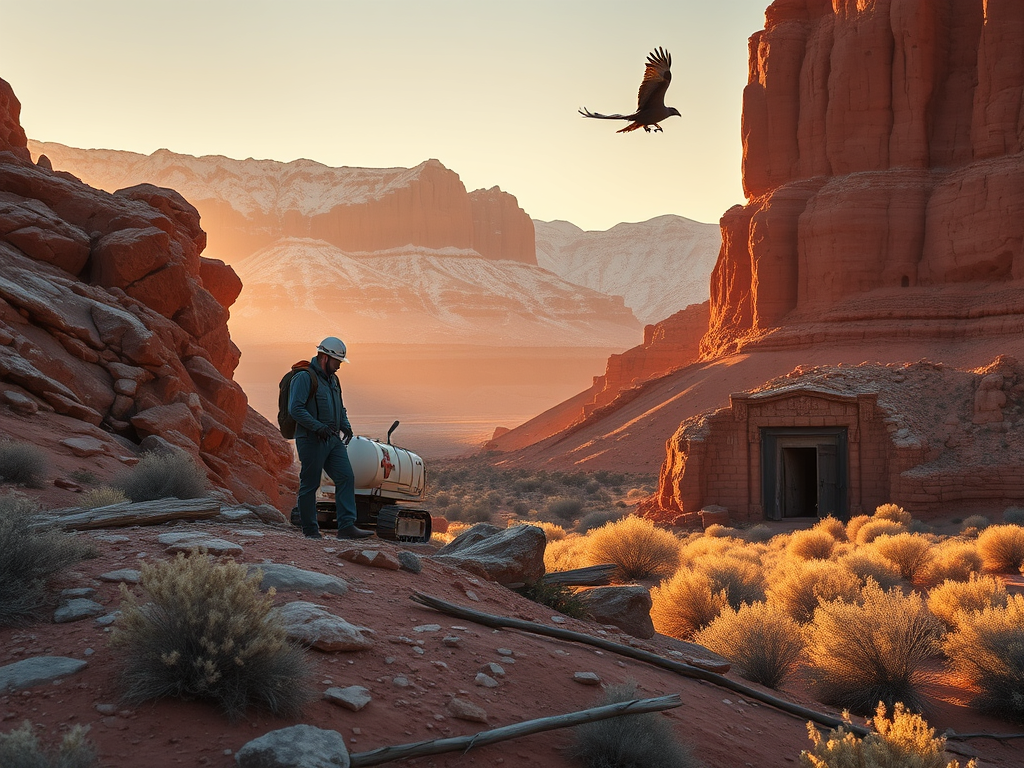
On May 12, the U.S. Interior Department lit a fire under the energy world—one that burns not with coal or gas, but with uranium ore pulled straight from the red rocks of Utah.
In a move that sent shockwaves through the permitting world, the Interior announced it would complete an environmental review in just 14 days for Anfield Energy’s proposed Velvet-Wood uranium mine in San Juan County, Utah. That’s not a typo. Fourteen days. In an industry where these reviews can drag on for years, this announcement feels less like bureaucracy and more like a booster rocket.
And make no mistake—this isn’t just about one mine. It’s a signal flare for the future of domestic uranium production, critical mineral independence, and energy policy with teeth.
💥 Why Velvet-Wood Matters
The Velvet-Wood project isn’t a greenfield pipe dream—it’s a revitalization of a historic uranium mine, meaning the land has already borne the mark of mining. The new plan calls for only three acres of new surface disturbance, which dramatically lowers environmental impact and, therefore, regulatory friction.
Located in the uranium-rich Paradox Basin, this area has long been known to geologists and explorers alike as a buried treasure chest of critical mineral potential. Alongside uranium, vanadium—a metal essential for high-strength steel and emerging battery technologies—adds even more shine to the project’s portfolio.
But perhaps more important than what’s in the rock is what this rock means for the bigger picture.
🏛️ Permitting as Policy: The New Frontier
Interior Secretary Doug Burgum didn’t mince words: “America is facing an alarming energy emergency because of the prior administration’s climate extremist policies.” That’s political, yes—but also strategic. The Trump Administration’s approach is to slash permitting timelines, revive idle projects, and reassert control over the domestic supply chain—especially for critical and strategic materials like uranium.
If you’re a project generator, explorer, investor, or energy hawk—this should catch your attention.
Because the days of hand-wringing and “maybe someday” permitting are being traded in, at least for now, for a leaner, faster model aimed at energy security and market readiness.
🔁 The Mill is the Missing Link—And Anfield Has One
Anfield’s Shootaring Canyon Mill—one of only a handful of uranium mills in the U.S.—is a key asset in this story. The ability to process ore into uranium concentrate (aka yellowcake) domestically is a massive differentiator, particularly as utilities, governments, and investors eye cleaner, sovereign nuclear supply chains.
This is how exploration transitions into production, and how critical minerals policy meets infrastructure reality.
📈 Investment Implications: The Tide is Turning
The broader uranium market has already been heating up, with spot prices climbing, utilities re-entering the term market, and geopolitical risk pulling the curtain back on our dependence on Russia and its allies for enriched fuel.
But this latest announcement adds a new layer of confidence for investors looking for exposure to U.S. projects:
- Speed to production matters, and fast-tracked permits are a game-changer.
- Existing infrastructure, like mills and roads, cut both time and cost.
- Uranium and vanadium dual-resource projects are diversifying risk and revenue streams.
And it’s not just about majors. This is also a huge signal to junior explorers and those of us involved in the early-stage project pipeline: the window is open—but it won’t be forever. Those with prospective land positions, smart partnerships, and permitting-ready plans could find themselves very well-positioned.
🧭 Final Thoughts: Exploration as the First Step to Sovereignty
Projects like Velvet-Wood are just the tip of the spear. The real engine of American energy independence is still exploration—boots on the ground, drills in the core, and maps on the dash of dusty trucks headed out past the last gas station.
As a geologist and exploration advocate, I’ve said it before and I’ll say it again: mining starts here. With a rock hammer and a vision.
If you’re in this space—stay nimble, stay sharp, and stay ahead of the curve. Permitting may be speeding up, but only those prepared to act quickly will capitalize on this moment.
The rocks are talking. And now, finally, so is Washington.
 Mineral Exploration Geology - finding value in the world around us