

If you’ve been watching the metals markets lately—and let’s be honest, in this line of work, who isn’t—you might’ve caught the sharp glint of tungsten flashing across the headlines. Prices have just hit a 12-year high, and the story behind it reads like a geopolitical thriller with economic veins running straight through defense, tech, and green energy.
The Numbers Don’t Lie
Let’s start with the basics: tungsten concentrate prices in China have surged 26% since January, reaching $20,400 per tonne, while ammonium paratungstate (APT) prices in Europe have climbed 18% since February. This isn’t a fluke—it’s a flare.
The core issue? Supply dominance meets strategic vulnerability. China controls over 80% of global tungsten production, and they’ve begun reining in exports with tightened quotas in response to U.S. tariffs and mounting international tensions. When the world’s tungsten tap gets turned down, the rest of us scramble for buckets.
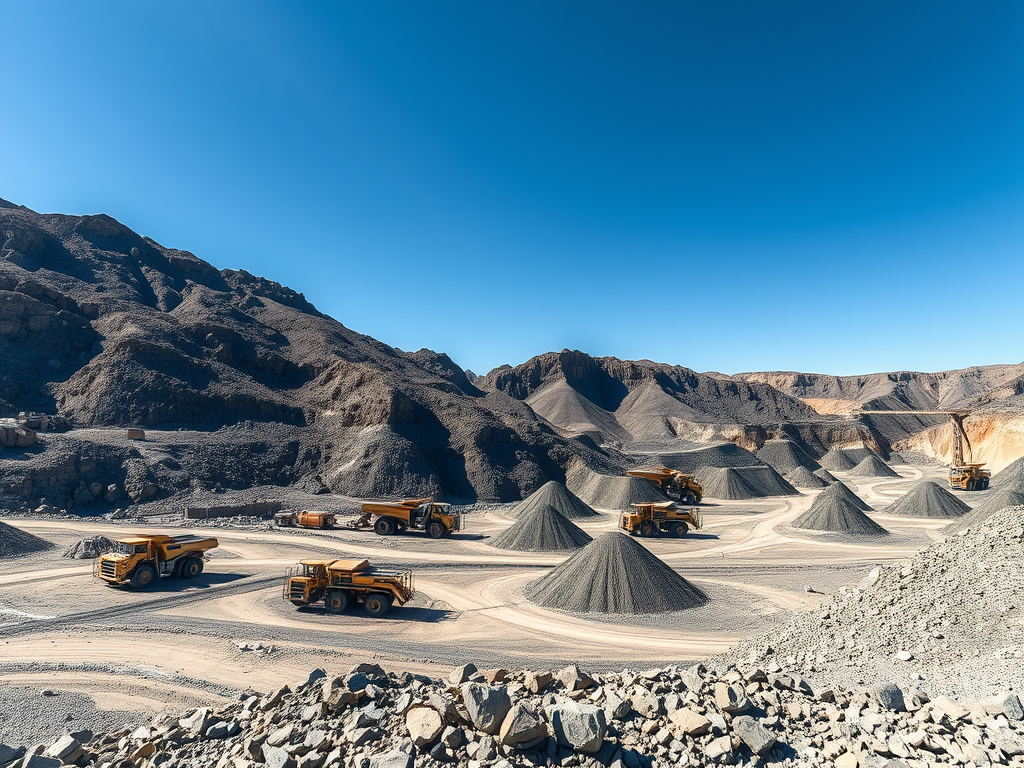
The Critical Metal Nobody’s Talking About
Tungsten doesn’t get the fanfare of lithium or rare earths, but it should. With the highest melting point of any metal and a density comparable to gold, tungsten is irreplaceable in a range of mission-critical applications:
- Armor-piercing projectiles and aerospace components in defense
- High-performance alloys in manufacturing and electronics
- Heat-resistant electrodes and filaments in energy technologies
Oh, and if you’re building wind turbines, tungsten’s there too—making it quietly indispensable in the renewable revolution.
Meanwhile, in the U.S.… a familiar refrain
Domestic tungsten mining ceased in 2015, and despite its designation as a critical mineral, the U.S. still leans heavily on imports—primarily from China and Russia. Sound familiar? It’s a play we’ve seen before in uranium, rare earths, and battery metals. Rinse, repeat, regret.
The U.S. is now signaling intentions to cut its dependence on adversarial suppliers, but that pivot takes time. Infrastructure must be rebuilt, permitting streamlined, and domestic production incentivized. Until then, we’re flying with foreign fuel in our tanks.

A Glimmer of Supply Security: Almonty Industries
Enter Almonty Industries, a name suddenly in bright lights. The company has inked a key offtake agreement to supply tungsten oxide for U.S. defense applications, sending its stock soaring 140% this year with a current valuation of $709 million. It’s a big move—but not big enough to fix the global crunch.
Even with Almonty ramping up, the supply/demand imbalance remains stark. Strategic stockpiles are thin. New mines take years. And demand? It’s only growing—driven not just by bullets and blades, but by circuit boards and solar arrays.
What’s Next? Building Resilience, One Drill Hole at a Time
This tungsten tale isn’t isolated—it’s part of a larger mineral awakening. As we push into the energy transition, shore up our defense base, and modernize infrastructure, we are being reintroduced—perhaps rudely—to the fact that you can’t digitize a drill rig.
We need to explore. We need to invest. And we need to rethink how and where our mineral lifelines begin.
For those of us on the ground floor of exploration and policy, this is a call to action. Let’s not wait for the next squeeze to tell us what should’ve been obvious all along: strategic metals deserve strategic attention.
💬 What’s your take?
Have you been tracking tungsten’s rise or working with it in your own projects? What lessons can we draw from this for the broader critical minerals landscape? Let’s dig in—pun intended.
 Mineral Exploration Geology - finding value in the world around us