
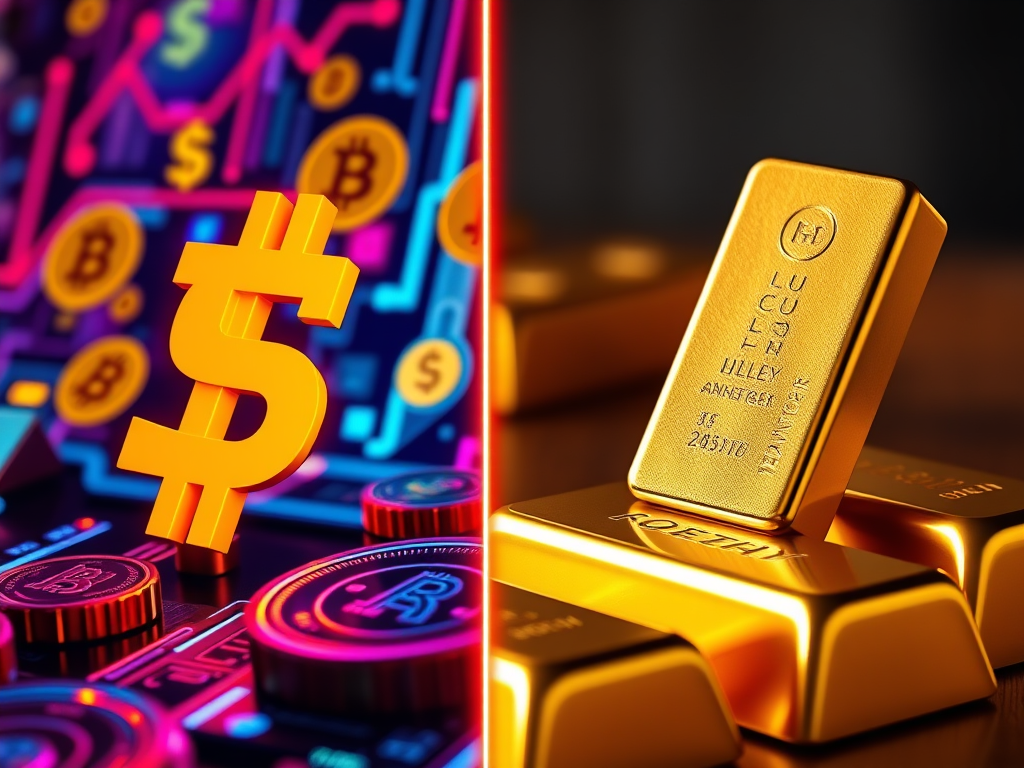
Why Bitcoin’s Glitter Fades While Gold (and Critical Minerals) Keep the Lights On
Introduction: The Digital Mirage vs. Earth’s Treasury
There’s a great modern irony unfolding: a generation raised on instant downloads and swipe-left attention spans has fallen head over heels for digital “currencies” backed by… nothing. Enter Bitcoin and the crypto carnival—neon-lit, meme-fueled, and increasingly mistaken for sound investment.
Meanwhile, the quiet titans—gold, silver, uranium, lithium, cobalt, and other critical minerals—are doing the heavy lifting, literally powering our homes, vehicles, and technologies… with hardly a TikTok in their name.
So what gives? Why does the speculative sparkle of crypto outshine the grounded value of the periodic table? And why should smart money be getting back to basics—into assets you can dig up, hold in your hand, or build a civilization on?
Let’s dig in.
Bitcoin: The Mirage in the Machine
Bitcoin was sold as digital gold. But while it may share scarcity by design, it lacks everything else that gives gold its enduring status: physicality, utility, and millennia of trust.
- Speculative by Nature: Bitcoin has no intrinsic value. It’s not a claim on anything, produces no yield, and its price is based purely on belief—an elegant code wrapped in mystique and memes.
- Volatile as a Vegas Weekend: Your retirement plan shouldn’t depend on tweets from billionaires or Reddit threads named “YOLO Options.”
- Zero Use Value: Can you build an EV battery with Bitcoin? Fuel a power plant? Nope. It’s just data in the ether—no matter how many laser eyes grace your profile pic.
Crypto may be digital wizardry, but the economy doesn’t run on wizardry. It runs on wires, steel, rare earth magnets, and minerals mined from the bedrock of reality.
Gold: The Original Store of Value
Gold, on the other hand, doesn’t need a pitch deck. It’s the OG of money metals.
- Intrinsic and Timeless: From ancient pharaohs to central banks, gold has been the store of value when the chips are down and empires fall.
- Finite and Tangible: It’s rare, it’s real, and it doesn’t disappear in a server outage.
- Crisis-Proof: Gold has weathered inflation, war, pandemics, and digital delusions. You don’t need a password to access it—just a safe.
It’s not flashy. It’s not cool. But it’s real. And in the end, reality always wins.
Critical Minerals: The Future Isn’t Digital—It’s Physical
Now let’s talk about the real “cryptos”—the ones buried in the crust, not the cloud. Lithium, cobalt, uranium, copper, silver, and the rare earths that make modern life possible.
- Uranium: Fuels the cleanest baseload energy on Earth. You can’t build a decarbonized future without it.
- Lithium & Cobalt: The blood and bones of battery tech. No electric cars, phones, or green grids without them.
- Rare Earths: Every wind turbine, smartphone, and F-35 jet has them. They’re not rare in occurrence, but rare in processing, politics, and supply chains.
- Silver: Half money metal, half industrial workhorse—used in solar, medicine, and high-tech gear.
These aren’t speculations. They’re necessities. The market may not be hyped, but that’s the opening for those with vision.
Why Younger Investors Miss the Mark
Younger investors are attracted to crypto because it’s:
- Easy to access
- Shiny and disruptive
- Marketed as anti-establishment
But the truth? It’s highly centralized, insecure, and largely controlled by a few tech oligarchs and algorithmic traders. Crypto promises freedom, but delivers volatility and groupthink.
Meanwhile, investing in real assets requires homework, patience, and—God forbid—a look at a drill map. But that’s where the real wealth lies: in things the world cannot live without.
Smart Money Knows: You Can’t Mine on a Blockchain
Institutions, billionaires, and governments aren’t hoarding NFTs. They’re buying copper projects in Chile, locking down uranium offtakes, and scrambling for lithium concessions like it’s the second gold rush. Why? Because they know:
Real value lies in the physical world.
It takes steel to build. It takes fuel to move. It takes minerals to electrify, digitize, and defend nations.
Final Thoughts: Get Grounded
Crypto may be sexy, but it’s skating on speculation. Meanwhile, the value of mined materials is growing every day—quietly, steadily, inevitably—as the demands of a technological and energy-hungry planet increase.
So the next time you’re tempted to invest in a jpeg or a vapor coin, ask yourself:
Can this power a nation, build a grid, or survive an economic shock?
If not, maybe it’s time to come back to Earth.
Literally.
Mark Travis is a Certified Professional Geologist, sober explorationist, and unapologetic advocate for the rocks that run the world. Follow his musings at www.mineralexplorationgeology.com and on LinkedIn for more gritty truths and geologic gospel.
 Mineral Exploration Geology - finding value in the world around us