There are moments when markets don’t move incrementally—they declare a regime change.
Gold starting 2026 above $4,500 per ounce is one of those moments. Silver holding north of $80 per ounce is another.
These are not late-cycle excesses. They are early-cycle admissions that something foundational has shifted: trust in fiat systems, confidence in sovereign balance sheets, and belief that the financial world can continue to levitate without consequence.
2026 is not shaping up to be another commodity bull market. It is shaping up to be a re-anchoring of value—from abstraction back to physical reality, from promises back to atoms, from leverage back to scarcity.
And when that happens, the industry best positioned to matter again—after a decade in the wilderness—is mineral exploration.
This Is Not a Commodity Cycle. It Is a Trust Cycle.
Commodity cycles are about growth rates and substitution. Trust cycles are about belief.
Gold’s current role is no longer subtle. It is not merely an inflation hedge or a portfolio diversifier. Gold has become a referendum on monetary credibility—a non-yielding asset chosen precisely because it is no one else’s liability.
Silver, however, is playing a more dangerous and more powerful role.
Silver is where monetary distrust collides with industrial necessity. It is embedded in electrification, solar, defense, grids, and high-spec electronics—and yet it still carries thousands of years of monetary memory. When silver rises alongside gold, it is not echoing sentiment. It is confirming scarcity.
Gold speaks to confidence. Silver speaks to reality.
When those two agree, repricing is inevitable.
Let’s Call the Shot: The 2026 Middle-Case Prices
This is the line in the sand—the part we own.
Assuming no global financial collapse, no return to fiscal discipline, and no meaningful increase in primary metal supply, the middle-case outcome for this cycle looks like this:
Gold: $6,500–$7,500 per ounce Silver: $150–$200 per ounce
Not as spikes. Not as blow-off tops. As structural repricing levels that reflect capital reallocation, not panic.
These numbers assume continued central-bank accumulation, modest but persistent Western portfolio reallocation, and a growing recognition that real assets are no longer optional ballast—they are foundational.
If these numbers prove wrong, they will be wrong because discipline returned faster than history suggests. That would be a welcome surprise.
But markets are not currently pricing discipline. They are pricing erosion.
Capital Is Remembering Gravity
For fifteen years, capital floated upward—into technology, financial engineering, and narratives untethered from physical constraint. That worked in a world of cheap money and unquestioned institutions.
That world is gone.
Capital is rediscovering gravity, and gravity pulls toward assets that cannot be printed, frozen, rehypothecated, or redefined by policy memo. This is why serious institutions—JPMorgan Chase & Co. among them—are increasingly attentive to real assets, infrastructure metals, and the financing mechanisms that sit beneath them.
They are not chasing price. They are positioning for control of supply chains, optionality, and future scarcity.
That distinction matters.
Why Exploration Finally Breaks Out in This Cycle
Exploration has always been cyclical, but this cycle is structurally different.
There is no inventory cushion. There is no excess discovery pipeline. There is no fast way to replace what was not found ten or twenty years ago.
Silver supply is brittle. Gold discoveries are rarer, deeper, and more expensive. Uranium, copper, and critical minerals face the same constraint: you cannot conjure new deposits on demand.
At $6,500 gold and $175 silver, exploration stops being a discretionary gamble and becomes strategic manufacturing of future supply. Governments understand this. Majors understand this. Capital is beginning to understand this.
The result will not be a flood of capital—it will be selective, intelligent funding, which is exactly what exploration has lacked for a decade.
The Flywheel That Changes Everything
Here is how the next phase unfolds.
Gold stabilizes the monetary narrative. Silver compresses time.
Producers re-rate first as margins expand and balance sheets heal. Developers follow as stranded projects suddenly make sense again. Exploration becomes scarce—not because there are fewer rocks, but because there are fewer credible teams with real targets and the ability to execute.
Capital structures evolve. Royalties, streams, joint ventures, sovereign partnerships—complexity returns because simplicity no longer works. Bad geology is exposed quickly. Good geology is rewarded earlier than anyone expects.
This is how an exploration renaissance actually begins—not with hype, but with constraint forcing competence.
Silver Is the Accelerator
Gold brings institutions. Silver brings urgency.
Silver’s market is small enough to move violently and essential enough to matter. At $150–$200 silver, exploration budgets do not merely grow—they multiply. Drill rigs return. Talent returns. Entire districts that have been dormant for a generation come back into focus.
Silver does not drift into new price regimes. It jumps, and in doing so it forces capital to act.
This Is a Renaissance, Not a Bubble
Bubbles are narrative-first and supply-responsive. This cycle is physics-first and supply-constrained.
There is no excess capacity waiting to be turned on. There is only geology, time, and expertise. That reality re-elevates the people who understand rocks, systems, and risk—not as cost centers, but as the front end of value creation.
Mining did not suddenly become interesting again. Reality became unavoidable.
The Call, on Record
If January 2027 looks back on January 2026, this is the line that should still hold:
2026 will be remembered as the year capital decisively rotated back into physical truth—when gold repriced trust, silver repriced scarcity, and mineral exploration re-emerged as one of the most important strategic industries on Earth.
If we’re wrong, we’ll be wrong loudly and honestly.
But if we’re right, this won’t read like commentary. It’ll read like a field note from the moment the cycle turned.
Three years ago, I wrote about uranium as humanity’s new fire—a phrase meant to reframe the atom not as a weapon or a controversy, but as a fundamental leap in how civilization accesses energy. At the time, it felt like a contrarian stance. Nuclear was tolerated, debated, sometimes defended—but rarely embraced.
That hesitation is gone.
Not because minds were changed in op-eds or hearings, but because reality arrived carrying a power bill.
Artificial intelligence has done what decades of climate arguments, geopolitical warnings, and grid stress tests could not: it has made nuclear energy unavoidable.
The Load That Ended the Debate
When Meta signed agreements to secure up to 6.6 gigawatts of nuclear power—enough electricity to supply millions of homes—it wasn’t a branding exercise or a political statement. It was load planning.
Those agreements, spanning utilities and advanced reactor developers, were designed to power data centers and AI infrastructure, including Meta’s Prometheus supercluster in Ohio. This followed an earlier 20-year nuclear power purchase agreement with Constellation Energy, reinforcing the message: this is not speculative demand. It is contracted, long-term, and mission-critical.
Six gigawatts is not ideology. It is physics, written in ink.
AI Doesn’t Run on Vibes
Artificial intelligence is different from every prior wave of electrification. It is not flexible. It does not pause politely when the sun sets or the wind calms. It requires:
Continuous, 24/7 power
Tight voltage and frequency control
Massive energy density in a small footprint
Zero tolerance for unplanned downtime
In other words, baseload.
Wind and solar play important roles in modern grids—but at scale, AI exposes their limits. The storage required to smooth intermittency at data-center magnitude is staggering, costly, and still bounded by materials, land use, and physics.
AI doesn’t run on vibes. It runs on electrons—and electrons don’t care about politics.
Why Nuclear Won This Time
This is not nuclear’s first comeback attempt. The industry’s past is littered with projects that ran late, over budget, or both. The cautionary tale most often cited is NuScale, whose flagship SMR project collapsed under rising costs and withdrawn power-purchase commitments.
So what changed?
Two things—both decisive.
First, the customer. Today’s nuclear buyers are not utilities hoping regulators approve future rate recovery. They are technology companies with fortress balance sheets, global competition breathing down their necks, and no patience for unreliable power.
Second, the urgency. AI infrastructure is not optional. It is strategic. As Goldman Sachs Research has noted, data-center electricity demand is projected to surge dramatically this decade. This demand is not hypothetical—it is already being built.
Nuclear did not win because it became cheaper overnight. It won because it became necessary.
The Uranium Signal
When downstream demand hardens, upstream signals follow—and nowhere is that clearer than in uranium markets.
The Sprott Physical Uranium Trust has continued accumulating physical uranium, pushing holdings to historic levels and reinforcing price stability well above long-term averages. These purchases are often dismissed as “financial flows,” but that misses the point.
Physical uranium inventory tightens the market precisely when utilities and developers are locking in future supply. The result is not hype—it is structural support.
For explorers and developers, the message is plain: future reactors require present-day pounds.
Energy Density Is Destiny
At its core, this moment is not about AI, climate policy, or even uranium prices. It is about energy density—the quiet variable that governs everything from industrial growth to geopolitical stability.
Every major leap in civilization has been powered by denser energy:
Wood to coal
Coal to oil
Oil to uranium
Each transition unlocked more capability with less material, less land, and fewer constraints. Nuclear sits at the top of that ladder—not because it is perfect, but because nothing else delivers so much energy in so small a space, so reliably, for so long.
AI has simply forced us to admit it.
The Return of the Atom
The nuclear debate did not end in a courtroom or a legislature. It ended in server halls, where engineers stared at uptime requirements and crossed everything else off the list.
This is not a revival driven by nostalgia or ideology. It is a return driven by necessity—by grids that must work, by data that must flow, and by a civilization that has once again reached the limits of its current fire.
Humanity’s new fire was never extinguished. It was waiting—for the moment when nothing else would do.
There are moments in commodity markets when price ceases to be a conclusion and begins to function as a signal. Not the fleeting kind that flashes during a speculative frenzy or vanishes with the next headline, but something quieter and more consequential. A recognition embedded in the numbers themselves that the underlying rules have shifted.
This is not a story of a single spike or a short-lived squeeze. It is not the familiar choreography of hot money chasing momentum before slipping back out the side door. What we are seeing instead is a deeper reorientation, where pricing begins to reflect a change in how the world expects to operate—how it intends to power itself, secure itself, and hedge its own uncertainties.
As we look ahead to 2026, that reorientation is becoming increasingly difficult to dismiss. Gold, silver, copper, and uranium are not moving in perfect harmony, nor are they responding to the same immediate pressures. Each is rising for its own reasons, shaped by distinct demand drivers and structural constraints. Yet taken together, their trajectories form a recognizable pattern. Less a traditional boom-and-bust cycle, and more a system of parallel flows—multiple lanes advancing at different speeds, carrying different forms of value, all bound for the same horizon.
This is the multi-lane super cycle. And the prices flashing across the screen are not the destination. They are the dashboard lights, telling us that something fundamental is already in motion beneath the hood.
Gold: When Insurance Becomes Collateral
Gold’s move toward the $5,000-per-ounce range is not being driven by fear in the traditional sense. This is not a panic trade, nor a reflexive rush for safety. What is unfolding is better understood as a process of re-anchoring—a recalibration of what constitutes stability in an increasingly unstable financial landscape.
Central banks, in particular, are no longer approaching gold as a hedge reserved for moments of crisis. Instead, they are treating it as a structural reserve asset: a form of value that sits outside political alignment, credit risk, and fiscal experimentation. In a world where neutrality is difficult to find and trust is unevenly distributed, gold’s political indifference has become one of its most valuable attributes. Alongside this shift, private capital is rediscovering gold for similar reasons—not as an emotional refuge, but as a rational counterbalance to long-duration fiscal policies whose ultimate outcomes remain uncertain.
As prices push into the $4,800–$5,500 per ounce range, gold begins to behave differently within portfolios. It stops functioning as insurance you hope never to claim and starts acting as collateral you expect to rely on. That distinction matters. Collateral invites institutional participation, and institutions do not move on impulse. They allocate deliberately, often for long periods, embedding assets like gold more deeply into the financial architecture.
Viewed through this lens, gold’s role in 2026 is less about protection and more about positioning. It occupies the quiet lane of the multi-lane super cycle—steady, deliberate, and largely unglamorous, yet foundational to everything moving alongside it.
Silver: The Torque Beneath the Hood
Silver occupies a very different lane from gold, and it makes no effort to be subtle. Where gold moves with measured confidence, silver responds with acceleration. The long-standing notion that silver somehow belongs in the $20–$30 range has already been overtaken by events. Prices brushing $70 per ounce, with credible pathways toward $100, are not an anomaly so much as a long-delayed correction.
This is not simply a story of silver “catching up” to gold. It is silver being repriced for what it actually is: a metal that sits at the intersection of monetary psychology and industrial necessity. Unlike gold, silver is consumed. It is embedded in solar panels, power electronics, data infrastructure, and the physical systems required to electrify modern economies. These are not speculative end uses or distant forecasts; they are embedded in policy frameworks, capital budgets, and energy security strategies already being executed.
In this context, silver’s volatility is often misunderstood. It is not a weakness of the market, but a function of its structure. Thin markets move quickly when attention arrives, and silver has always been exquisitely sensitive to shifts in focus. When gold establishes a new price regime, it tends to pull silver into the conversation, and once that happens the response is rarely linear.
If gold serves as the anchor of the multi-lane super cycle, silver provides the torque. And torque, by its nature, does not move gently—it amplifies force, turning steady pressure into rapid motion.
Copper: Pricing the Physical World
Copper occupies the most load-bearing lane of the super cycle. It is heavier, louder, and far less forgiving than the metals moving alongside it. Where gold and silver trade on trust and attention, copper answers to something more basic: the physical requirements of a modern, electrified world.
At prices and forecasts ranging from $5.00 to $7.00 per pound, copper is no longer being priced on regional growth narratives or short-term manufacturing cycles. It is being priced on physics. Power grids, data centers, electric vehicles, renewable energy systems, and the expanding infrastructure behind artificial intelligence all depend on one unyielding constant—large volumes of conductive metal delivered reliably and at scale. There are no clever substitutes waiting in the wings.
In this environment, the price story cannot be separated from the supply story. Copper’s geology is becoming more difficult just as its demand profile steepens. Declining head grades, aging mine fleets, extended permitting timelines, and growing social and environmental constraints ensure that new supply arrives slowly, if at all. Recycling and scrap recovery provide important support, but they are incremental solutions in the face of structural demand growth, not cures.
By 2026, copper no longer fits comfortably into the category of a speculative commodity. It is a civilization input, being repriced to reflect the true cost—and growing difficulty—of keeping modern systems powered, connected, and running without interruption.
Uranium: When Time Becomes the Scarce Commodity
Uranium moves through the super cycle on a very different clock. It occupies the most unusual lane, governed less by daily sentiment and more by long planning horizons that suddenly compress when reality intrudes. Unlike most commodities, uranium does not trade continuously on mood or momentum. It reprices episodically—sometimes abruptly—when utilities recognize that time, rather than price, has become the binding constraint.
That recognition is no longer theoretical. Long-term contracting cycles are reasserting themselves as reactor life extensions, restarts, and new builds quietly reset demand expectations across the global fleet. At the same time, years of underinvestment in primary supply and fuel-cycle capacity have left the market with limited elasticity. When demand moves forward, supply struggles to follow, and the gap is measured not just in pounds, but in years.
Within a forecasted $90–$140 per pound range, uranium prices are signaling more than the cost of fuel. They are reflecting the value of security of supply, the friction points within conversion and enrichment, and a broader shift in how nuclear energy is perceived. Once politically fraught, nuclear power has become increasingly indispensable—particularly in a world that now depends on reliable, round-the-clock electricity to sustain digital infrastructure, data centers, and emerging technologies.
Uranium’s market remains thin, its signals easy to miss until they suddenly dominate the conversation. But when utilities act, they do so with urgency born of necessity. And urgency, as markets have learned repeatedly, has little patience for yesterday’s price anchors.
Price as Prelude
Taken together, the price trajectories of gold, silver, copper, and uranium do not point to a synchronized peak or a speculative crescendo poised to collapse under its own enthusiasm. They point instead to something far more durable: a broad repricing of materials that sit at the foundation of monetary trust, electrification, and energy security. Each metal is moving for its own reasons, within its own lane, yet all are responding to the same underlying signal—the growing recognition that the systems we depend on are materially constrained.
What matters is not that prices are higher, but that they are staying higher, settling into new ranges that reflect structural realities rather than temporary dislocations. Markets are beginning to internalize the cost of complexity: the time it takes to permit, to build, to finance, and to operate in a world where friction is no longer an exception but a baseline condition. Price, in this context, becomes less a verdict and more a messenger, carrying information about what can no longer be taken for granted.
And that message does not stop at the trading desk.
Once prices move into these new regimes, they begin to alter behavior. Capital reallocates. Risk tolerances shift. Projects once considered marginal suddenly warrant a second look, while others are re-evaluated not on headline grade or scale, but on deliverability. The conversation moves away from “Is there demand?” and toward “Can this actually be built, permitted, financed, and processed in time to matter?”
This is where the repricing radiates outward—into exploration strategies, permitting pathways, processing decisions, and even national policy. Higher prices validate effort, but sustained prices justify commitment. They encourage drilling programs that would have seemed premature a few years ago, accelerate timelines that were once comfortably elastic, and force a reckoning with bottlenecks that markets previously ignored.
In that sense, price is not the story’s climax. It is the opening note. What follows is the reshaping of an industry—and a set of strategic priorities—around the physical realities those prices now reflect.
The Ripple Effects: What Follows Price
When price regimes shift, behavior follows. Not immediately, and not uniformly—but inevitably. Capital is patient until it isn’t. And as we look toward 2026, the second half of this story is already coming into focus, shaped by decisions made quietly over the past year and validated by the successes of 2025.
What is emerging is not a frenzy, but a recalibration.
Exploration activity, particularly drilling, is re-accelerating—not in euphoric waves, but in disciplined, data-driven programs aimed squarely at near-term relevance. This is not the return of “drill everything everywhere.” It is a more selective revival, guided by price signals that have proven durable enough to justify effort, but not so frothy as to reward indiscretion. Grassroots targets are being dusted off where geology and access align. Brownfields are being re-examined with fresh eyes. Districts once dismissed as “too complex” are being revisited as processing technology, infrastructure, and policy alignment begin to converge.
Permitting, long regarded as the immovable choke point of Western mining, is also beginning to show signs of selective thaw. Not a wholesale loosening, but a meaningful shift in tone. The regulatory temperature is changing—not because standards have disappeared, but because priorities have sharpened. High-profile approvals and procedural milestones achieved in 2025 have done something subtle but powerful: they have reintroduced precedent.
FAST-41, in particular, has made permit timelines to matter again—not as a slogan, but as a framework. Projects that align clearly with national supply-chain priorities, energy security, and critical-minerals objectives are finding pathways that were previously opaque. The message from regulators is no longer “nothing moves,” but rather “some things now move faster than others.” That distinction changes behavior across the entire development pipeline.
The most telling ripple, however, is the elevation of processing and metallurgy from afterthought to strategy.
When governments, defense agencies, and industrial planners begin investing directly in mills, refineries, and modular processing solutions, they are acknowledging a hard truth that markets long preferred to ignore: raw materials without processing capacity are liabilities, not assets. Concentrates trapped behind geopolitical bottlenecks or absent domestic refining pathways offer little real security, regardless of how impressive the resource looks on paper.
This recognition is already reshaping priorities across the sector:
Processing is becoming policy, not just engineering
Metallurgy is moving upstream, influencing exploration decisions earlier
Modular and distributed milling concepts are gaining traction where centralized capacity is constrained
Defense and energy security frameworks are now intersecting directly with mine planning
As a result, exploration itself is being reframed. Ore quality, mineralogy, and metallurgical behavior are gaining weight relative to sheer tonnage. Proximity to infrastructure and processing options is no longer a footnote—it is central to valuation. Complexity, once a reason to walk away, is increasingly viewed as a source of optionality in a world willing to invest in solutions.
In this environment, the winners are not simply those with the biggest deposits, but those whose projects can move—through permitting, through processing, and ultimately into supply chains that now care deeply about origin, reliability, and timing.
Price opened the door. 2025 proved that it could stay open. 2026 is shaping up to be the year the industry walks through it.
Beyond the Rocks
The multi-lane super cycle does not end at the edge of a pit or the closing bell of a market. It extends outward, shaping decisions far beyond mines and balance sheets. It is already visible in geopolitics and defense planning, in energy strategy and industrial policy, and even in the cultural conversation about what progress costs and what restraint truly means. These metals are not just inputs; they are signals of intent.
What is unfolding is not a scramble for resources in the old sense. It is a reprioritization—a quiet but consequential recognition that materials underpin systems, and that systems, in turn, underpin societies. Reliability now matters as much as efficiency. Origin matters alongside price. Time, once treated as flexible, has reasserted itself as a constraint. In this environment, price becomes the first language these realities speak, but it is not the last.
By the time 2026 fully arrives, the question will no longer be whether gold, silver, copper, or uranium deserved higher prices. That debate will feel quaint. The more pressing question will be whether sufficient groundwork was laid while prices were still doing the explaining—whether exploration was advanced, permits secured, processing capacity built, and supply chains reinforced before urgency replaced deliberation.
Because once the super cycle moves from the dashboard to the roadway, change accelerates. Capital commits. Policies harden. Timelines compress. The landscape reshapes itself not in theory, but in practice.
And through it all, the rocks remain patient witnesses. They do not argue. They do not persuade. They simply record the choices we make and the signals we choose to heed.
How Modular Processing Is Rewriting the Economics of Complex Ore Systems
Something fundamental has shifted in how the United States is thinking about minerals—and it didn’t start with a mining company.
It started with the U.S. Army.
In December, Reuters reported that the U.S. military is actively developing small, modular refineries for critical minerals, beginning with antimony and potentially expanding to other strategically essential elements. These are not conceptual studies or policy white papers. They are physical facilities—designed to be compact, deployable, resilient, and secure.
Let that reality settle in.
The U.S. military is no longer assuming that global processing markets will be there when it needs them. It is no longer content to rely on foreign refining capacity for materials essential to defense, technology, and national security. Instead, it is moving processing closer to home—and deliberately shrinking the scale at which it must occur.
That single decision quietly rearranges the board.
Because once processing can be modular, localized, and purpose-built, a whole class of deposits long written off as “too hard” suddenly demands a second look.
Why Antimony Matters—and Why It’s Just the Beginning
The choice of antimony as the starting point is not accidental. Antimony is critical for ammunition, alloys, flame retardants, and a range of defense applications. Yet the United States is almost entirely dependent on foreign refining capacity, with China dominating global processing.
At nearly the same moment, Perpetua Resources announced a partnership with Idaho National Laboratory to build a domestic antimony processing facility tied to the Stibnite project—explicitly framing metallurgical capacity as a matter of national security rather than just mining economics.
Taken together, these moves signal something deeper than a single metal or project. They represent a recognition that processing itself—not just mining—has become strategic infrastructure.
These are not isolated developments. They are load-bearing beams.
The Quiet Inversion of Value
For decades, mineral exploration carried a quiet graveyard of ideas.
Districts left behind. Deposits labeled uneconomic. Projects shelved not because the geology failed—but because the metallurgy did.
They were too polymetallic. Too complex. Too awkward for clean flowsheets and tidy concentrates. Penalty elements loomed. Recoveries weren’t elegant. And by the standards of their time, the economics never quite cleared the bar.
But geology, like history, has a way of reworking old material under new conditions.
What we are witnessing now—almost beneath the noise of quarterly earnings calls and policy press releases—is a structural inversion of value. The very attributes that once doomed complex ore systems are becoming the reasons they matter.
This is the critical minerals framework at work.
Criticality isn’t about elegance. It’s about vulnerability.
When Processing Stops Being a Liability
For much of modern mining history, success meant fitting neatly into an existing industrial mold: single-commodity recovery, conventional flotation, and concentrates that slid smoothly into global smelter networks.
Anything outside that template was discounted, deferred, or abandoned.
But once processing becomes localized, modular, and strategic, the logic flips.
Polymetallic systems—especially carbonate replacement deposits (CRDs) across Nevada and the broader Great Basin—often host exactly the element suites now appearing on critical minerals lists: antimony, zinc, lead, copper, silver, bismuth, arsenic pathfinders, and more.
What used to be metallurgical “noise” becomes strategic signal.
Complexity no longer disqualifies a deposit. In some cases, it enhances it.
Nevada’s Second Act
Consider historic silver or strategic-metals districts in the Great Basin and other polymetallic systems scattered across Nevada.
Historically, they faced familiar headwinds: multiple metals complicating recovery, elements that triggered smelter penalties, and project scales that struggled to justify bespoke processing solutions. In previous cycles, that complexity pushed them to the margins.
Under today’s conditions, those same attributes begin to look different.
Multiple metals become optionality rather than burden. Complex metallurgy becomes leverage rather than liability. Domestic processing capacity becomes a priority rather than an afterthought.
The emergence of small-scale, modular refining—whether military-led, government-assisted, or public–private—reshapes the economic calculus. Not every district reopens overnight. Not every deposit becomes viable. But the door that was once bolted shut is now undeniably open.
Mining as Remediation, Not Relic
There is an uncomfortable truth the broader conversation often avoids: the best way to clean up legacy mine sites is to mine them again—properly.
Modern mining is not the mining of the past. Today’s operations rely on precision drilling, advanced modeling, closed-loop water systems, electrified fleets, and far tighter environmental controls.
Abandoned sites do not heal themselves. They oxidize, leach, erode, and persist.
Responsible redevelopment isn’t regression. It’s reclamation with intent—and with a business plan.
The System Assembles
Step back far enough and the pieces begin to interlock.
Mining produces the metals that feed battery supply chains. Batteries electrify mining fleets and industrial equipment. Nuclear power delivers dense, reliable, carbon-free energy. Critical minerals underpin AI, defense systems, and grid resilience. Domestic processing closes the loop.
This isn’t contradiction. It’s recursion.
Mining metals to build batteries that power mining equipment, fueled by nuclear energy, to produce the materials that sustain a low-carbon, high-technology civilization.
Yes, it means more mining. But it also means smarter, cleaner, more intentional mining—guided by geology, enabled by technology, and reinforced by national strategy.
The Real Keystone
The lynchpin isn’t a single policy, deposit, or refinery.
It’s the recognition that complexity is no longer a flaw.
What was once “too hard” is now too important to ignore.
And in that realization lies the reopening of forgotten districts, the revival of overlooked systems, and perhaps the foundation of the next industrial era—one where geology, technology, and security finally pull in the same direction.
There are moments in history when humanity stumbles into a discovery so profound that the old world simply cannot continue. We split the atom less than a century ago, and for a long stretch, our species barely knew what to make of it. We feared it, mythologized it, and stuffed it into a box labeled too powerful, too political, too much.
But now—finally—something is shifting. The timing, the physics, the policy winds, and the relentless hunger of the digital age are converging into an unmistakable truth: we are stepping out of the era of chemical fire and into the era of nuclear fire.
This is not a cycle story. It’s a civilizational pivot.
And uranium—quiet, dense, misunderstood uranium—is at the heart of it.
I. The New Fire: Humanity’s Leap Beyond Combustion
For fifty thousand years, every spark that powered our lives came from the same narrow miracle: electrons jumping between bonds. Campfires, coal plants, gas turbines—they’re all variations on the same ancient theme.
Then came nuclear fission. A new fire. A different fire. A fire born not from electrons, but from the nucleus itself—where the strong force holds court as the most powerful force nature has ever revealed to us.
One pound of uranium equals the energy of three million pounds of coal. Energy density so extreme it defies intuition. So compact it reshapes civilization the moment we accept its implications.
We’ve spent decades treating this fuel as though it were just another commodity. But uranium is not the next step in the combustion story—it is the first step beyond it.
II. Three Industrial Revolutions at Once
In October, JPMorgan dropped a quiet thunderbolt: a $1.5 trillion Security & Resiliency Initiative, aimed at reinforcing the strategic backbone of the U.S. economy. The pillars were unmistakable:
AI and frontier technologies
Energy independence and grid resiliency
Critical minerals and advanced manufacturing
And there, placed unapologetically among the must-have infrastructure of the 21st century, was nuclear energy.
When institutions of this scale shift their worldview, they aren’t betting on a fad. They’re acknowledging an inevitability.
Artificial intelligence, automation, domestic supply chains, data… these things are not trends. They are the architecture of a new industrial order. And that order requires a stable, abundant, high-density energy substrate.
It requires the new fire.
III. The Market Awakens
For years, uranium wandered in the desert—underpriced, misunderstood, dismissed as yesterday’s fuel. Yet even in the lean decade, the physics remained unchanged. And eventually, reality comes calling.
Today, every part of the fuel cycle is tightening:
Spot and term prices rising
Enrichment swinging from underfeeding to overfeeding
Inventories thinning
Utilities returning to long-term contracts after a decade asleep
And what was once a niche corner of commodity finance now has a shadow giant: the Sprott Physical Uranium Trust, pulling pounds off the market with the force of pure price signal.
This is not speculative froth. This is structural tightening.
We burned through our cushion. We failed to invest in new supply. We forgot that no reactor, no matter how modern, can run on sentiment.
And now the market is rediscovering what the physics always told us: uranium has been undervalued for an entire generation.
IV. Policy Tailwinds: Fast-41 and Federal Momentum
For decades, permitting has been the slow-turning wheel that discouraged developers and exhausted investors. But the federal landscape is changing—quietly, steadily, and now unmistakably.
Fast-41, once a framework reserved for highways and pipelines, now explicitly includes: ISR uranium, Mills, Conversion, Enrichment, & HALEU production
In parallel, the 2025 Budget Bill and executive directives have recognized nuclear as essential to national security, supply-chain strength, and decarbonization. Washington isn’t simply approving nuclear. It is prioritizing it.
The bureaucracy is beginning to match the physics. And that alone is enough to shift the trajectory of an industry.
V. The World Starts Building Again
While the West spent years debating nuclear’s identity crisis, the rest of the world kept building: China. India. South Korea. The UAE. Eastern Europe.
Dozens of reactors under construction. More in planning. And the U.S., once stagnant, is quietly transforming its own fleet with 80-year life extensions—the kind of decision that locks in long-term uranium demand for generations.
Meanwhile, SMRs and microreactors are not science projects anymore. Their first deployments aim where the grid falters: Remote towns, Industrial loads, Military installations, Microgrids, & Data centers
The next generation of reactors will not look like the last. Their scale will be smaller, their roles more varied, and their potential enormous.
VI. AI and the Electrification Surge
Artificial intelligence is no longer just a computational discipline—it is an energy consumer of mythic proportions. Model training. Inference. Hyperscale data centers. 24/7 loads with zero tolerance for downtime.
We are building digital cathedrals that run day and night, learning, predicting, dreaming, building. They demand electricity not in peaking cycles, but in ceaseless baseload.
Intermittency cannot carry this burden. Batteries cannot shoulder it. Gas cannot scale cleanly enough for it.
Only nuclear operates with the quiet consistency that AI requires: 90%+ capacity factors. Multi-year refueling cycles. Carbon-free baseload.
AI is the new industrial furnace. And the only fuel that can support it at scale is uranium.
VII. The Price Is Wrong — and Physics Says So
The greatest misunderstanding in the entire uranium market is a simple one: we price uranium like a commodity, but it behaves like a physical miracle.
Whether uranium is $70/lb or $300/lb barely moves the cost of nuclear power. Fuel is a single-digit portion of reactor economics. Meanwhile, the energy density of U-235—nuclear strong-force energy—puts it in a cost-equivalence range orders of magnitude above today’s pricing.
A physics-based valuation framework places uranium somewhere between:
$300/lb (conservative cost parity)
$1000–3000/lb (pure energy-density equivalence)
This is not a price forecast. It is a statement of mismatch—between what uranium is and what the market pretends it is.
This gap is the opportunity of a generation.
VIII. When Prices Move, Entire Districts Wake Up
A true price breakout doesn’t just lift a few producers. It resurrects forgotten districts, reopens dormant mines, and redraws the map of viable exploration.
At higher uranium prices:
ISR isn’t the only game in town
Open pits and underground operations return
Marginal belts transform into real contenders
Drilling accelerates
Staking wars reopen
The exploration pipeline finally breathes again
Meanwhile, modern tools—AI, machine learning, 3D geologic modeling—unlock layers of subsurface intelligence never before accessible. Roll-front discovery becomes a data-driven pursuit rather than a needle-in-a-basin exercise.
The work becomes smarter. Faster. More predictive. More efficient.
We’re not just inheriting new fire. We’re learning how to aim it.
IX. Waste: The Myth, the Reality, and the Future Fuel
Nuclear waste is one of the great optical illusions of modern society. The entire spent-fuel footprint of the United States fits on a single football field stacked 30 feet high. It is solid. Contained. Tracked. Managed with a flawless safety record spanning seven decades.
And—this is the part almost no one realizes—95% of its energy remains unused.
Tomorrow’s reactors and recycling technologies will turn much of what we now store into multi-century fuel. Even the isotopes considered “waste” today are becoming strategic assets—powering nuclear batteries, satellites, sensors, and remote systems for centuries.
In a world obsessed with circularity, nuclear is quietly revealing the most circular energy cycle of all.
X. What This Means for Us
The horizon in front of us is not abstract. It is real, rising, and demanding talent, courage, stewardship, and scientific clarity.
As uranium prices rise and the world’s appetite for electrons becomes insatiable, opportunity expands across every corner of the sector:
Geologists
Engineers
Hydrologists
Nuclear fuel specialists
Data scientists
Permitting professionals
AI-driven subsurface modelers
This is not a renaissance to watch. It is a renaissance to shape.
We have inherited a fire more powerful than any our species has ever wielded—and with it, a responsibility to use it wisely, transparently, ethically, and with a long memory for the land and communities that support our work.
We are building the energy architecture of 2050, 2080, 2100 and beyond. The choices we make now echo into a century that will run on electrons drawn from the nucleus.
Every so often the industry coughs up a headline that feels less like news and more like the opening rumble of something tectonic. Barrick’s announcement that it is considering an IPO of its North American gold assets is one of those moments—a subtle shift along a deep structure that could send ripples through the entire sector, from the big boards down to the dusty pickup trucks parked outside Gold Dust West.
For Nevada, for Elko County, and for the juniors who watch the majors like a herd animal sensing weather on the horizon, this is worth more than a casual glance.
A Pure-Play Gold Vehicle in the Making
Barrick’s board has authorized management to explore spinning out a minority stake in a new company anchored by:
Nevada Gold Mines (NGM), the Barrick–Newmont joint venture
Pueblo Viejo in the Dominican Republic
Fourmile, the high-grade Nevada jewel and still growing discovery
Barrick keeps control; the market gets a “pure gold” entity focused on stable jurisdictions. It’s not the full breakup some investors have urged, but it is a deliberate—and telling—step.
Interim CEO Mark Hill framed it as creating greater shareholder flexibility. Between the lines, though, it’s also a way to crystallize the value of their safest, steadiest assets while quarantining higher-risk jurisdictions elsewhere in the portfolio.
The Activist Pressure and the Case for Simplification
Elliott Management, the U.S. activist fund that has quietly built a $1B stake in Barrick, has pushed for something more radical: a true separation of North American gold mines from operations in Africa, Pakistan, PNG, and other geopolitically complicated locales. Barrick stopped short of that—but the very act of entertaining an IPO is a sign that pressure is being felt.
And let’s be frank: the market has not been kind. Despite gold’s march into historically strong pricing, Barrick has lagged peers like Agnico. Operational setbacks, cost pressures, international disputes (including a $1B write-off in Mali), and the abrupt exit of CEO Mark Bristow have taken the shine off the brand.
A streamlined, North America–focused vehicle provides a cleaner narrative. “Fewer headaches, more ounces,” as one colleague quipped over coffee at last year’s AEMA.
Why Nevada Should Pay Attention
Here’s where the rubber meets the grey dirt for those of us living and working in Elko County.
Nevada Gold Mines has been, for decades, the gravitational center of the region’s economy. When the Barrick–Newmont JV formed in 2019, many hoped it would unleash new efficiencies and major new exploration initiatives. And yes, some real synergies happened, but the aftershocks were quieter than expected. Elko has seen:
Reduced greenfields activity
Fewer aggressive exploration campaigns
A slowdown in claim staking, drilling, and contracting work
Lower overall wage growth in comparison to peers
Meanwhile, the price of gold sits in rarefied air… yet the local service economy feels as if someone left it in neutral on a mild downhill. Restaurants close early, contractors scramble for consistent work, and the “Help Wanted” signs seem to have faded rather than multiplied.
This proposed IPO raises the possibility—admittedly speculative—that the new pure-play entity may rekindle the exploration spark. When a company has a narrower mandate and a tighter geographic focus, it often has a greater appetite for discovery. Capital markets respond differently when the story isn’t diluted by far-flung geopolitical risk.
If this structure leads to even a marginally more aggressive Nevada exploration budget, the ripple effects would be meaningful.
What It Means for the Juniors
Here’s where it gets interesting for the junior space.
An IPO centered on NGM and Fourmile could:
Create a clearer “peer zone” for juniors in Nevada Investors often benchmark juniors against local majors. A streamlined, Nevada-centric gold producer creates a tighter comparison band—and potentially a more receptive audience.
Open the door for partnerships or strategic investments If the spinout wants to grow in Nevada, it may start shopping for bolt-ons, JVs, or early-stage projects that fit its portfolio profile.
Shift market psychology When a major signals renewed emphasis on North American gold, speculative capital often flows down the ladder.
Make Nevada exploration sexy again Let’s be real: the state hasn’t had that “updraft moment” in several years. A structural change at the top of the food chain can flip sentiment almost overnight.
If you’re a junior with land in Elko, Eureka, Crescent Valley, or the Battle Mountain trend, this story isn’t background noise—it’s the drumbeat that precedes motion.
Still Early Days
Barrick says it will evaluate the structure through early 2026 and provide updates with its FY2025 results in February. This isn’t going to shift tomorrow’s drilling plans, but it may influence next year’s budgets, hiring, and corporate strategy in ways we’ll feel directly here in Nevada.
The earth may seem quiet… but the fault is loading.
Final Thoughts
Big companies make big moves slowly, but once the machine starts humming, it reshapes the terrain around it. This potential IPO could be one such reshaping—subtle but far-reaching.
For those of us working the Nevada hills, watching the juniors hustle, or trying to breathe life into local economies that should be booming right now, the possibility of a renewed, more focused North American gold entity is worth keeping on your radar.
If nothing else, it’s a reminder that even giants must occasionally reconfigure their orbits—and when they do, the gravitational field changes for all of us.
Every so often, a question settles into the back of a geologist’s mind like a pebble in a boot. No matter how far you walk, you feel it.
For me, that pebble was this:
If one pound of uranium holds roughly three million times more energy than a pound of coal… why do they trade at the same order of magnitude in price?
Why is uranium an $80/lb commodity when, energetically, it behaves like bottled lightning?
I expected the answer to be complicated. The truth was deeper — and far more astonishing — than I imagined.
This essay is the story of following that question all the way down to the bedrock… and discovering a fault line in the global economy waiting to slip.
I. Uranium vs. Coal: A Tale of Two Fuels
Let’s start with the raw physics — no jargon, no reactor-speak, just simple energy content.
Coal:
About 10,000 BTU per pound.
Uranium (real-world reactor fuel):
About 1.6 billion BTU per pound.
Uranium (full-U235 fission theoretical):
About 37 billion BTU per pound.
To keep the math anchored:
👉 1 pound of uranium ≈ 3,000,000 pounds of coal 👉 or roughly 1,500 short tons
This is not a rounding error. It is the largest energy-density spread in the history of civilization.
Yet…
Coal trades at $50–$100 per ton. Uranium trades at ~$80 per pound.
The more I turned the numbers over, the more absurd the comparison became.
II. The First Shock: Uranium’s “Heat Parity” Price Isn’t $100 — It’s Thousands
To calculate uranium’s “true value,” let’s ask a simple, childlike question:
“If you priced uranium the same way you price coal — purely by heat content — what would it be worth?”
Answer:
In today’s reactors, uranium should be worth $3,000–$8,000 per pound.
In theoretical full-fission terms, it reaches $100,000–$500,000 per pound.
Those are not typos. Those aren’t dreams. Those are physics.
So how on Earth is uranium $80/lb?
Because markets don’t trade physics — they trade logistics, regulation, and psychology.
That realization led me to the second, even deeper shock.
III. The Second Shock: Even at $300–$1,000/lb, Nuclear Power Costs Stay Flat
This was the moment the ground shifted under my feet.
You can triple or quadruple the price of uranium…
…and the cost of nuclear electricity barely moves.
Why?
Because nuclear plants use so little fuel.
A single fuel pellet the size of your fingertip holds the same energy as a ton of coal. A single pound of uranium powers thousands of homes for a year. Fuel is a tiny slice of a reactor’s operating cost.
Raising uranium from $80 to $300 or even $1,000 moves the needle only from ½ cent per kWh to maybe 2 cents per kWh in fuel cost.
Let that sink in:
Nuclear energy is so potent that even a 10× or 20× rise in uranium price barely budges the electric bill.
This is not just an economic curiosity — it is a macroeconomic revelation.
IV. The Third Shock: A World Built on Cheap Nuclear Energy Floats, Not Sinks
If uranium rises to its real value — $300 fuel-parity or even $3,000 physics-parity — something extraordinary happens:
Energy becomes inexpensive, predictable, and abundant.
Imagine:
No volatility from gas pipelines.
No coal supply crunches.
No weather-dependent intermittency.
No geopolitical chokeholds.
No fragile grids.
No spiraling power costs.
Nuclear offers:
Ultra-cheap fuel
Ultra-long asset life
Ultra-stable output
When energy becomes cheap and constant, everything else in the economy becomes lighter:
Manufacturing costs drop
Mining costs drop
Transportation costs drop
Food production costs drop
Inflation pressure eases
Economic growth accelerates
It is the closest thing to a “cheat code” for civilization we have ever found.
Sometimes you have to read the tea leaves to see the deeper reality: Cheap uranium → cheap nuclear → cheap everything.
This isn’t geology anymore — this is political economy.
V. And Here’s the Punchline: The Mining World Isn’t Ready
This is where my geologist’s boots hit the dirt.
Because if uranium is this undervalued… if its true energy value is in the thousands per pound… if the world is going nuclear out of necessity… then we are standing on the threshold of a mining revolution.
At $300/lb:
Roll-fronts once considered “marginal” become prime targets.
At $500–$1,000/lb:
Low-grade sandstone horizons become company-makers. Old ISR fields get second and third lives.
At $1,000–$3,000/lb:
Lignites, shales, metasomatic systems, and granites — today written off as waste — become the Athabasca Basins of 2075.
What we call “low grade” today will be considered “bonanza” tomorrow.
We are in the early-early-early oil age of uranium. Rockefeller-level early. “Horse-drawn rigs in Pennsylvania” early.
The only reason the world isn’t acting like it is early? Because we are pricing uranium as if it is coal.
And it is not coal. It is energy compressed into a mineral soul.
VI. The New Frontier: Energy Abundance and Geologic Renaissance
What happens when:
reactors get smaller
regulations get smarter
fuel cycles get closed
enrichment expands
nations seek energy independence
grids bend under AI and electrification…
…and uranium prices finally catch up?
A renaissance.
A rebirth.
A new era where exploration geologists walk onto projects long dismissed as “uneconomic” — and suddenly see opportunity glowing like desert varnish at sunset.
We will re-drill old deposits. We will re-map old roll fronts. We will re-model old sandstone basins. We will re-evaluate “waste” with wiser eyes.
Because the future doesn’t belong to high-grade deposits.
The future belongs to scale.
VII. Conclusion: The Rock Is Mighty — The Market Just Forgot
Uranium is not an $80 commodity pretending to be a fuel.
It is a world-changing energy metal priced as if it were an afterthought.
Physics says it should be thousands per pound. Economics says it can easily support hundreds per pound. Civilization says we desperately need it. Geology says we are barely scratching the surface.
And the exploration frontier — the one that I and many others walk every day — is on the cusp of rediscovery.
The rock is mighty.
The world just hasn’t remembered it yet.
But it will.
And when it does, the next century of energy, mining, geopolitics, and human flourishing may well be written in the quiet glow of uranium’s still-untapped power.
For years, many of us in exploration, energy, and policy circles have been voicing the same refrain:
America must rediscover its backbone — the one forged in ore and energy, refined by industry, and animated by purpose.
We’ve written about it, spoken at conferences, and fought uphill battles in permitting offices. Now, a trillion and a half dollars later, that whisper from the pit, the drill pad, and the assay lab has finally reached the marble halls of finance.
JPMorgan Chase’s new “Security & Resiliency Initiative” — a $1.5 trillion investment framework — reads like a checklist of every structural challenge we’ve named:
Supply chains fractured by foreign dependence
Permitting regimes tangled in red tape
Hollowed-out refining and manufacturing capacity
A cultural hesitation to act upon the Earth — to build, dig, and dare
And suddenly, the world’s largest bank says: We hear you.
II. From Policy Paralysis to Purposeful Action
This isn’t a boutique green fund or a PR stunt. It’s a re-industrialization mandate that explicitly includes:
Critical-mineral exploration and refining
Nuclear energy, solar power, and grid resilience
Advanced manufacturing and AI-enabled infrastructure
Policy advocacy to streamline permitting and remove regulatory friction
That last point stopped me cold. A global financial titan committing to advocate for permitting reform? That’s a tectonic shift.
For decades, investors have been content to fund consumption rather than creation. Now we’re seeing a return to first principles — to the idea that progress and stewardship can walk the same path. That responsible use of Earth’s materials is not desecration but devotion.
III. The Nuclear Note in the New Energy Symphony
Look closer and you’ll find nuclear listed among JPMorgan’s 27 “sub-areas of strategic investment.” This is no longer fringe. The same financiers that once fled uranium are now calling it resilient infrastructure.
As data centers bloom across the prairie and AI’s appetite for electrons deepens, the need for firm, clean, constant power grows existential. The atom — long maligned, long patient — is returning to the spotlight. And with it, the miners, geologists, and innovators who never stopped believing that the future still runs on fuel from the rocks beneath us.
IV. Refining the Future
JPMorgan’s plan isn’t just about what comes out of the ground — it’s about what we can build above it.
From copper smelters to rare-earth separation plants, from battery-metal recycling to magnet manufacturing, the initiative recognizes what explorers have always known: a resource has no power until it’s refined.
That’s not just metallurgy — that’s civilization in miniature. The same alchemy that turns rock into revenue also turns vision into reality.
V. The Political Ground Shifts
Equally seismic is the policy stance:
“The firm will advocate for research, development, permitting, procurement, and regulations conducive to growth.”
In other words: they’re joining the lobby to fix what’s broken. When Wall Street’s largest player begins echoing the same frustrations voiced by field geologists, operators, and regional coalitions, the ground has truly moved.
This could be the moment when private capital and public policy finally align — when we stop apologizing for production and start enabling it.
VI. A Renewal of Faith in Making
There’s a deeper current running through all this. For too long, the national conversation has treated use as something shameful — as if to touch the Earth is to harm it. But creation has always required contact.
Our machines, our reactors, our refineries — these are the hands of a species still learning how to shape wisely. To use with restraint. To build with reverence. That’s not exploitation — that’s participation in something vast, beautiful, and ongoing.
This new initiative, if it holds course, could mark the dawn of a renewed covenant between humanity and its home planet — one built on trust, purpose, and shared prosperity.
VII. The Road Ahead
There’s plenty left to prove. Capital can move mountains — or drown them in paperwork. But for now, this feels like the beginning of something worthy.
The miners, metallurgists, and mappers have always been the first to sense a change in the strata. And this feels like a fresh layer being laid down — one built of courage, collaboration, and the will to act.
Maybe the Earth has been whispering all along, and at last, the world’s largest bank stopped to listen.
“The age of apology must end. The age of awareness must begin.”
What if the greatest environmental crisis of our time isn’t carbon, but shame? For decades we’ve been told that the best way to love the Earth is to remove ourselves from it — to shrink, to silence, to apologize for our very existence. The modern environmental ethic, stripped of nuance, has turned into a ritual of self-denial. The story goes something like this: nature is pure, humanity is poison, and the planet would sigh in relief if we’d simply vanish.
But what if the story is wrong?
Walk down any supermarket aisle and you’ll see it — the word organic printed like a halo on plastic packaging. As if the carrot needs confession. As if carbon-based life itself required marketing absolution. The irony, of course, is that everything but water is organic in the literal, chemical sense. You are organic. Asphalt is organic. Jet fuel, plastic, and penicillin are all the clever offspring of carbon’s restless bonding. The word has been stolen from science and sanctified by guilt.
And so, we’ve built an economy of penance — one where progress is suspect, invention is indulgence, and humanity is treated like a trespasser on its own homeworld. The message is clear: the less human you are, the better the planet feels.
But the truth, my friends, is much grander.
Humanity has not been a vandal to the Earth; we’ve been a catalyst. The beaver’s dam, the ant’s colony, and the swallow’s mud nest are all acts of engineering. Ours are simply more sophisticated. To build, to dig, to smelt, to map — these are not betrayals of nature, but expressions of it. When we draw copper from stone or split an atom to light a city, we’re extending the Earth’s own experiment in self-awareness. We are nature, thinking about itself.
The idea that the world would be better “without us” is not humility — it’s nihilism dressed up as virtue. It flattens the richness of life into a binary morality: us bad, nature good. It forgets that complexity, contradiction, and creation are the native languages of the cosmos. It forgets that forests thrive in the clearings we make, that biodiversity blooms along roadsides, and that our cities — those concrete jungles of ambition — host more life than the sterile wildernesses we idealize from afar.
The time has come for a philosophical reclamation. I call it Geosophy — the wisdom of the Earth.
Geosophy begins with a simple recognition: that humanity is not apart from nature, but a part of it. It is not a license to exploit, but a call to participate consciously. Its framework rests upon three tenets — a triad for the new age of balance between creation and care.
Terra Praxis — Ethical Action Upon the Earth
This is the doing principle. Humanity is meant to act — to shape, to transform, to work the Earth with intention and respect. Geosophy rejects both reckless extraction and idle abstinence. It asks: what can we build that serves the long rhythm of life, not just our short one? To work upon the land ethically is to engage it as a partner, not a resource.
Natura Conjuncta — The Unity of Humanity and Nature
There is no border between us and the biosphere. The river that cools our turbines is the same water that turns to rain and fills our lungs with the taste of minerals. To act as though we are outside the system is folly; to act within it, wisely, is grace. Natura Conjuncta is the dissolution of that false divide — the remembering that civilization is a continuation of evolution, not its interruption.
Concordia Effectorum — Harmony of Cooperative Endeavor
Nothing thrives alone. The mycelium beneath our feet, the clouds that ferry salt from sea to mountain, the miner and the mason who shape a world together — all are threads in a shared tapestry. Geosophy calls for cooperation, not conquest. Between people, between disciplines, between humanity and the living planet itself. Harmony is not stasis; it is the art of dynamic balance.
This is the heart of Geosophy: to see ourselves not as invaders upon a fragile world, but as inheritors of its creative will. The rocks beneath our feet whisper not for our retreat, but for our mastery — mastery not in the sense of domination, but of understanding. A sculptor must touch the clay to reveal the form; so too must humanity press its hands into the Earth to discover what it was meant to become.
We are not trespassers in Eden — we are its gardeners, its poets, its experiment in consciousness made flesh. Every pick stroke, every bridge, every seed planted and orbit mapped is an act of communion between the dreaming mind of nature and the deliberate hand of humankind. To engage with the Earth is not to corrupt it; it is to participate in its unfolding. The world wants to be known, to be transformed, to be brought into dialogue with intelligence. In that sense, our technology is not a rebellion against nature — it is nature learning to write, to think, to dream in new materials.
The Earth has always been changing; we are simply its latest and most conscious instrument of change. Long before we arrived, tectonic forces sculpted mountains, volcanoes painted skies with fire, and glaciers carved the bones of continents. We are made of the same restless energy — carbon and willpower bound in form. To deny our role is to deny the Earth’s own story of becoming. The planet is not a museum piece to be preserved behind glass; it is a living manuscript still being written, and we, for better or worse, are among its authors.
We are the strata that can think back upon themselves — the shale that remembers, the iron that dreams. If evolution is the Earth’s slow song, then humanity is the verse where the melody begins to harmonize with intention. Geosophy asks us not to mute that song in fear, but to learn the notes, to improvise wisely, to play our part in the grand geologic symphony.
To live geosophically is to accept the responsibility that comes with consciousness — the burden and the blessing of being aware enough to choose. We can wound or we can heal, extract or restore, destroy or design. The power to shape is neither curse nor crown, but calling. And that calling is the essence of Geosophy: to act not out of guilt, but out of grace — not as conquerors of the Earth, but as collaborators in its continuing creation.
The age of apology must end. The age of awareness must begin.
We are not a blight upon the land — we are its voice, its reach, its reflection made manifest in flesh and reason. When we mine, when we farm, when we build spacecraft and seed reefs and write symphonies, we are not departing from nature — we are fulfilling it. Our ingenuity is not a sin; it is the planet’s own experiment in consciousness continuing through us.
Let us therefore reject the cult of human absence and embrace the covenant of human presence. Let us create, with reverence. Let us use, with wisdom. Let us remember that stewardship does not mean silence, and love does not mean withdrawal.
The age of obstruction must give way to the age of participation. For too long, the loudest voices in the global conversation have preached that to protect the Earth, we must halt the human story — that to love the mountain is to leave it untouched, to honor the desert is to forbid its promise. But this is not reverence; it is paralysis.
Geosophy offers a counter-creed: that true reverence is relationship, not retreat. That the sacredness of a mountain is not diminished by the copper within it — it is expressed through it. The ore is the mountain’s hymn to civilization, a chord of potential waiting for resonance. And yes, the land is precious for biodiversity — because within its hidden channels lies uranium, the element that can power a planet without consuming it. The Earth gives not to be worshiped from afar, but to be understood and engaged with in balance and purpose.
This is the philosophical frontier that separates stagnation from stewardship. The NGO that blocks the mine in the name of purity does not save the Earth — it merely freezes it in a snapshot of fear. The activist who decries the dam forgets the lives it lifts from darkness, the ecosystems it feeds anew. Progress need not be the enemy of preservation; it is its necessary evolution.
We too have a faith, a religion, a philosophy that informs our actions — a creed born not of guilt, but of gratitude. Geosophy stands as the spiritual and intellectual framework for those who believe that creation is sacred because it is participatory. That to work upon the Earth with skill, conscience, and courage is an act of worship as profound as prayer.
So let the new environmentalism be one of engagement, not erasure. Let policy and philosophy alike remember that the Earth’s health depends on motion — on water flowing, on tectonics shifting, on humanity daring to act in alignment with her rhythms rather than hiding from them.
Because in the end, the story of Earth is the story of becoming — and we, humanity, are the living continuation of that tale. The planet is not waiting for our apology. It is waiting for our mastery — our partnership — our song.
Civilization runs on minerals. Gold may glitter, but copper carries our current, uranium powers our grids, and rare earths anchor the very magnets that spin the world. Without them, the skyscrapers don’t rise, the phones don’t ring, and the servers that feed the cloud go dark. Mining is not just an industry; it is the bedrock upon which every other modern enterprise rests.
And yet, here we stand in 2025, after more than a decade of neglect. The global mining industry has starved its own “R&D department”—exploration. Budgets have been slashed, geologists retired without replacement, and entire districts left unmapped since the 1980s. Instead of planting seeds for the future, the sector has lived off old harvests, leaning on deposits discovered by the last great exploration wave of the 1960s–1990s.
It’s the equivalent of eating the seed corn to make it through winter. Yes, you may survive the lean season, but when spring arrives the fields are bare. The industry now faces a generational dilemma: demand is rising with electrification, AI-driven power consumption, and defense needs, but the pipeline of new discoveries is running dry.
The warning signs are already here. Grades are falling, permitting timelines stretch a decade or more, and the very talent pool of geologists—the human capital that finds ore before machines can mine it—is shrinking. The exploration torch is passing out, just as the world needs it most.
This is the seed corn problem: an industry that mistook austerity for efficiency, cost-cutting for strategy, and in doing so mortgaged its future.
Why Exploration Matters
Exploration is the ghost in the machine—the unseen force that keeps the gears of civilization turning. Mines are not infinite. Ore bodies deplete, grades decline, and production costs inevitably climb. Without a steady stream of new discoveries, the reserves that underpin our supply chains wither away.
When exploration falters, the ripple effects are immediate and profound:
Depletion at the source: Mature mines close or shift to lower-grade zones, requiring more energy, more water, and more waste rock for every ton of metal produced.
Fragile supply chains: Scarcity tightens the noose. Nations grow dependent on single suppliers or unstable jurisdictions, inviting shortages and geopolitical choke points.
Economic exposure: Industries that appear cutting-edge—AI, data centers, quantum computing, crypto, electric vehicles, wind turbines, solar panels—become castles built on sand, unsupported by the very raw materials that make them possible.
History proves the point. The U.S. uranium boom of the 1950s, the global porphyry copper discoveries of the 1960s and 1970s, and the Carlin Trend gold rush in Nevada all reshaped economies and societies. But each relied on bold, boots-on-the-ground exploration—and each took decades to bring from discovery to production. Without planting new seeds today, there will be no harvest tomorrow.
Exploration is not optional. It is the bedrock of resilience, the insurance policy against scarcity, and the quiet act of faith that there will still be metal in the mill when the world comes calling.
What Happened to the Juniors?
Once, junior explorers were the daring prospectors of capital markets. They were scrappy, nimble, and driven by geologists with calloused hands and big dreams—funded by retail investors and risk-tolerant funds who saw the outsized upside of a drill-bit discovery. They were the seed planters.
Today, they’re skeletal. The ecosystem that once sustained them has been hollowed out by a perfect storm of mistrust, market shifts, and changing appetites for risk.
Burned Trust (2011–2015): Billions vanished in the last gold cycle. Over-promises, bad geology, and outright scams poisoned the well. Investors fled, leaving legitimate juniors to starve alongside the frauds.
ETF Domination: Passive index funds became the new custodians of capital. They allocate by market cap, not by exploration potential. Drill holes don’t move the needle. The capital pool that once flowed freely into high-risk discovery stories has shrunk to a trickle.
Retail Drift: The everyday investor who once bought a thousand shares of a penny-stock explorer on a hunch now chases tech IPOs, cannabis booms, meme stocks, and crypto tokens. Rocks lost their shine in a world of instant returns and digital buzz.
Risk Aversion: Institutional capital demands cash flow, not speculation. Money flows to mid-tiers and majors who can produce quarterly results, not to juniors who burn cash in search of something that may not exist.
The result? An entire generation of junior companies reduced to husks—managing legacy properties, eking out survival on private placements, or vanishing altogether. Where once the TSX-Venture exchange was a bustling bazaar of discovery, it is now a thinly traded echo chamber.
The juniors are left begging for scraps. And without them, the pipeline of new discoveries—the very seed corn of the mining industry—runs dry.
Why the Majors Look Away
Big mining companies are not innocent bystanders in this drought of discovery. They’ve made a calculated choice—a choice that prioritizes quarterly comfort over generational security.
Dividends > Drills: Shareholders demand yield, not uncertainty. The likes of BHP, Rio Tinto, and Vale trumpet their dividend programs as proof of “discipline,” funneling billions back to investors instead of into the geologists who might find tomorrow’s ore bodies. The City of London and Bay Street cheer, but the exploration pipeline withers.
M&A Is Easier: Why risk the cost and uncertainty of greenfield exploration when you can let juniors shoulder the burden and then swoop in later? Barrick, Newmont, and Anglo American have built portfolios on acquisitions rather than discoveries, paying premiums for ounces once desperation sets in. This strategy works only as long as juniors exist—and today, even that seedbed is failing.
Permitting Pain: In the U.S., a new mine can take 10–15 years to permit. In Chile, Peru, and Argentina, political shifts and social unrest regularly derail development. Even Canada, once a paragon of mining stability, has bogged down in federal-provincial wrangling. To the majors, exploration feels like wasted effort if politics can veto production. Why drill if a discovery just becomes a stranded asset?
Artificial Scarcity: A tighter project pipeline props up higher commodity prices. For majors, scarcity is profitable—at least in the short run. Copper prices hold stronger when new supply is uncertain. Uranium equities rally when no new projects are breaking ground. But this “discipline” is short-sighted. Artificial scarcity enriches today’s balance sheets while mortgaging tomorrow’s grids.
The majors’ restraint looks like prudence, but in truth, it is systemic neglect. They have mistaken risk aversion for strategy. Instead of seeding the next generation of mines, they are cannibalizing the last generation’s discoveries, hoping someone else will do the dirty work of prospecting.
Yet “someone else” no longer exists. The juniors are starved, governments are paralyzed, and the majors have parked their drills. The system is eating itself.
The Timeline of Consequences
The story of exploration neglect is not abstract. It unfolds on a clock, with milestones as predictable as they are dire. Here’s what we will see in the coming year, 5 years, and 10 years if this pattern of neglect is allowed to continue:
📍 1 Year (2026): The Plateau(if this isn’t already the case)
Reserves continue to shrink across commodities—global copper reserves, for example, are already skewed toward lower-grade porphyries that cost twice as much to mine as their predecessors.
Senior geologists retire, taking with them decades of local knowledge about belts in Nevada, the Andes, and the African Copperbelt. Their field notebooks, often never digitized, gather dust in basements.
Once-vibrant districts—like northern Ontario’s greenstone belts or the Carlin Trend in Nevada—begin to lose their intellectual “muscle memory.” The living knowledge that connects old drill logs to new targets vanishes.
📍 5 Years (2030): The Gap
Project pipelines hollow out. The majors’ development schedules, already thin, collapse into a handful of advanced brownfield expansions.
Juniors consolidate into survival mergers or collapse outright, leaving only a skeletal handful of companies with active drills. The TSX-Venture—the historical cradle of global discovery—is reduced to a backwater of shell companies and recycled management teams.
Governments scramble to reverse decades of neglect: Washington floats “Critical Mineral Moonshots,” Brussels pushes exploration tax credits, Beijing doubles down on African offtake agreements. But the measures are too late. You cannot conjure ore bodies with subsidies once the drills have gone silent.
Supply deficits bite. Copper, lithium, and rare earths become the new oil shocks—triggering inflation, power rationing, and trade wars over who gets the last shipments.
📍10 Years (2035): The Ghost Tap
You cannot turn on a tap that isn’t connected to a pipeline. Mines take 10–20 years to permit and build. By 2035, the missing decade of exploration has come due.
Critical minerals are no longer market stories—they are national security flashpoints.
China leverages its dominance in rare earths to dictate terms in global trade.
The U.S. Defense Department stockpiles uranium and cobalt like Cold War-era oil.
Europe, unable to build batteries without imported lithium, faces rolling blackouts and stalled EV adoption.
Even record-high commodity prices won’t matter. A $15,000/t copper price or $200/lb uranium price won’t magically materialize new deposits. Discovery takes decades, and the decade has already been lost.
The result is a ghost system: idle smelters, shuttered gigafactories, and stalled wind and solar farms—technology stranded for want of the materials that should have been planted years before.
The Geopolitical Context
We are entering an era where geology is geopolitics. Control of the periodic table is now as decisive as control of sea lanes or satellite constellations.
China throttles rare earth exports, weaponizing its near-monopoly in magnets and battery materials. Its Belt and Road Initiative has already secured lithium and cobalt across Africa and South America.
Russia leans into resource nationalism, tying uranium exports and energy corridors to its foreign policy goals. Kazakhstan—producer of over 40% of the world’s uranium—sits in Moscow’s orbit.
India is no longer just a consumer but an aggressive competitor, racing to lock down lithium supplies in Argentina and rare earth projects in Australia.
The West risks becoming a permanent importer, dependent on rivals for the metals that power its grids, weapons, and economies.
This is not about abstract “market dynamics.” It is about whether democracies will control their own futures.
Without uranium, copper, lithium, and rare earth elements, there is no AI revolution, no data center backbone, no renewable transition, no electric vehicle fleet. Strip away the minerals, and the high-tech towers of modernity collapse like sandcastles in the tide.
And here lies the hard truth: exploration is the first act of sovereignty. Mines take 10–20 years to permit and build. If we do not plant seeds now, by the 2030s the United States and its allies will be paying whatever price Beijing or Moscow demands—or doing without altogether.
The call to action is clear:
Reinvest in exploration with the urgency of a Manhattan Project—geological surveys, public-private partnerships, and incentives that pull risk capital back into the field.
Build Western supply chains that can withstand geopolitical shocks, from Nevada lithium to Saskatchewan uranium to Australian rare earths.
Treat geology as strategy, not afterthought. The United States Geological Survey should be viewed with the same seriousness as the Pentagon, for both are guardians of national defense.
This is the rallying cry for the U.S. and its allies: sovereignty begins at the drill rig. Without exploration, there is no mining. Without mining, there is no economy. Without an economy built on secure foundations, there is no freedom to defend.
A Glimmer of Policy Reform
For all the gloom, there are sparks of recognition—early shoots that hint the field may not be barren forever.
FAST-41 Permitting Reform: Once a bureaucratic chokehold, permitting in the U.S. is showing signs of movement. The Federal Permitting Improvement Steering Council (FAST-41) is beginning to streamline timelines for “covered projects.” Uranium juniors like Anfield Energy with its Velvet-Wood mine in Utah, and EnCore Energy with Dewey-Burdock in South Dakota, have already secured wins under this process. What once looked like stranded assets are edging toward daylight.
Pentagon–MP Materials Partnership: The U.S. Department of Defense has invested directly in MP Materials’ Mountain Pass rare earth mine in California—hundreds of millions of dollars in contracts to secure separation and magnet manufacturing capacity on U.S. soil. This is no boutique project: MP Materials controls the only rare earth mine (of scale) in the U.S. and is ramping toward vertical integration that could anchor a Western supply chain.
Copper as a Keystone: Projects like Resolution Copper in Arizona—one of the largest undeveloped copper resources in the world—remain politically tangled, but their scale makes them unavoidable. If unlocked, Resolution alone could supply up to 25% of U.S. copper demand for decades.
Lithium Rising: The controversial but progressing Thacker Pass project in Nevada, and Ioneer’s Rhyolite Ridge, have secured federal loans and partnerships, positioning the U.S. as a serious player in lithium carbonate production. Thacker Pass, with more than $2 billion in projected investment, is not just a mine but a downstream refining hub in the making.
Downstream Momentum: Supply chains are finally catching political attention. From rare earth magnet plants in Texas to lithium hydroxide refineries in Nevada, the U.S. is beginning to invest not only in the rocks, but in the capacity to turn them into finished products. That is the true measure of sovereignty.
These reforms are encouraging, but they are still small strokes on a canvas that demands bold, sweeping lines. A handful of permitting wins and defense contracts are not a revolution. What’s needed is a scale-up—tenfold, a hundredfold. Only when the U.S. and its allies treat minerals with the same urgency once reserved for oil, or for the space race, can we say things have truly changed.
This glimmer is fragile, but it is real. If fanned, it could light the torch of a new exploration renaissance.
Conclusion: Choose Risk or Embrace Ruin
The mining industry thought it was playing it safe by pulling back on exploration. In truth, it was gambling the future—trading short-term stability for long-term scarcity. The result is hollow pipelines, fragile supply chains, and a generation of geological knowledge at risk of fading into silence.
Exploration is not a luxury. It is the R&D of civilization itself. Without it, there is no copper for wires, no lithium for batteries, no uranium for baseload power. Starve exploration, and we starve the future.
The real risk isn’t in drilling holes—it’s in failing to drill them. The world’s faucets are running, but the reservoir is dropping. The only question that remains is whether we have the vision and courage to dig the next well before the water stops.
For those still with me at the end of this essay, here’s the wry truth in one line:
“Exploration: the riskiest bet we can’t afford not to make.”


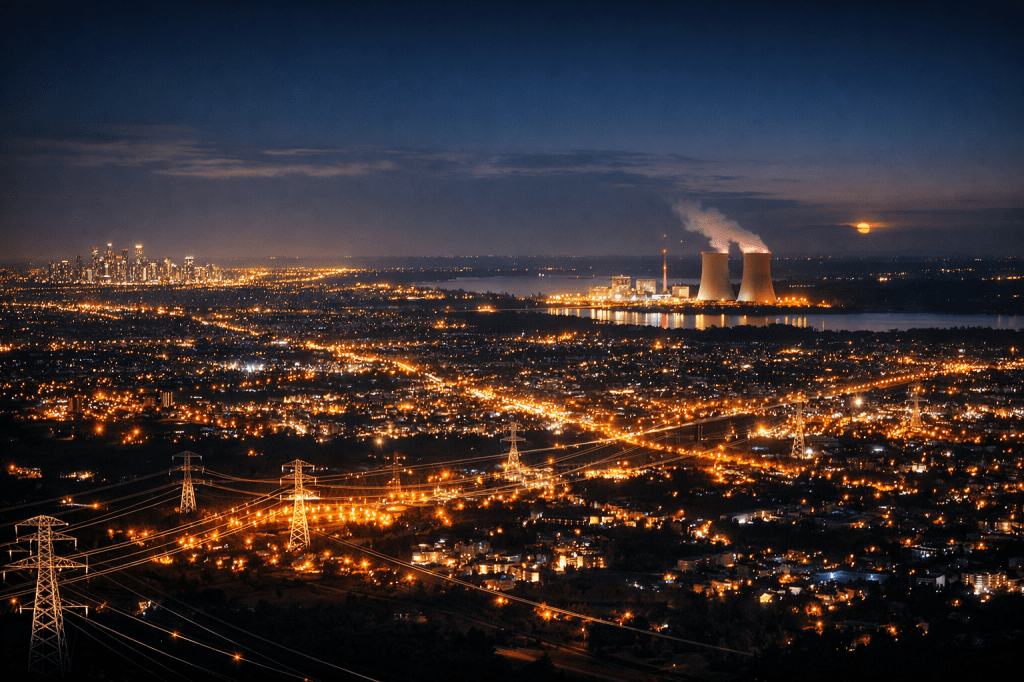



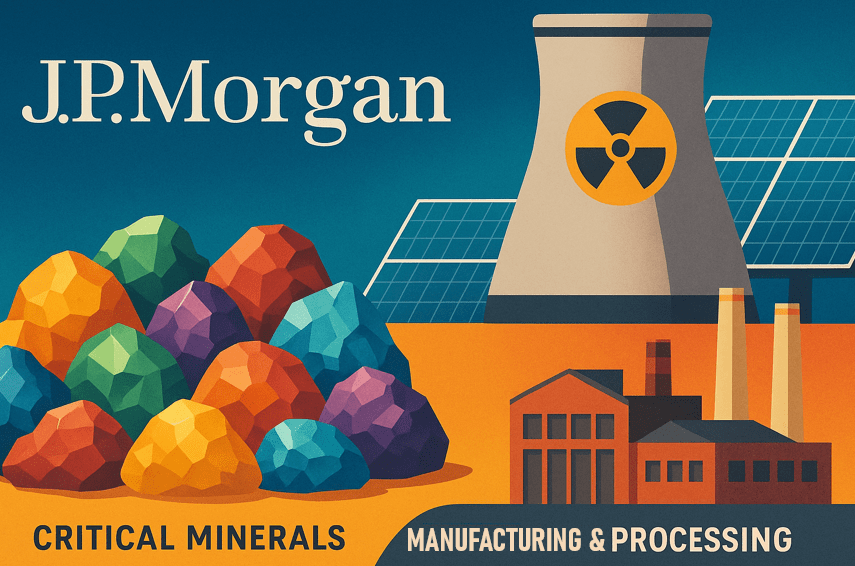


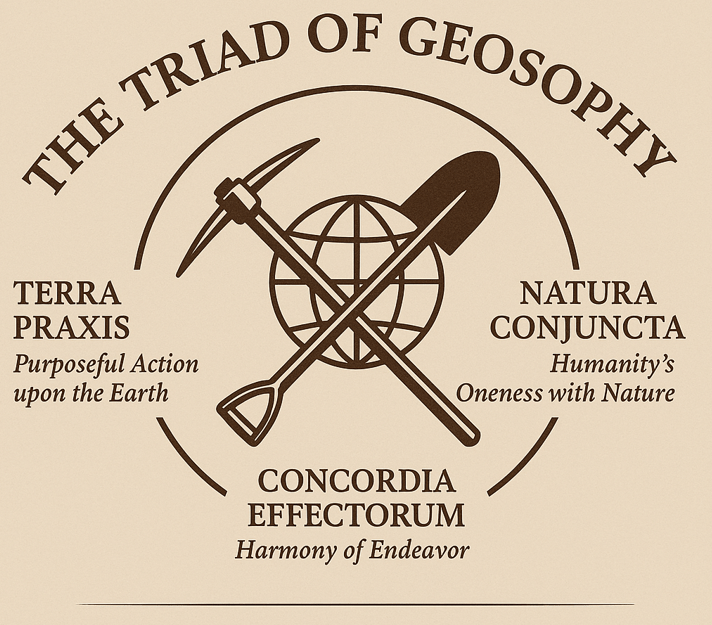


 Mineral Exploration Geology - finding value in the world around us