On January 20th, 2025 Pres. Donald Trump signed a flurry of executive orders and directives to rollback many of the Biden-era’s policies. The recent executive order titled “Unleashing American Energy” aims to significantly boost domestic energy production across various sectors. A key focus lies on streamlining regulations and accelerating the development of critical minerals and nuclear energy resources. This strategy has the potential to fuel a nuclear renaissance, enhancing energy security and independence for the United States.
The order recognizes the critical role of critical minerals in modern technology, from renewable energy sources like wind turbines and solar panels to advanced manufacturing and defense applications. By prioritizing domestic mining and processing of these minerals, the United States aims to reduce reliance on foreign suppliers, many of which are located in geopolitically unstable regions. This move strengthens supply chains, enhances national security, and supports the growth of key industries.
Furthermore, the order emphasizes the importance of nuclear energy as a reliable, carbon-free source of electricity. The United States possesses vast uranium reserves and advanced nuclear technology, making it well-positioned to lead in this sector. By streamlining the licensing and permitting processes for new nuclear power plants and supporting research and development in advanced reactor technologies, the order seeks to revitalize the nuclear industry. This could lead to a significant increase in nuclear power generation, providing a stable and abundant source of electricity while reducing carbon emissions.
A nuclear renaissance would have profound implications. It would enhance energy security by diversifying the nation’s energy mix and reducing dependence on volatile global energy markets. Additionally, it would contribute significantly to decarbonization efforts, aligning with national climate goals. Furthermore, a revitalized nuclear industry would create high-skilled jobs and stimulate economic growth in related sectors.
However, the successful implementation of this executive order will depend on several factors. Addressing public concerns about nuclear safety and waste disposal will be crucial. Continued investment in research and development of advanced reactor technologies, such as small modular reactors (SMRs), is essential to improve safety, efficiency, and cost-effectiveness. Finally, fostering international cooperation on nuclear energy technologies and ensuring the responsible use of nuclear materials will be vital for long-term success.
In conclusion, the “Unleashing American Energy” executive order presents a significant opportunity to bolster domestic energy production, enhance national security, and advance climate goals. By prioritizing the development of critical minerals and nuclear energy resources, the United States can pave the way for a nuclear renaissance, ensuring a reliable, clean, and abundant energy future
From top left, Robert Friedland (Executive Chairman Ivanhoe Electric), Crown Prince Mohammed bin Salman (“MBS”), Minister Bandar Alkhorayef (Ministry of Industry and Mineral Resources of Saudia Arabia) at FMF 2025
The global transition towards a greener economy has ignited a fierce competition for critical minerals, the essential building blocks for technologies like electric vehicles, wind turbines, and solar panels. This scramble for resources has placed immense pressure on mining and exploration activities, reshaping global supply chains and driving significant investment in the sector. Currently, the Future Minerals Forum in Riyadh, Saudi Arabia, is playing a pivotal role in shaping this evolving landscape.
Current Affairs in Critical Minerals Mining and Exploration
The current state of critical minerals mining and exploration is marked by several key trends:
Surging Demand: The demand for minerals like lithium, cobalt, nickel, and rare earth elements is skyrocketing, driven by the global push for decarbonization and technological advancements. This surge has led to increased exploration efforts and the development of new mining projects worldwide.
Supply Chain Vulnerabilities: The concentration of critical mineral production and processing in a few countries, notably China, has raised concerns about supply chain security and potential geopolitical risks. This has prompted nations to diversify their sources and invest in domestic production and processing capabilities.
Environmental and Social Concerns: Mining activities often have significant environmental and social impacts, including habitat destruction, water pollution, and displacement of communities. There is growing pressure on mining companies to adopt sustainable practices and ensure responsible sourcing of minerals.
Technological Advancements: Innovation in mining and processing technologies is crucial for improving efficiency, reducing environmental impact, and unlocking new sources of critical minerals. This includes advancements in exploration techniques, extraction methods, and recycling processes.
Global Forces Involved in Securing Resources and Critical Supply Chains
Several key players are vying for influence in the critical minerals arena:
Governments: Governments are playing a crucial role in securing critical mineral supplies through strategic partnerships, investments in domestic production, and the development of regulatory frameworks. They are also increasingly focused on promoting sustainable mining practices and ensuring responsible sourcing.
Mining Companies: Mining companies are at the forefront of exploration and extraction activities, investing heavily in new projects and technologies. They are also facing increasing pressure from investors and consumers to adopt sustainable and ethical practices.
Downstream Industries: Companies in sectors like automotive, renewable energy, and electronics are heavily reliant on critical minerals and are actively involved in securing their supply chains through direct investments, offtake agreements, and partnerships with mining companies.
Financial Institutions: Banks, investment funds, and private equity firms are providing crucial funding for mining and exploration projects, driving innovation and expansion in the sector.
Current Investment Capital Allocation
Investment in critical minerals has seen a significant uptick in recent years, with capital flowing into various segments of the value chain:
Exploration and Development: A significant portion of investment is directed towards exploration activities to discover new deposits and develop new mining projects.
Mining and Processing: Investments are being made to expand existing mines, develop new processing facilities, and improve extraction and refining technologies.
Recycling and Circular Economy: Growing attention is being paid to recycling and circular economy initiatives to recover valuable minerals from end-of-life products and reduce reliance on primary mining.
Research and Development: Investments in R&D are crucial for developing new technologies and sustainable practices in the critical minerals sector.
The Future Minerals Forum and its Impact on Future Mining Investment
The Future Minerals Forum in Riyadh, Saudi Arabia, has emerged as a key platform for global dialogue and collaboration on critical minerals. The forum brings together government officials, industry leaders, investors, and experts to discuss the challenges and opportunities in the sector.
The forum is particularly significant for future mining investment for several reasons:
Promoting Investment Opportunities: The forum showcases investment opportunities in the mining sector, particularly in the Middle East, Africa, and Central Asia, attracting global capital to the region.
Fostering Collaboration: The forum facilitates partnerships and collaborations between governments, mining companies, and investors, creating a conducive environment for investment.
Driving Sustainable Development: The forum emphasizes the importance of sustainable mining practices and responsible sourcing, encouraging investments that align with environmental and social goals.
Shaping Global Policy: The forum contributes to shaping global policy discussions on critical minerals, influencing investment trends and regulatory frameworks.
The Future Minerals Forum is playing a crucial role in shaping the future of the critical minerals sector, driving investment, promoting sustainable development, and ensuring a secure and responsible supply of these essential resources for the global economy.
The electrification transition, aiming to shift dependence from fossil fuels to electricity, brings a surge in demand for minerals crucial for batteries, renewable energy infrastructure, and electric vehicles. In addition, the nascent small modular reactor (SMR) industry will carry much of the heavy lifting to replace coal-fired power plants with factory built nuclear reactors. This has significant implications for the mineral exploration industry, where Environmental, Social, and Governance (ESG) factors are gaining increasing importance. However, without an overhaul of current permitting processes in countries like the USA, these transitions will be greatly stymied if not completely deferred to jurisdictions that are agile enough to pivot in the face of a changing landscape.
Environmental:
Mining Activities: Exploration and extraction can cause environmental damage through land disturbance, water pollution, and greenhouse gas emissions. But this needn’t be true if that mining is conducted within jurisdictions where sustainable, clean, and regulated mining activities prevail. Companies are expected to minimize these impacts through responsible practices, like using renewable energy sources, mitigating water usage, and implementing effective land reclamation strategies. But most current mining for critical minerals and minerals needed for the electrification transition are happening in areas with little to no oversight or safe-guards for the environment.
Climate Change: The electrification transition aims to combat climate change, but mineral extraction itself can contribute to emissions. Companies need to demonstrate clear strategies to reduce their carbon footprint and operate sustainably throughout the value chain. One such avenue would be to use SMRs to provide carbon-free base-load power from nuclear power sources that can feed into electrically-powered fleets on the modern mine site. In this way mineral extraction could close the loop on electricity and mineral production achieved in a wholly carbon-less capacity. But this would require leaps and bounds in both permitting prowess and investor willpower.
Social:
Community Engagement: Exploration often occurs in remote areas with existing communities. Companies must engage with these communities transparently, respecting their rights and cultural heritage, and ensuring fair benefit sharing. Within the current framework here in the USA these systems have been in place for decades. However, self-serving NGOs that label themselves as ‘environmentalists’ find ever-unique ways to obstruct and corrupt a well-meaning regulatory system that provides better protections than anywhere else on the globe. All while China continues to forego any of these considerations to produce the consumer products we here in the West enjoy without a second thought.
Indigenous Rights: Indigenous communities may have specific rights and interests in the land where exploration takes place. Companies need to consult and collaborate with them throughout the process, respecting their rights and traditional knowledge. Many of these communities are able to provide a wealth of knowledge on how best to care for the land and nurture the native plants that must be protected.
Labor Standards: The mining industry has a history of labor abuses. Companies are expected to uphold fair labor practices, ensuring safe working conditions, living wages, and equal opportunities for all workers. On the modern stage of diversity and inclusion, today’s face of mining looks drastically different than those images found in Gold Rush museums and Prospector’s journals of a bygone era. Women in mining are having their day and this bulwark will continue to grow.
Governance:
Transparency and Accountability: Investors, communities, and other stakeholders are increasingly demanding transparency from mining companies regarding their ESG practices. Companies need robust reporting systems and accountable governance structures to demonstrate their commitment to sustainability. But ultimately, the narrative needs to change from one of villainy towards an understand that ‘minerals are life’ and each human life requires a certain base-amount of minerals to be extracted in order to sustain that life.
Regulations and Licensing: Governments are implementing stricter regulations to ensure responsible mining practices. Companies need to comply with these regulations and actively participate in shaping responsible mining policies. But more importantly, the regulatory agencies need to provide a clear path forward for companies and investors alike towards achieving extraction of the sorely needed mineral resources.
ESG and the Electrification Transition:
Responsible Sourcing: As demand for battery minerals like lithium, cobalt, and nickel increases, ensuring their responsible sourcing is crucial. Other minerals such as uranium, copper, silver, REEs, and many others will have a part to play in the coming dance for mineral extraction. Companies need to partner with suppliers who adhere to high ESG standards throughout the supply chain. And mid-stream processing and enrichment of extracted minerals need to feed the manufacturing industries on the self-same soil that the minerals were extracted. At this time, most raw material processes needs to circumnavigate the globe before it can be used to make anything.
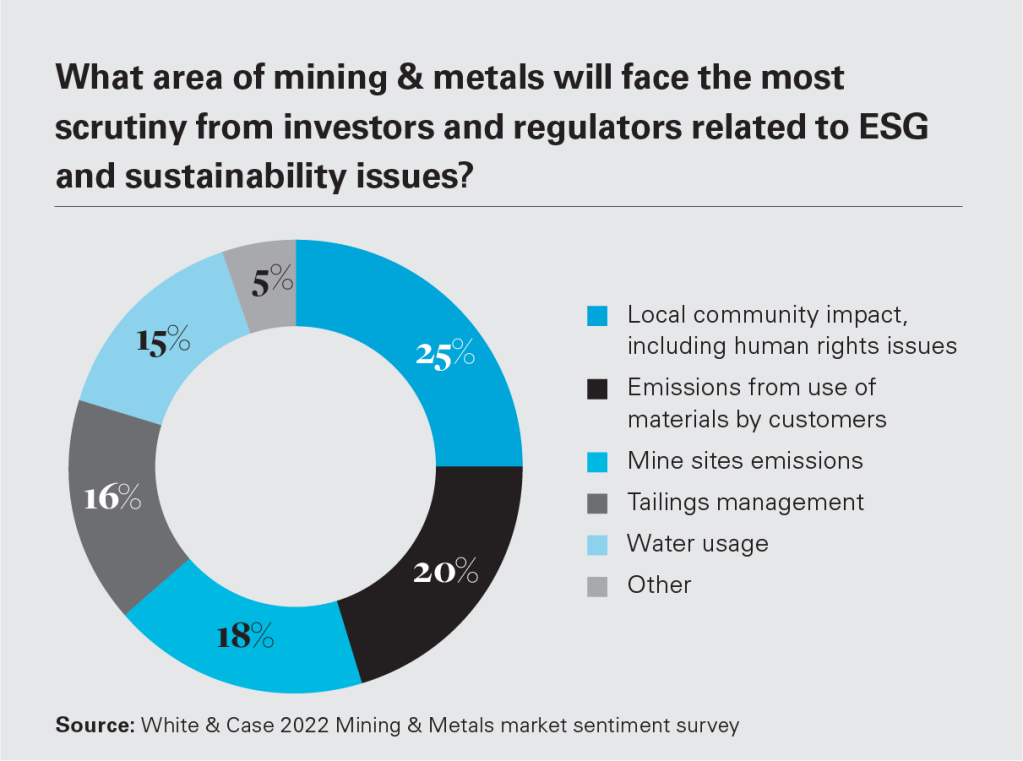
Social License to Operate: Communities and stakeholders are becoming more vocal about the social and environmental impacts of mining. Companies that fail to uphold ESG standards risk losing their social license to operate, hindering their ability to access critical resources. However, the segmented nature of various mining activties divorce the outcry from the ability to impact the end product. In other words, it is nice to decry mining’s ill from the USA while having no direct impact on mining’s impact within China where these criticisms fall on deaf ears and have no real impact. After all, these are completely different nations.
Investor Scrutiny: Investors are increasingly integrating ESG factors into their investment decisions. Companies with strong ESG practices are likely to attract more investment and have a lower cost of capital. But even after nominally identifying the correct company, jurisdiction, or geologic setting, the regulatory hurdles to opening the doors at any “perfect mine” are still quite high and flanked by obstructionist NGOs that care little for the environment they claim to protect and more about the misguided, out-dated narrative they continue to espouse.
In Conclusion: ESG considerations are no longer optional for mineral exploration companies in the electrification transition. But understanding the challenges that mining companies face in this tumultuous terrain needs to be taken into consideration as well. By prioritizing responsible practices, companies can mitigate risks, secure community support, attract investors, and contribute to a sustainable future for the industry and the planet.
The dusty plains and rugged mountains of the western US whisper tales of gold rushes and silver booms. These days we are more likely to see lithium, copper, REE, and uranium booms turning heads with high-tech exploration and proprietary devices humming above the fertile ground. For centuries, mineral exploration has carved its mark on this landscape, fueling economic growth, sparking frontier expansion, and leaving behind a legacy of both prosperity and environmental scars. But what does the future hold for mineral exploration in this iconic region?
Golden Echoes: The history of the West is intertwined with the pursuit of minerals. The California Gold Rush of 1848 painted the region with a frenzy of prospectors, forever altering its demographic and economic trajectory. Subsequent discoveries of copper, lead, and silver cemented the West’s reputation as a treasure trove. These explorations were often rough-and-tumble affairs, leaving behind abandoned towns and environmental concerns. Many of these towns are still lively communities while others are barley visible on a modern road map with over grown roads and rusted out gas stations.
Shifting Sands: The 20th century saw a shift towards larger, mechanized mining operations, focusing on base metals and industrial minerals. While bringing economic stability, these ventures raised concerns about water usage, land reclamation, and pollution. Public awareness led to stricter environmental regulations and a decline in traditional large-scale mining. In reality, the high-minded “save the environment” folks only accomplished pushing those jobs and resource production over-seas, something that is now a big concern for our local supply chain security.
Green Gold Rush: But the Wild West’s geological story is far from over. The 21st century has brought a new wave of exploration, fueled by the demand for minerals crucial for the green revolution. Lithium, cobalt, and rare earth elements, needed for batteries, wind turbines, and solar panels, are now drawing prospectors to forgotten corners of the West. This “green gold rush” offers environmental benefits, reducing reliance on fossil fuels, but also poses new challenges, such as ensuring responsible sourcing and minimizing ecological impact. The ‘elephant in the room’, of course, is uranium and nuclear power (the ONLY baseload power capable to replacing carbon sources of energy).
Technological Treasure Hunter: Technology is revolutionizing mineral exploration. Advanced geophysical surveys, data analysis tools, and even drones are helping prospectors identify potential deposits with greater accuracy and efficiency. This can minimize environmental disruption and open up previously inaccessible areas, but also raises concerns about land access and data ownership. Additionally, technological advancements have made current small modular reactors (SMRs) intrinsically safe and quite lucrative for the electrification transition.
The Human Terrain: The human dimension remains crucial in shaping the future of mineral exploration in the West. Communities must have a say in how their land is used, and mining companies must operate with transparency and accountability. Striking a balance between economic development, environmental protection, and community interests will be key to ensuring a sustainable future for both the land and its people. But this has always been the case, the only things that has changed in the last 100 years ago is nearly every aspect of human life. It is naïve to measure yesterday’s faults against today’s norms, but such is the usual criticism.
Looking Ahead: The western US stands at a crossroads in its mineral exploration journey. The lessons of the past, the technological advancements of the present, and the challenges of the future demand a nuanced approach. Collaboration between government, industry, academics, and communities is essential to develop responsible and sustainable practices that not only unearth natural resources but also build a thriving, environmentally conscious future for the Wild West. If we don’t do it someone else will and in a more environmentally costly manner without our oversight.
The Earth’s crust holds a treasure trove of minerals, vital for everything from smartphones to wind turbines. Your local geology holds more under your feet than you will most likely imagine… unless you are a geologist, miner, prospector, or metallurgist. Yet, the buzz of pickaxes and drill rigs exploring for these hidden riches seems muted in recent times. The question begs: where has all the investment for mineral exploration gone?
It’s true, mineral exploration spending has seen a decline in the past decade. Compared to the heady days of the early 2010s, when commodity prices soared, exploration budgets have tightened. Usually, price begets sentiment and with $2,000 gold one would think that investors would be flocking towards producers and explorers alike. So, where’s the beef? But to say it’s vanished entirely is painting an incomplete picture. The story here is one of shifting sands, not barren deserts.
The Green Shift: The tide is turning towards minerals critical for the green energy revolution. Lithium, cobalt, and rare earth elements, once niche players, are now rockstars, with demand skyrocketing fueled by electric vehicles, solar panels, and wind turbines. Investment in exploration for these “clean energy minerals” is booming, with lithium exploration spending alone nearly doubling in the past year. This, in the face of a current slump in lithium price. Here price and sentiment have diverged. Weird. Furthermore, even in the face of the “green revolution” our governing bodies and regulatory agencies can seem to pivot fast enough to provide a clear path forward.
The Risk Factor: Mineral exploration is a high-risk, high-reward game. It’s like searching for needles in a vast haystack, with most endeavors ending in dust. I’ve heard in the past, only 1 in 100 prospects will actually find something (this might as well be 1 in 1,000 with current investment levels). This inherent risk has pushed investors towards safer bets, especially during commodity downturns. Additionally, environmental concerns and complex permitting processes further dampen enthusiasm for traditional exploration methods. All while other countries and other ‘Super Regions’ (such as being promoted by Saudi Arabia) could easily surpass more traditional mineral rich nations and producers.
Tech to the Rescue: However, innovation is changing the game. New technologies like drone-based surveys and advanced data analysis are lowering exploration costs and increasing the odds of finding viable deposits. This is attracting renewed interest from investors, particularly in greenfield (undiscovered) areas. Very few patches of ground haven’t seen some level of prospective interest, state-funded geologic surveys, or past exploration and diggings. But usually, if you look more closely, these bygone districts only saw activity when the mule and shovel were the best extraction methods available. Modern economies of scale provide the heavy lift anymore. Perhaps it is time to re-visit these storied districts?
The Geopolitical Puzzle: The global map of mineral exploration is also being reshaped by geopolitical factors. Tensions between major economies have prompted countries to secure domestic sources of critical minerals, leading to targeted investments in exploration within their borders. This trend is likely to continue, adding a layer of complexity to the global picture. In recent months China has restricted export of critical minerals such as graphite, Russian uranium supplies are in unsavory hands, and Kazakh well-fields lack the needed sulfuric acid to keep up in-situ recovery. These are symptoms of coming shortfalls and supply chain issues. Beware!
So, where has all the investment gone? It hasn’t disappeared, it’s simply undergone a metamorphosis. It’s flowing towards greener pastures, driven by the surging demand for clean energy minerals. While traditional exploration faces headwinds, technological advancements and a shift in priorities are opening new avenues for investment. The future of mineral exploration is likely to be defined by a strategic blend of technological innovation, green ambitions, and geopolitical maneuvering. But all will be for not if local governments and permitting efforts continue to find obstruction and uninspired political maneuvering.
The question, then, becomes not just where the investment has gone, but where it should go. A sustainable future demands responsible and efficient exploration practices, coupled with investments in recycling and resource substitution. The battery of today will NOT be the battery of the future. And the coveted energy source of now will inevitably turn more nuclear over time. Finding the right balance between meeting our mineral needs and protecting the environment will be the true test for the future of mineral exploration. And as past sins continue to the poster child for how not to mine, these same deposits and districts hold the key for future, sustainable extraction. Only through modern mining can we properly clean up the past wrongs. Taxing your way into reclamation is the most inefficient use of tax-payer funds when that same populous needs the minerals locked up in fought-over, legacy mining areas. The only reason the ski bunnies of today are able to easily access Colorado slopes is due, quite literally, because of mine roads carved into some of the steepest terrain within the North American cordillera.
This post, of course, merely scratches the surface of a complex and evolving issue. Further research into specific regions, policy issues, mineral districts, and technological advancements can paint a more nuanced picture of where the investment is heading and the challenges and opportunities that lie ahead. But one take way from this is clear: we need to get out of our own way!
Current estimates might have humanity’s control of fire dating to nearly 1 million years ago. Carbon combustion, in all its various forms and sophistications, is still our main energy source today. The car you drive today, with all its bells and whistles, is still, quite simply, a very sophisticated campfire. And it is this burning of carbon-based fuel that seems to have run its course of usefulness, or more importantly its welcome… as we wrestle with climate change and the need to reduce CO2 in the atmosphere. Within this context, uranium and nuclear energy have the ability to give humanity a new fire, a new energy source… and one that is free from the carbon-cycle.
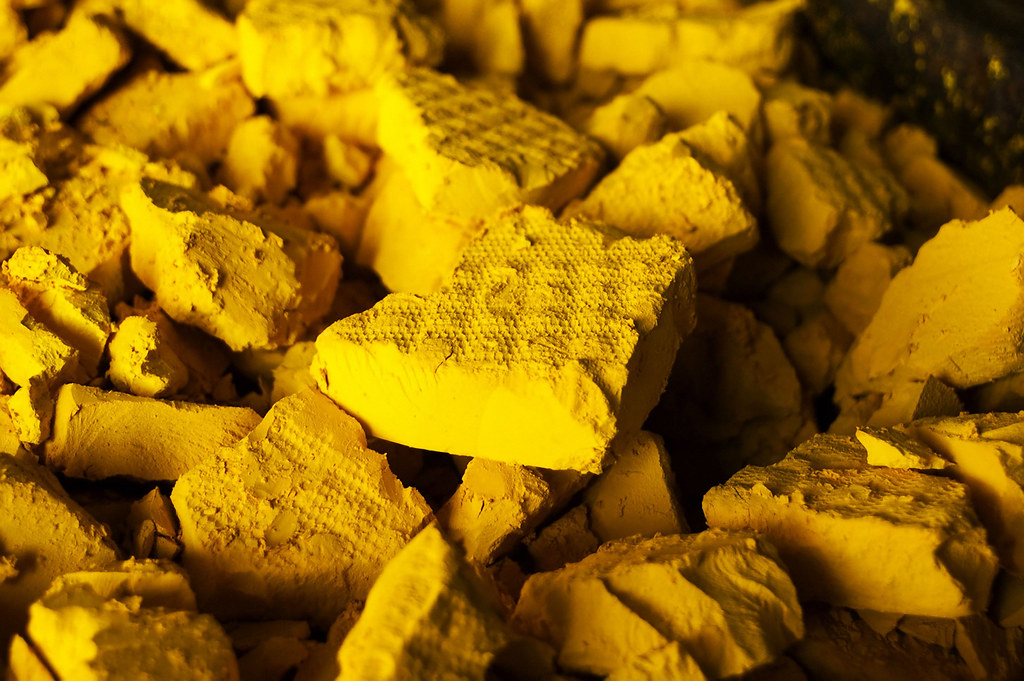
Uranium might have started its time with humanity in infamy, but its usefulness as a dense fuel source will redeem itself in due time. 1,000,000 : 1 is the ratio of energy per unit of uranium to unit of carbon-based fuel sources. For every unit of coal, natural gas, or petroleum it takes 1,000,000 more units of that fuel to equal just one unit of uranium. This math will win out all cost/benefit analysis thought experiments thrown at it. It is a monumental, gigantic, herculean (even) orders of magnitude greater fuel source than all carbon-based fuel and it is clean as well.
Nuclear energy is the cleanest form of baseload power that we already utilize as a reliable source of energy. Here in the US there is a fleet of 120 reactors that have been quietly producing 20% of our nation’s baseload power for decades. It is clean not only because it is carbon-free, but it also contains 100% of all its waste products within the reactor and this material can be stored safely long-term. The same cannot be said for coal-fired power plants that continually release not only CO2 into the atmosphere but many other toxins, volatiles, and yes, even naturally occurring uranium and other radioactive elements are emitted from coal-fired power plants.
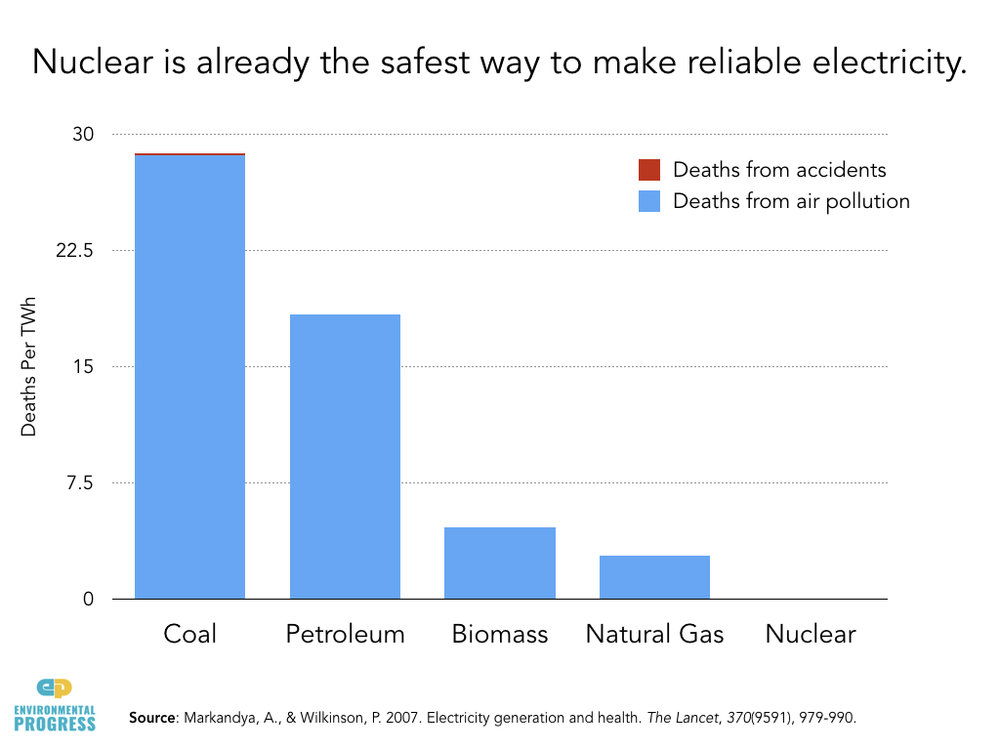
This is not an unknown statistic for those that study these effects on the human population. In this regard it would be safer to live next to a nuclear power plant than to live next to a conventional, coal-fired power plant, where deaths are accounted for by the tera-watt per hour. In fact, by contrast, those living next to a nuclear power plant would receive their equivalent annual dose of radiation from that power plant by simply eating a banana (which has Potassium-40 in it, did you know?)
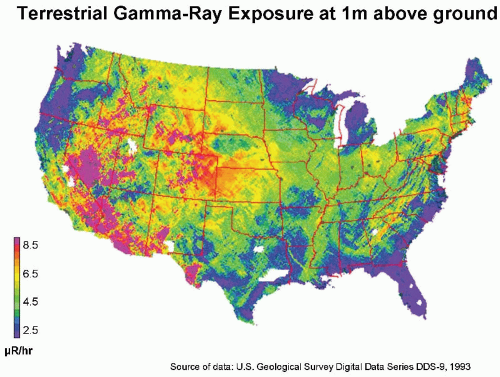
Ionizing radiation needs to be respected not feared. Radiation dose needs to be understood not irrationally demonized. And NORM (naturally occurring radioactive material) needs to be normalized, since anyone living in the Western US quite literally live atop ground that emits gamma radiation everyday. The uranium and its daughter products, that make up the majority of all radioactive isotopes, have been with us for millennia and will continue to be here long after we’ve decided to educate ourselves about it or not.
It is in our geology, our bones, and in our environment… down to a certain parts per billion in sea water. And it can be mined cleanly here in the US and processed to be put into modern, small modular reactors that address previous design short-comings to ensure 100% safe power for our future. These deposits come in many forms but most can be traced back to a granitic or volcanic source within the basement rock of the continent we live.
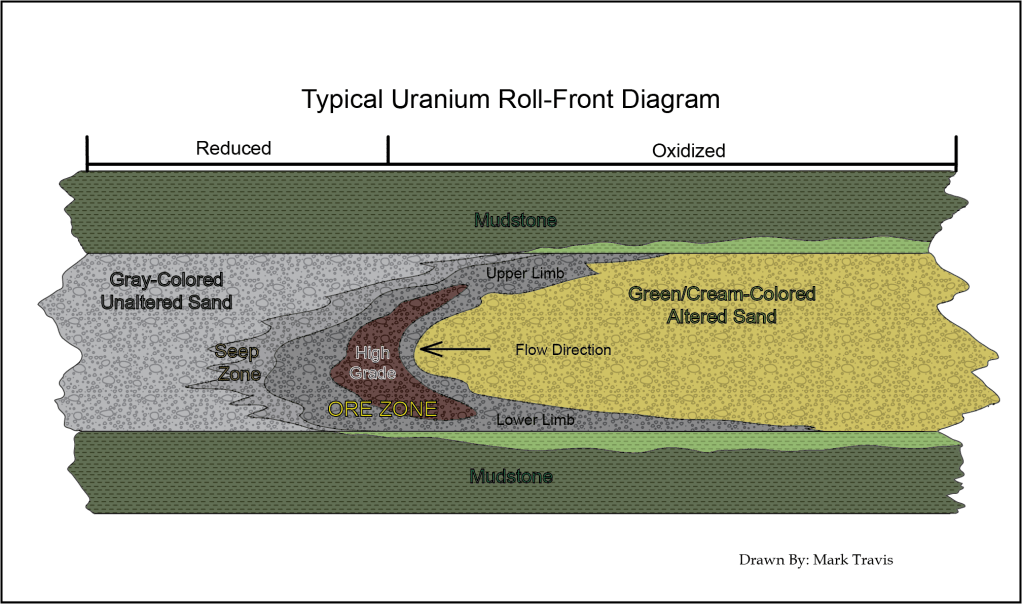
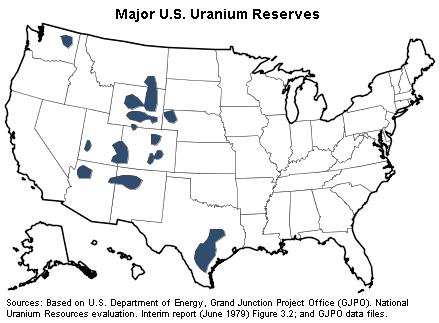
The most abundant source of uranium that is currently mined within the US is called “roll-front” uranium. These deposits occur in aquifers and fluvial sandstones beneath your feet in places like Central Wyoming and South Texas. You’ve probably driven by the “mines” that produce these ore bodies, but you probably wouldn’t have noticed. The in-situ mining method doesn’t move any dirt, it is a well field of injection and collection wells that add oxygen to the reduced aquifer environment to mobilize the uranium.
Roll-fronts were first called “geochemical” fronts, referring to the redox boundary within the aquifer that defines them. A roll-front uranium ore body is quite simply where the uranium found naturally within the aquifer drops out of solution due to a reducing environment. In cross-section the system is a “C-shape” due to natural permeability found within the middle of a fluvial sandstone, where the aquifer is able to ‘push’ the roll-front further into the reducing side. The lower and upper limbs (or the “tails”) of the roll-front are where the permeability decreased due to a facies change from fluvial sands to perhaps a mudstone, siltstone, or shale.
Between the 1950’s and 1980’s uranium production came from numerous mines in the Western US and supplied fuel for baseload power for decades. But these reserves have dwindled and new production will be needed to power the nuclear reactor fleet already in use. But what will happen as we continue to transition away from carbon-based fuel. Renewables will only be able to replace coal-fired power plants so far. In fact, renewable energy within the current energy mix can’t replace coal-fired power plants.
The future of energy production, transportation, and the electrification of our world requires an “all-of-the-above” energy mix. And uranium is a key component to that energy mix and should be considered as a ‘critical’ mineral (though it is not currently listed as such by the USGS). All of the elements required to implement the transition for the energy and transportation sectors need to be part of that list and we need to exploit each one of those resources that are found within our borders. Uranium, gold, silver, lithium, REEs, PGEs, base-metals (Cu, Co, Zn, Sn, etc.) will all be required to make the electrification transition a reality. And all of these elements are found right here in the US where domestic production of these minerals is not only possible but needed for our economic and energy security.
There is a global shift to the domestic production of minerals. This is happening across the world and is having ripple effects both up stream and down stream in this forward looking economy. It might seem somewhat backward to look inward for stable economic pillars for the global economy. But I might argue the opposite in the face of the ESG (economic social governance) paradigm we, as a species, seem to be self-implementing in this post-pandemic world. It is a natural step to draw from domestic natural resources, should we want to have a greater say in how those resources are produced. It might be the hallmark of the Dotcom boom that most of the materials that built it came from a supply chain wholly opaque to the consumer. And perhaps that system was built with the exact purpose of keeping such machinations obscured from the public eye. Nonetheless, it is perhaps an outdated mode given the current global climate. Imagine the backlash in today’s global economy. Imagine if all companies adhered closely to the transparent ESG paradigm.
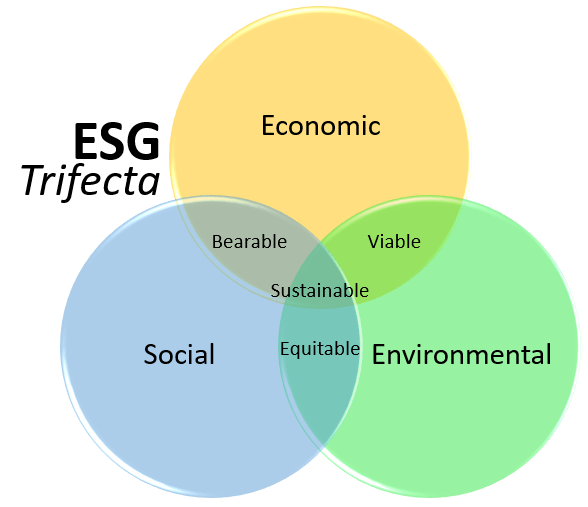
As a quick re-cap, the Environmental/Social/Governance paradigm is a global movement for business to be conducted in a transparent way that responds to the socially responsible investor. But in reality it is a current day risk mitigation that takes into account “non-financial” factors when assessing sustainability. In a mineral industry context, the days of a mine’s sustainability equaling its mineral resource or mine life is long past. In truth, this reality has been long-coming and began decades ago here in the U.S. with NEPA (National Environmental Policy Act, 1970). While NEPA is a laudable step towards sustainability, it’s main problem is it’s scope; it only affected the U.S. In short, NEPA was one step forward, two steps back for domestic production of minerals here in the U.S. While the U.S. implemented what is known today as the “NEPA process” other jurisdictions, such as China or Russia, continued business as usual. In this way, the U.S. has continually become less a producer and more a consumer, not only when it comes to mining but across all sectors.
Why does this shift matter? And how could this global transparency and awareness bolster a budding domestic mineral industry? In a way, the ESG paradigm could be harnessed to level the playing field between the un-regulated, “Wild West” mineral producers and the well-regulated non-producers.
We stand at a crossroads. Should the U.S. source it’s resource needs from within or continue to push the social/environmental liability elsewhere? If COVID taught us anything, global supply chains can be swiftly eroded and being self-reliant, even within an ever-expanding global economy, will pay dividends. And in the context of the socially responsible investor & ESG, we should all be able to pull the veil back and see exactly how the sausage is made.
In the Kingdom of Saudi Arabia, as part of their Vision 2030 initiative, they are pivoting towards a future that is diversified to include domestic production of green metals, energy metals, and other precious & base metals production. The Kingdom is most obviously known for its hydrocarbon production, but there is a long history of gold and copper production as well. The Arabian Shield is geologically very old and host to untold riches that have yet to be exploited. In fact, the USGS during the 1950s thru 70s had numerous field mapping campaigns to try and encapsulate these resources outside of the scope of oil & gas.
If a key player within the supply of current fuels has the wherewithal to begin to pivot towards the future, surely the U.S. can find the backbone to do the same. But there is one question that would need to be answered before that could happen: Can we reconcile the fact that, in order to build the green future of the electrification transition, we will need to mine minerals? Current policy from the Biden administration seems keen to promote domestic production of minerals but actual investment from the Dept of Defense is looking beyond our borders to non-domestic mineral resources. This is quite discouraging given the vast endowment of natural resources the U.S. already has within its borders.
I’ve seen this bumper sticker, found in many a mining town, that goes something like: “If it’s not grown… it’s mined.” There’s nothing like some bumper sticker wisdom to solve any problem, right? Seriously though, this might seem like an over simplification of a complex problem, but is it? Resources, by their very definition, are something that must needs be exploited. Now. This exploitation can be done ethically, with all stakeholders at the table, or we can continue to allow other countries to do our dirty work for us. In short, if we don’t mine it cleanly (per our own NEPA regulations) then someone else will mine it however they see fit (without regulatory oversight, most likely). To be honest, unregulated mining is the most profitable (for the mining company)… that’s why it was done that way historically. So then, what is the point of ESG (or any set of standards, for that matter) if we are not all playing by the same rules?
The domestic production of minerals (aka, mining) is ultimately the logical conclusion of the green energy thought experiment. Don’t shoot the messenger when you find out that in order to transition away from carbon you will need to invite some other elements to the party. As Hunter S. Thompson encapsulated so eloquently, “Buy the Ticket… Take the Ride!” If the goal is to electrify our energy and transportation sector by means of transitioning away from carbon sources of fuel, then the only alternative is a suite of other elements/minerals. These minerals have be enumerated in the critical minerals list put out by the USGS. And here is the good news: all of the elements found on the critical minerals list can be found here within the U.S.
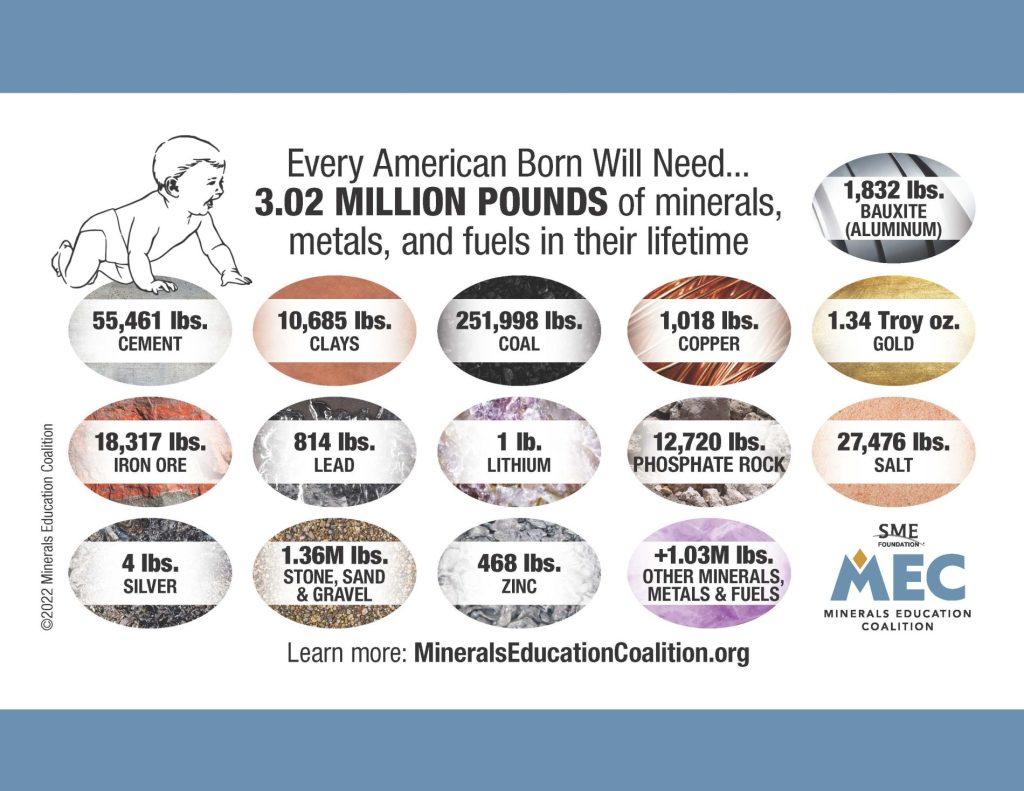
It’s no secret to those who’ve been paying attention. Minerals equal life. And in order to produce said minerals, they must be mined. The only true debate left is when, where, and how. When will we start to mine these minerals that are required to move forward? Where will we decide to mine these minerals so we can have a say in how they are produced? And how will we do so in an ethical, socially responsible, and sustainable way?
It’s not a giant feat by any stretch. Many of these questions can be answered by visiting your local phosphate, lithium, copper, or gold & silver mine found thought out the Western U.S. They have been quietly producing these vital minerals for decades. The problem now, of course, is there are precious few of them opening up anew. Many of these deposits have a long, battle-worn history of achieving the hard-won state of “in production,” and perhaps rightly so. But it’s it about time we found a more cooperative solution to guiding the mineral producer through the NEPA process and onto actual mineral production. I can see more opportunities to help the miner and the conservationist alike through cooperative permitting. But that sort of “kumbaya” moment doesn’t make for sexy headlines for the 24 hour media cycle to sell. And few environmental activist firms would be able to set up shop with that kind of business model.












 Mineral Exploration Geology - finding value in the world around us