The Trump administration has taken decisive action to strengthen the United States’ domestic production of critical minerals, marking a significant step toward securing the nation’s energy independence and national security. By invoking the Defense Production Act (DPA), President Donald Trump signed an executive order to bolster the ability of the U.S. to mine, process, and produce critical minerals and rare earth elements domestically. This comprehensive effort targets reducing reliance on foreign imports—particularly from China—and aims to establish a stable and resilient supply chain for these indispensable resources.
Why Domestic Production Matters
Critical minerals play an essential role in the production of numerous technologies, from batteries and renewable energy systems to defense applications vital to national security. Yet, despite possessing some of these minerals, the U.S. imports a substantial amount, with a staggering 70% of rare earth imports coming from China. This dependency creates economic vulnerabilities and strategic risks, particularly as China has started implementing export controls on materials like germanium and gallium—key resources for various industries.
Recognizing these challenges, the executive order prioritizes domestic production as a solution. Measures include financial support such as loans, investments in mineral processing facilities, and expedited permitting processes for mining projects. These actions not only reduce foreign dependency but also provide the infrastructure to support long-term economic growth within the mining and energy sectors.
Exploring Untapped Potential
The U.S. is home to significant untapped reserves of critical minerals, including uranium, copper, potash, and gold. With the implementation of this executive order, exploration activities are expected to intensify, particularly on federal lands where resources remain largely underdeveloped. By working closely with private sector partners, the administration seeks to identify new deposits and ensure that these valuable resources contribute to a self-sufficient supply chain.
This focus on exploration aligns with the broader goal of energy independence. By tapping into domestic reserves, the U.S. mitigates its reliance on unpredictable global markets, ensuring access to the materials critical for advanced technologies and industrial needs. It also positions the nation to become a global leader in the production and processing of these vital minerals.
A Lucrative Opportunity for Investment
In addition to fortifying supply chains and national security, the executive order opens significant investment opportunities. The designation of critical minerals now includes not only rare earth elements but also uranium, coal, and other essential materials. This broadening of scope provides companies with a clear path to develop new projects under a supportive regulatory and financial framework.
With growing demand for materials used in renewable energy technologies, electric vehicles, and defense systems, investors stand to benefit from a favorable market outlook. The administration’s commitment to faster permitting and financial backing minimizes risk, enabling businesses to take on ambitious projects. This support not only ensures the continuity of supply for industries but also fosters innovation and economic diversification.
Building a Resilient Future
The Trump administration’s decision to leverage the Defense Production Act underscores the strategic importance of critical minerals to national security and economic stability. This law, originally enacted in the 1950s, has been invoked in modern times to address pressing national needs, such as boosting mask production during the pandemic and incentivizing the production of battery materials under the Biden administration. Now, it serves as a key instrument in addressing vulnerabilities within the U.S. supply chain for critical minerals.
As geopolitical tensions and trade uncertainties continue to shape the global landscape, the need for a stable and secure supply of critical minerals has never been greater. By fostering exploration, streamlining production, and encouraging investment, the U.S. is taking proactive measures to insulate itself from market volatility and potential supply chain disruptions.
This initiative represents a historic step in ensuring that the nation remains competitive and resilient in the face of growing demand for the materials that power its economy and safeguard its security. Through public-private partnerships and innovative policy measures, the U.S. is charting a course toward a more sustainable and independent future.
The global bismuth market is currently experiencing unprecedented turbulence, with prices in Europe skyrocketing from $6 per pound in late January to $40 per pound in March 2025. U.S. prices have climbed even higher, reaching $55 per pound. This surge reflects not only tight supply dynamics but also the significant impact of geopolitics on critical mineral markets.
Let’s explore the drivers behind this price escalation and the broader implications for the mineral exploration sector.
China’s Export Curbs and Global Market Disruption
China, which produces over 80% of the world’s mined bismuth, recently imposed export controls on five key metals: bismuth, tungsten, tellurium, molybdenum, and indium. These restrictions, introduced in response to U.S. tariffs, have sent shockwaves through global supply chains. With limited alternative sources, China’s policy decisions underscore the critical importance of securing diversified supply routes for such minerals.
The current lack of replacement sources outside of China has created a volatile market environment. Analysts from CRU Group warn that without significant new capacity development, supply constraints could persist, further driving price instability.
Market Volatility and Supply Chain Risks
The rapid price escalation has created challenges for traders and manufacturers alike. Shipping delays, typically taking around two months, add to the risk of speculative stockpiling as buyers grapple with uncertainty over where prices might land in the near future. Additionally, low inventory levels internationally are pushing the cost of prompt materials to extraordinary levels.
On the Wuxi Stainless Steel Exchange, bismuth contracts have surged 105% since the beginning of the year, trading at 163,800 yuan ($22,677) per metric ton as of mid-March. Such rapid changes highlight the sensitivity of the bismuth market to geopolitical disruptions.
Permitting Hurdles Hampering Domestic Exploration
One of the most significant barriers to ramping up domestic production in regions such as the U.S. is the complex and time-intensive permitting process for new mining projects. Exploration companies often face regulatory delays spanning several years before receiving approval to commence operations. While regulatory oversight is crucial for environmental stewardship, streamlined permitting processes could enable faster responses to supply crises like the current bismuth shortage.
Permitting challenges also discourage potential investors, as the long lead times create uncertainty around project viability. Addressing these hurdles will be essential for fostering domestic investment in critical minerals.
Opportunities for Domestic Investment and Exploration
The current bismuth market volatility presents a unique opportunity for nations to reduce reliance on imports. The U.S., for instance, has significant untapped bismuth reserves that could contribute to a more resilient supply chain if development hurdles are overcome. Enhanced incentives for exploration and production, such as tax breaks or government-backed investment programs, could attract private sector interest and accelerate domestic capacity.
Countries such as Japan, South Korea, and Laos, which also produce bismuth, may similarly see heightened exploration and development activities as global stakeholders seek to diversify sourcing.
Implications for the Future of Mineral Exploration
The bismuth supply crunch serves as a stark reminder of the volatility inherent in critical mineral markets. Geopolitical tensions, policy changes, and regulatory barriers all play a role in shaping supply dynamics. For mineral exploration professionals, this underscores the importance of forward-thinking strategies to identify and develop alternative sources.
From streamlined permitting processes to increased domestic investment, the path to a stable and diversified supply chain for bismuth and other critical minerals requires collaboration between government bodies, private sector players, and international stakeholders.
The lessons from this crisis extend beyond bismuth, highlighting the broader need for innovative solutions to meet the rising global demand for critical minerals. As the industry navigates these challenges, agility and resilience will be key to seizing the opportunities ahead.
Cobalt prices have skyrocketed following the Democratic Republic of Congo’s (DRC) recent suspension of cobalt exports, alongside Eurasian Resources Group (ERG) declaring force majeure on deliveries from its Metalkol operations. This pivotal development has sent shockwaves through global markets, creating both challenges and opportunities for domestic mining and exploration sectors.
Unpacking the Supply Shock The DRC, responsible for over 70% of the world’s cobalt production, holds immense influence over this critical mineral market. With exports temporarily banned to address oversupply and falling prices, the global cobalt supply chain faces significant disruption. As prices surge, reaching $12.25 per pound in Europe and climbing nearly 12% in China, stakeholders across industries are re-evaluating strategies to secure supply stability.
A Window of Opportunity for Domestic Projects For U.S.-based mining companies, the current crisis presents an opportunity to capitalize on rising prices and growing demand. The suspension highlights the risks of over-reliance on foreign supply chains, particularly for battery metals critical to clean energy technologies and electric vehicles. Domestic cobalt exploration projects now stand in a favorable position to attract investment and advance development.
Exploration firms focused on battery metals can leverage this moment to push for accelerated permitting and financing. Heightened demand, coupled with geopolitical uncertainty, underscores the necessity of establishing a resilient and diversified supply base. However, it’s crucial to note that domestic projects often face long lead times due to permitting and operational challenges. Strategic planning will be key to bridging the gap between current market needs and future production.
Long-Term Implications for the Mining Sector The DRC’s ban on cobalt exports may serve as a wake-up call for policymakers and industry leaders alike. It emphasizes the importance of fostering domestic capabilities in critical mineral production to reduce exposure to global supply disruptions. While export restrictions and volatile pricing present immediate challenges, they also signal a shift toward localized supply chains, creating opportunities for new players in the mining sector.
This moment calls for an alignment of national priorities with industry capabilities, ensuring that domestic exploration and mining can thrive while supporting sustainable development goals. As the world transitions to a clean energy future, a secure and ethical supply of battery metals like cobalt will be indispensable.
From top left, Robert Friedland (Executive Chairman Ivanhoe Electric), Crown Prince Mohammed bin Salman (“MBS”), Minister Bandar Alkhorayef (Ministry of Industry and Mineral Resources of Saudia Arabia) at FMF 2025
The global transition towards a greener economy has ignited a fierce competition for critical minerals, the essential building blocks for technologies like electric vehicles, wind turbines, and solar panels. This scramble for resources has placed immense pressure on mining and exploration activities, reshaping global supply chains and driving significant investment in the sector. Currently, the Future Minerals Forum in Riyadh, Saudi Arabia, is playing a pivotal role in shaping this evolving landscape.
Current Affairs in Critical Minerals Mining and Exploration
The current state of critical minerals mining and exploration is marked by several key trends:
Surging Demand: The demand for minerals like lithium, cobalt, nickel, and rare earth elements is skyrocketing, driven by the global push for decarbonization and technological advancements. This surge has led to increased exploration efforts and the development of new mining projects worldwide.
Supply Chain Vulnerabilities: The concentration of critical mineral production and processing in a few countries, notably China, has raised concerns about supply chain security and potential geopolitical risks. This has prompted nations to diversify their sources and invest in domestic production and processing capabilities.
Environmental and Social Concerns: Mining activities often have significant environmental and social impacts, including habitat destruction, water pollution, and displacement of communities. There is growing pressure on mining companies to adopt sustainable practices and ensure responsible sourcing of minerals.
Technological Advancements: Innovation in mining and processing technologies is crucial for improving efficiency, reducing environmental impact, and unlocking new sources of critical minerals. This includes advancements in exploration techniques, extraction methods, and recycling processes.
Global Forces Involved in Securing Resources and Critical Supply Chains
Several key players are vying for influence in the critical minerals arena:
Governments: Governments are playing a crucial role in securing critical mineral supplies through strategic partnerships, investments in domestic production, and the development of regulatory frameworks. They are also increasingly focused on promoting sustainable mining practices and ensuring responsible sourcing.
Mining Companies: Mining companies are at the forefront of exploration and extraction activities, investing heavily in new projects and technologies. They are also facing increasing pressure from investors and consumers to adopt sustainable and ethical practices.
Downstream Industries: Companies in sectors like automotive, renewable energy, and electronics are heavily reliant on critical minerals and are actively involved in securing their supply chains through direct investments, offtake agreements, and partnerships with mining companies.
Financial Institutions: Banks, investment funds, and private equity firms are providing crucial funding for mining and exploration projects, driving innovation and expansion in the sector.
Current Investment Capital Allocation
Investment in critical minerals has seen a significant uptick in recent years, with capital flowing into various segments of the value chain:
Exploration and Development: A significant portion of investment is directed towards exploration activities to discover new deposits and develop new mining projects.
Mining and Processing: Investments are being made to expand existing mines, develop new processing facilities, and improve extraction and refining technologies.
Recycling and Circular Economy: Growing attention is being paid to recycling and circular economy initiatives to recover valuable minerals from end-of-life products and reduce reliance on primary mining.
Research and Development: Investments in R&D are crucial for developing new technologies and sustainable practices in the critical minerals sector.
The Future Minerals Forum and its Impact on Future Mining Investment
The Future Minerals Forum in Riyadh, Saudi Arabia, has emerged as a key platform for global dialogue and collaboration on critical minerals. The forum brings together government officials, industry leaders, investors, and experts to discuss the challenges and opportunities in the sector.
The forum is particularly significant for future mining investment for several reasons:
Promoting Investment Opportunities: The forum showcases investment opportunities in the mining sector, particularly in the Middle East, Africa, and Central Asia, attracting global capital to the region.
Fostering Collaboration: The forum facilitates partnerships and collaborations between governments, mining companies, and investors, creating a conducive environment for investment.
Driving Sustainable Development: The forum emphasizes the importance of sustainable mining practices and responsible sourcing, encouraging investments that align with environmental and social goals.
Shaping Global Policy: The forum contributes to shaping global policy discussions on critical minerals, influencing investment trends and regulatory frameworks.
The Future Minerals Forum is playing a crucial role in shaping the future of the critical minerals sector, driving investment, promoting sustainable development, and ensuring a secure and responsible supply of these essential resources for the global economy.
The electrification transition, aiming to shift dependence from fossil fuels to electricity, brings a surge in demand for minerals crucial for batteries, renewable energy infrastructure, and electric vehicles. In addition, the nascent small modular reactor (SMR) industry will carry much of the heavy lifting to replace coal-fired power plants with factory built nuclear reactors. This has significant implications for the mineral exploration industry, where Environmental, Social, and Governance (ESG) factors are gaining increasing importance. However, without an overhaul of current permitting processes in countries like the USA, these transitions will be greatly stymied if not completely deferred to jurisdictions that are agile enough to pivot in the face of a changing landscape.
Environmental:
Mining Activities: Exploration and extraction can cause environmental damage through land disturbance, water pollution, and greenhouse gas emissions. But this needn’t be true if that mining is conducted within jurisdictions where sustainable, clean, and regulated mining activities prevail. Companies are expected to minimize these impacts through responsible practices, like using renewable energy sources, mitigating water usage, and implementing effective land reclamation strategies. But most current mining for critical minerals and minerals needed for the electrification transition are happening in areas with little to no oversight or safe-guards for the environment.
Climate Change: The electrification transition aims to combat climate change, but mineral extraction itself can contribute to emissions. Companies need to demonstrate clear strategies to reduce their carbon footprint and operate sustainably throughout the value chain. One such avenue would be to use SMRs to provide carbon-free base-load power from nuclear power sources that can feed into electrically-powered fleets on the modern mine site. In this way mineral extraction could close the loop on electricity and mineral production achieved in a wholly carbon-less capacity. But this would require leaps and bounds in both permitting prowess and investor willpower.
Social:
Community Engagement: Exploration often occurs in remote areas with existing communities. Companies must engage with these communities transparently, respecting their rights and cultural heritage, and ensuring fair benefit sharing. Within the current framework here in the USA these systems have been in place for decades. However, self-serving NGOs that label themselves as ‘environmentalists’ find ever-unique ways to obstruct and corrupt a well-meaning regulatory system that provides better protections than anywhere else on the globe. All while China continues to forego any of these considerations to produce the consumer products we here in the West enjoy without a second thought.
Indigenous Rights: Indigenous communities may have specific rights and interests in the land where exploration takes place. Companies need to consult and collaborate with them throughout the process, respecting their rights and traditional knowledge. Many of these communities are able to provide a wealth of knowledge on how best to care for the land and nurture the native plants that must be protected.
Labor Standards: The mining industry has a history of labor abuses. Companies are expected to uphold fair labor practices, ensuring safe working conditions, living wages, and equal opportunities for all workers. On the modern stage of diversity and inclusion, today’s face of mining looks drastically different than those images found in Gold Rush museums and Prospector’s journals of a bygone era. Women in mining are having their day and this bulwark will continue to grow.
Governance:
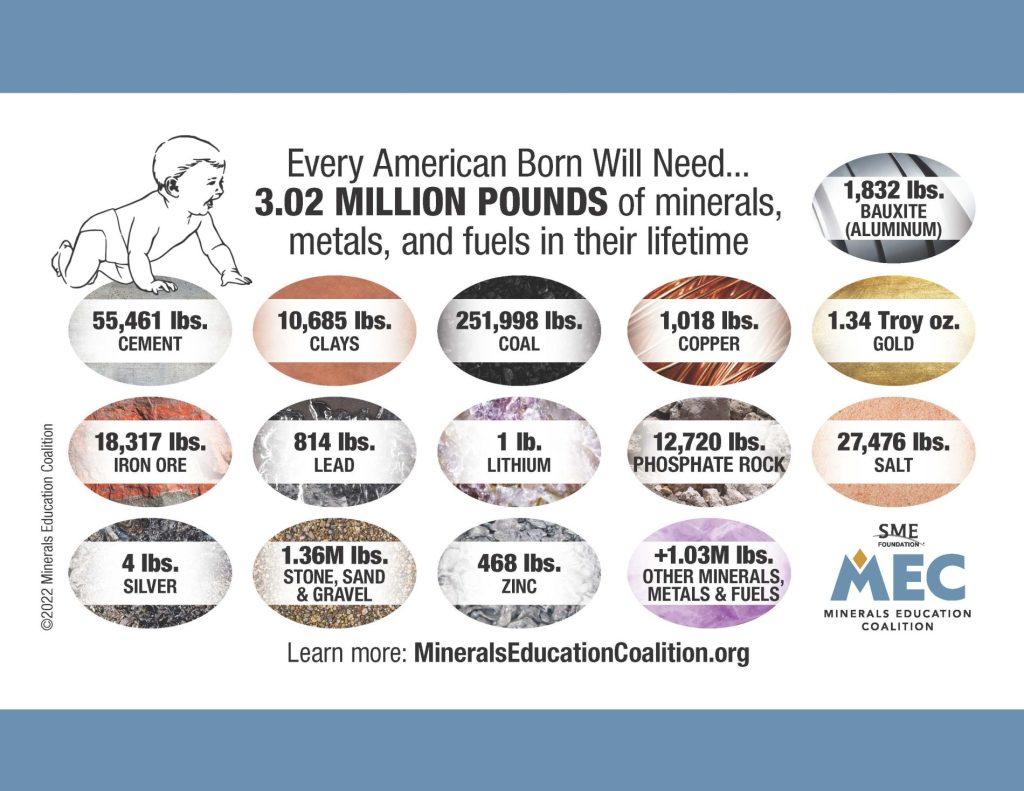
Transparency and Accountability: Investors, communities, and other stakeholders are increasingly demanding transparency from mining companies regarding their ESG practices. Companies need robust reporting systems and accountable governance structures to demonstrate their commitment to sustainability. But ultimately, the narrative needs to change from one of villainy towards an understand that ‘minerals are life’ and each human life requires a certain base-amount of minerals to be extracted in order to sustain that life.
Regulations and Licensing: Governments are implementing stricter regulations to ensure responsible mining practices. Companies need to comply with these regulations and actively participate in shaping responsible mining policies. But more importantly, the regulatory agencies need to provide a clear path forward for companies and investors alike towards achieving extraction of the sorely needed mineral resources.
ESG and the Electrification Transition:
Responsible Sourcing: As demand for battery minerals like lithium, cobalt, and nickel increases, ensuring their responsible sourcing is crucial. Other minerals such as uranium, copper, silver, REEs, and many others will have a part to play in the coming dance for mineral extraction. Companies need to partner with suppliers who adhere to high ESG standards throughout the supply chain. And mid-stream processing and enrichment of extracted minerals need to feed the manufacturing industries on the self-same soil that the minerals were extracted. At this time, most raw material processes needs to circumnavigate the globe before it can be used to make anything.
Social License to Operate: Communities and stakeholders are becoming more vocal about the social and environmental impacts of mining. Companies that fail to uphold ESG standards risk losing their social license to operate, hindering their ability to access critical resources. However, the segmented nature of various mining activties divorce the outcry from the ability to impact the end product. In other words, it is nice to decry mining’s ill from the USA while having no direct impact on mining’s impact within China where these criticisms fall on deaf ears and have no real impact. After all, these are completely different nations.
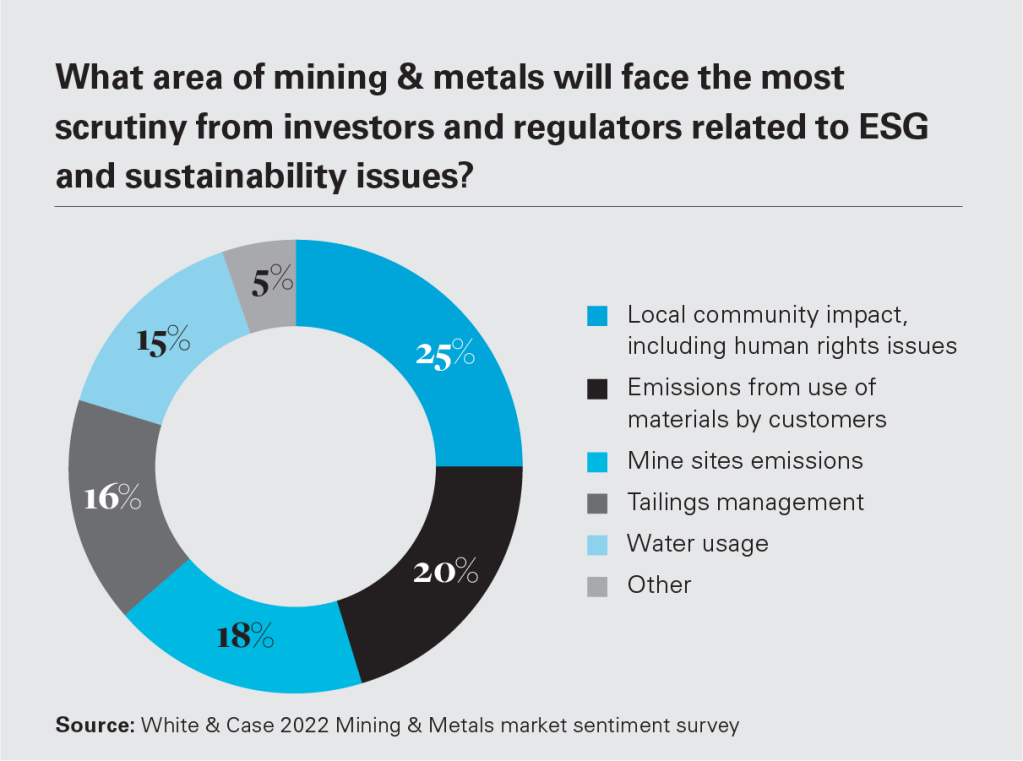
Investor Scrutiny: Investors are increasingly integrating ESG factors into their investment decisions. Companies with strong ESG practices are likely to attract more investment and have a lower cost of capital. But even after nominally identifying the correct company, jurisdiction, or geologic setting, the regulatory hurdles to opening the doors at any “perfect mine” are still quite high and flanked by obstructionist NGOs that care little for the environment they claim to protect and more about the misguided, out-dated narrative they continue to espouse.
In Conclusion: ESG considerations are no longer optional for mineral exploration companies in the electrification transition. But understanding the challenges that mining companies face in this tumultuous terrain needs to be taken into consideration as well. By prioritizing responsible practices, companies can mitigate risks, secure community support, attract investors, and contribute to a sustainable future for the industry and the planet.
Current estimates might have humanity’s control of fire dating to nearly 1 million years ago. Carbon combustion, in all its various forms and sophistications, is still our main energy source today. The car you drive today, with all its bells and whistles, is still, quite simply, a very sophisticated campfire. And it is this burning of carbon-based fuel that seems to have run its course of usefulness, or more importantly its welcome… as we wrestle with climate change and the need to reduce CO2 in the atmosphere. Within this context, uranium and nuclear energy have the ability to give humanity a new fire, a new energy source… and one that is free from the carbon-cycle.
Uranium might have started its time with humanity in infamy, but its usefulness as a dense fuel source will redeem itself in due time. 1,000,000 : 1 is the ratio of energy per unit of uranium to unit of carbon-based fuel sources. For every unit of coal, natural gas, or petroleum it takes 1,000,000 more units of that fuel to equal just one unit of uranium. This math will win out all cost/benefit analysis thought experiments thrown at it. It is a monumental, gigantic, herculean (even) orders of magnitude greater fuel source than all carbon-based fuel and it is clean as well.
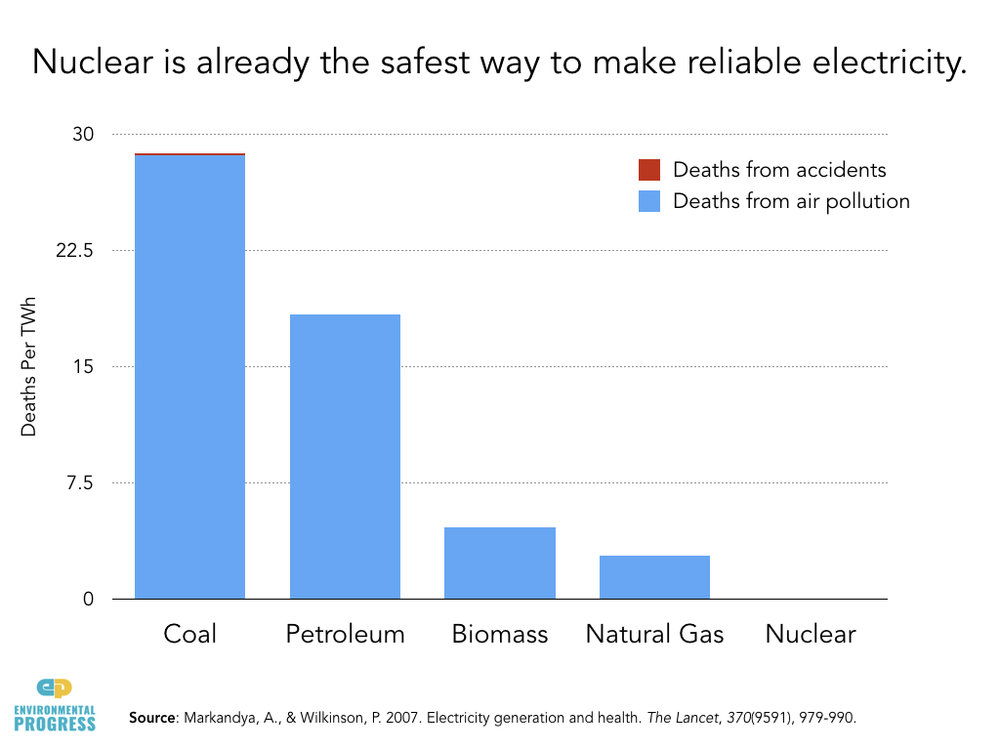
Nuclear energy is the cleanest form of baseload power that we already utilize as a reliable source of energy. Here in the US there is a fleet of 120 reactors that have been quietly producing 20% of our nation’s baseload power for decades. It is clean not only because it is carbon-free, but it also contains 100% of all its waste products within the reactor and this material can be stored safely long-term. The same cannot be said for coal-fired power plants that continually release not only CO2 into the atmosphere but many other toxins, volatiles, and yes, even naturally occurring uranium and other radioactive elements are emitted from coal-fired power plants.
This is not an unknown statistic for those that study these effects on the human population. In this regard it would be safer to live next to a nuclear power plant than to live next to a conventional, coal-fired power plant, where deaths are accounted for by the tera-watt per hour. In fact, by contrast, those living next to a nuclear power plant would receive their equivalent annual dose of radiation from that power plant by simply eating a banana (which has Potassium-40 in it, did you know?)
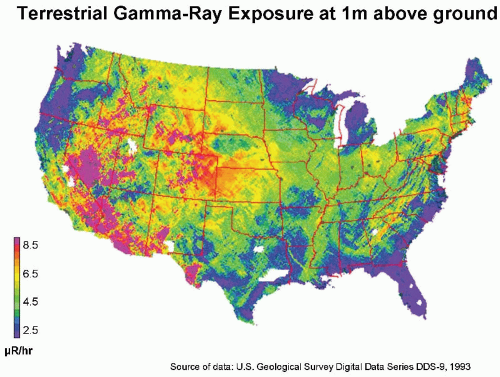
Ionizing radiation needs to be respected not feared. Radiation dose needs to be understood not irrationally demonized. And NORM (naturally occurring radioactive material) needs to be normalized, since anyone living in the Western US quite literally live atop ground that emits gamma radiation everyday. The uranium and its daughter products, that make up the majority of all radioactive isotopes, have been with us for millennia and will continue to be here long after we’ve decided to educate ourselves about it or not.
It is in our geology, our bones, and in our environment… down to a certain parts per billion in sea water. And it can be mined cleanly here in the US and processed to be put into modern, small modular reactors that address previous design short-comings to ensure 100% safe power for our future. These deposits come in many forms but most can be traced back to a granitic or volcanic source within the basement rock of the continent we live.
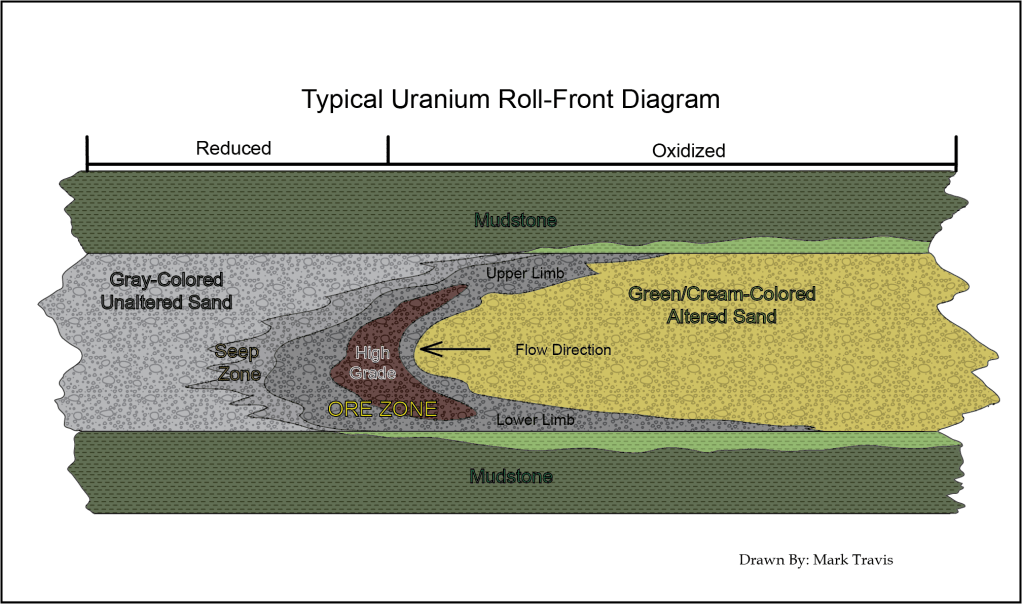
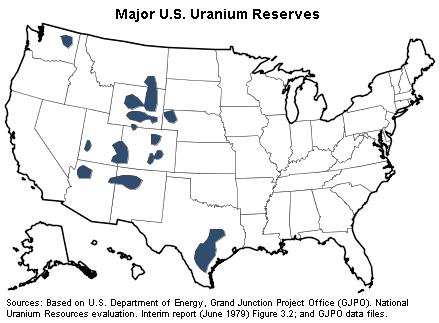
The most abundant source of uranium that is currently mined within the US is called “roll-front” uranium. These deposits occur in aquifers and fluvial sandstones beneath your feet in places like Central Wyoming and South Texas. You’ve probably driven by the “mines” that produce these ore bodies, but you probably wouldn’t have noticed. The in-situ mining method doesn’t move any dirt, it is a well field of injection and collection wells that add oxygen to the reduced aquifer environment to mobilize the uranium.
Roll-fronts were first called “geochemical” fronts, referring to the redox boundary within the aquifer that defines them. A roll-front uranium ore body is quite simply where the uranium found naturally within the aquifer drops out of solution due to a reducing environment. In cross-section the system is a “C-shape” due to natural permeability found within the middle of a fluvial sandstone, where the aquifer is able to ‘push’ the roll-front further into the reducing side. The lower and upper limbs (or the “tails”) of the roll-front are where the permeability decreased due to a facies change from fluvial sands to perhaps a mudstone, siltstone, or shale.
Between the 1950’s and 1980’s uranium production came from numerous mines in the Western US and supplied fuel for baseload power for decades. But these reserves have dwindled and new production will be needed to power the nuclear reactor fleet already in use. But what will happen as we continue to transition away from carbon-based fuel. Renewables will only be able to replace coal-fired power plants so far. In fact, renewable energy within the current energy mix can’t replace coal-fired power plants.
The future of energy production, transportation, and the electrification of our world requires an “all-of-the-above” energy mix. And uranium is a key component to that energy mix and should be considered as a ‘critical’ mineral (though it is not currently listed as such by the USGS). All of the elements required to implement the transition for the energy and transportation sectors need to be part of that list and we need to exploit each one of those resources that are found within our borders. Uranium, gold, silver, lithium, REEs, PGEs, base-metals (Cu, Co, Zn, Sn, etc.) will all be required to make the electrification transition a reality. And all of these elements are found right here in the US where domestic production of these minerals is not only possible but needed for our economic and energy security.
There is a global shift to the domestic production of minerals. This is happening across the world and is having ripple effects both up stream and down stream in this forward looking economy. It might seem somewhat backward to look inward for stable economic pillars for the global economy. But I might argue the opposite in the face of the ESG (economic social governance) paradigm we, as a species, seem to be self-implementing in this post-pandemic world. It is a natural step to draw from domestic natural resources, should we want to have a greater say in how those resources are produced. It might be the hallmark of the Dotcom boom that most of the materials that built it came from a supply chain wholly opaque to the consumer. And perhaps that system was built with the exact purpose of keeping such machinations obscured from the public eye. Nonetheless, it is perhaps an outdated mode given the current global climate. Imagine the backlash in today’s global economy. Imagine if all companies adhered closely to the transparent ESG paradigm.
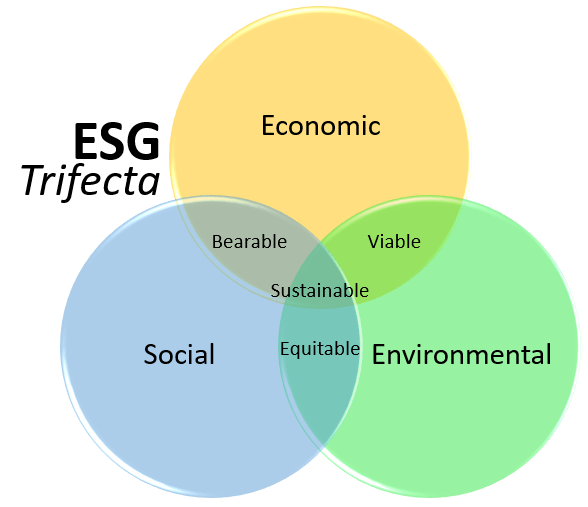
As a quick re-cap, the Environmental/Social/Governance paradigm is a global movement for business to be conducted in a transparent way that responds to the socially responsible investor. But in reality it is a current day risk mitigation that takes into account “non-financial” factors when assessing sustainability. In a mineral industry context, the days of a mine’s sustainability equaling its mineral resource or mine life is long past. In truth, this reality has been long-coming and began decades ago here in the U.S. with NEPA (National Environmental Policy Act, 1970). While NEPA is a laudable step towards sustainability, it’s main problem is it’s scope; it only affected the U.S. In short, NEPA was one step forward, two steps back for domestic production of minerals here in the U.S. While the U.S. implemented what is known today as the “NEPA process” other jurisdictions, such as China or Russia, continued business as usual. In this way, the U.S. has continually become less a producer and more a consumer, not only when it comes to mining but across all sectors.
Why does this shift matter? And how could this global transparency and awareness bolster a budding domestic mineral industry? In a way, the ESG paradigm could be harnessed to level the playing field between the un-regulated, “Wild West” mineral producers and the well-regulated non-producers.
We stand at a crossroads. Should the U.S. source it’s resource needs from within or continue to push the social/environmental liability elsewhere? If COVID taught us anything, global supply chains can be swiftly eroded and being self-reliant, even within an ever-expanding global economy, will pay dividends. And in the context of the socially responsible investor & ESG, we should all be able to pull the veil back and see exactly how the sausage is made.
In the Kingdom of Saudi Arabia, as part of their Vision 2030 initiative, they are pivoting towards a future that is diversified to include domestic production of green metals, energy metals, and other precious & base metals production. The Kingdom is most obviously known for its hydrocarbon production, but there is a long history of gold and copper production as well. The Arabian Shield is geologically very old and host to untold riches that have yet to be exploited. In fact, the USGS during the 1950s thru 70s had numerous field mapping campaigns to try and encapsulate these resources outside of the scope of oil & gas.
If a key player within the supply of current fuels has the wherewithal to begin to pivot towards the future, surely the U.S. can find the backbone to do the same. But there is one question that would need to be answered before that could happen: Can we reconcile the fact that, in order to build the green future of the electrification transition, we will need to mine minerals? Current policy from the Biden administration seems keen to promote domestic production of minerals but actual investment from the Dept of Defense is looking beyond our borders to non-domestic mineral resources. This is quite discouraging given the vast endowment of natural resources the U.S. already has within its borders.
I’ve seen this bumper sticker, found in many a mining town, that goes something like: “If it’s not grown… it’s mined.” There’s nothing like some bumper sticker wisdom to solve any problem, right? Seriously though, this might seem like an over simplification of a complex problem, but is it? Resources, by their very definition, are something that must needs be exploited. Now. This exploitation can be done ethically, with all stakeholders at the table, or we can continue to allow other countries to do our dirty work for us. In short, if we don’t mine it cleanly (per our own NEPA regulations) then someone else will mine it however they see fit (without regulatory oversight, most likely). To be honest, unregulated mining is the most profitable (for the mining company)… that’s why it was done that way historically. So then, what is the point of ESG (or any set of standards, for that matter) if we are not all playing by the same rules?
The domestic production of minerals (aka, mining) is ultimately the logical conclusion of the green energy thought experiment. Don’t shoot the messenger when you find out that in order to transition away from carbon you will need to invite some other elements to the party. As Hunter S. Thompson encapsulated so eloquently, “Buy the Ticket… Take the Ride!” If the goal is to electrify our energy and transportation sector by means of transitioning away from carbon sources of fuel, then the only alternative is a suite of other elements/minerals. These minerals have be enumerated in the critical minerals list put out by the USGS. And here is the good news: all of the elements found on the critical minerals list can be found here within the U.S.
It’s no secret to those who’ve been paying attention. Minerals equal life. And in order to produce said minerals, they must be mined. The only true debate left is when, where, and how. When will we start to mine these minerals that are required to move forward? Where will we decide to mine these minerals so we can have a say in how they are produced? And how will we do so in an ethical, socially responsible, and sustainable way?
It’s not a giant feat by any stretch. Many of these questions can be answered by visiting your local phosphate, lithium, copper, or gold & silver mine found thought out the Western U.S. They have been quietly producing these vital minerals for decades. The problem now, of course, is there are precious few of them opening up anew. Many of these deposits have a long, battle-worn history of achieving the hard-won state of “in production,” and perhaps rightly so. But it’s it about time we found a more cooperative solution to guiding the mineral producer through the NEPA process and onto actual mineral production. I can see more opportunities to help the miner and the conservationist alike through cooperative permitting. But that sort of “kumbaya” moment doesn’t make for sexy headlines for the 24 hour media cycle to sell. And few environmental activist firms would be able to set up shop with that kind of business model.
Dating to 1865, this historic silver camp in the geographic center of the Silver State has an interesting history and continued interest in today’s silver mining legacy. Within the context of current electrification efforts, it is important to secure domestic silver production for the transition of the energy and transportation sectors. Silver’s single largest industrial consumer is photo-voltaic solar panels, raking in a total of 11% of annual silver supply. The Silver Institute estimates this figure could rise to 50% in the coming years.
Nevada will have a big role to play in mining domestic sources of critical minerals, and among those minerals critical to the transition is silver. Nevada has numerous historic and producing silver districts. Many of these precious metals systems can become metal-dominant to either gold or silver. Historically, the silver-dominant systems have been overlooked by the gold explorationist. So in a counter-intuitive way there is more silver to be exploited within the Silver State than ever before.
Archway doors of a historic bank building in Belmont, NV
Belmont is located 45 miles Northeast of Tonopah, NV in northern Nye County. It is located on the Southeastern flank of the Toquima Range of central Nevada; located 20 miles Southeast of Round Mountain gold mine. The historic mining district is centered within some Private Patented mining claims from the original mining in the late 1800’s.
There are 10 precious metal deposits across complex geology along the Northumberland – Tonopah Silver-Gold Belt. This Belt runs Northeast from Tonopah in the south to Manhattan, Round Mountain, and Northumberland mines in the North. Within this trend there are both gold and Silver-dominant systems that are hosted within both Tertiary volcanics and Paleozoic sediments.
Historic Belmont Courthouse served as Nye Co. seat from 1867 until 1905
There still stands today, the original Nye County seat courthouse in the middle of town at Belmont, NV. Established as the county seat in 1867, Belmont served that role for the county until 1905 when Tonopah was gathering more than a little attention. There are still several surviving store fronts and original buildings within Belmont town site today, such as the archways of an old bank building that you pass on your traverse thru town on NV State Route 82.
The Belmont silver mining district is attributed with 20 years of original production from 1865 thru 1885. This was during the height of the Nevada Silver Rush within such famed districts as the Comstock in Virginina City, NV. Other names for the Belmont district were: Philadelphia, Silver Bend, Barcelona, & Spanish Belt. It is commonly confused with the Belmont mine and mine-fire in Tonopah, NV. As is common in mining culture, successful names get re-used in other districts, such as the well-known name of ‘Belmont’ by the time Tonopah was coming on line after the turn of the century.
Original Caterpillar Model 20
There are various reports that publish estimated silver production numbers anywhere from $4 million to $15 million (citing Kral, 1951 & Lincoln, 1923, respectively). Ore was reportedly produced at $80 per ton and grades of 25 ounces per ton. With these numbers we can calculate the estimated amount of mined silver ounces between 1.5 and 4.7 million ounces. Considering that these numbers come from primitive underground drift and stope mining methods it is impressive nonetheless as this represents at least 50 tons of mine muck per day stretched over 20 years.
Monitor-Belmont Mining Co.’s Highbridge Flotation Mill, built around 1914
Continued interest over time saw revitalization of the Belmont district since first mining. The Monitor-Belmont Mining Co. built a 20 stamp flotation mill on the site of the old Highbridge Mill. Purportedly, these same bricks were used in the original mill or stolen from surrounding mill ruins such as the Combination Mill located closer to Belmont town site. Again in the 1960’s, Summa Corp., a subsidiary of Howard Hughes, backed exploration and sampling efforts at Belmont. Followed up by with a heap leach facility ran in the 1980’s to treat old mine dumps.
Until the 1860’s, silver was at a set price of $1.29 per ounce due to the Mint Act of 1792. At this time, the US was on a bimetallic monetary system that backed the dollar against both gold and silver. Civil War debt was the orginal stressor that saw silver price nearly triple within a short period of time. Even before this price spike there was a fair amount of gold and silver interest and mining within Nevada such as the Comstock. Several governmental policies successively undermined and drove down the price of silver such as the Coinage Act of 1873 that effectively demonetized silver. Followed up by the Sherman Act of 1890, that saw buying and minting of silver to the Federal government resulting in the Panic of 1893. And then the final nail in the coffin, the Gold Standard Act of 1900 where gold became the sole monetary precious metal.
There was a brief-lived rebound in silver price during war-time again with war debt from World War I. At Belmont, this saw the building of the new Highbridge mill and brought electicity in from Manhattan, NV to help dewater the old underground workings. Even still, the renewed effort was short-lived as silver price continued its slump until its nadir during the Great Depression. The first US-led effort that helped silver price was the Bretton Woods agreement of 1944, where President Franklin Roosevelt signed with other european nations to set the dollar as the world’s reserve currency, backed by gold. Gold price was set at $35 per ounce for this agreement, which was a devaluation of the metal by 70% at the time.
Historic Silver Price Chart
Several Nixon Era policies completely dissolved the Gold Standard and decoupled gold from backing the dollar. So by the time the Hunt Bros. caused a run on physical silver bullion in 1979, silver was long overdue a significant price increase and re-valuation. If you adjust for inflation, the silver price set during the Hunt Bros time is nearly $45 per ounce. This throughline of history for silver price can be seen through the lens of the Belmont silver district with it’s own ups and downs.
In the context of Belmont history some key take-aways can be summarized thus; producing years coincide with the Nevada Silver Rush, it was the Nye County seat from 1867 until 1905, the district mined in decline, constantly chasing down a declining silver price, the district was forced to mine more narrow & high-grade each subsequent year, all while using primitive mining methods with simple tools and manual labor.
USGS Topo Map for the Belmont District area (sections are one square mile)
The physical town site of Belmont is located Northwest of the mining district by about a mile or more. Some mill sites were located in Belmont itself, but most of the larger scale mills and all underground workings and mining occured in the main part of the district Southeast of the town. Geographically, the Belmont mining district runs along a North-South set of hills that defines the line between Ralston and Monitor Valleys. There are numerous adits, shafts, declines, and associated dumps and tails thru out the district. Additionally, there are several old stone-built cabins that presumably prospectors lived out of during mining or perhaps before the town of Belmont got fully established.
District Geology (Sections 25 & 36)
District geology consists of Cretaceous Granite and Paleozoic strata along a structurally complex axis bewteen two larger mountain ranges. The Belmont Pluton is the name of the Cretaceous Granite that lies in the Southwest of the Belmont District. This pluton underlies the Paleozoic carbonates, argillites, and quartzite of Ordovician age. These sedimentary rocks dip East to Northeast into Monitor Valley on the Southeast flank of the Toquima Range. In addition to complex structure, involving both thrust faults and basin & range normal faulting, the Belmont Pluton has associated contact metamorphism with the Paleozoic strata. Throughout the district can be found aplitic dikes and sills as well as base-metal porphyritic alteration in the southern end of the district.
The vein mineralization style at Belmont is a silver, lead, zinc quartz vein system. Other metals associated with the system is copper, antimony, and bismuth. Two historic vein trends extend North-South thru-out the district separated by about 1,000′ (1 kilometer). The Highbridge/Transylvania vein system is on the East side of the district, whereas the Arizona/Eldorado vein system sits on the West side of the district. Historic workings have relatively shallow workings in the North with progressively deeper workings going South. Presumably this progression correlates relative to time, with the earliest diggings in the North and the youngest shaft and headframe in the South (still “standing” today) that reaches 1,000′ (1 kilometer) deep into the earth. Initial mining focused on the supergene enriched silver ores found near surface. Vein width within the quartz vein system varied from 2 feet up to 30 feet wide.
Many of the quartz veins and “pay zones” were found in fault gouge parallel with the vein system. The syn-bedding structures and veining dip shallow to steep across the district from West to East. There is right-lateral vein offset along East-West striking faults, presumably youngest. This youngest set of faulting would most likely be associated with regional Walker Lane tectonic motion. Recent mapping in the district suggests that there could be isoclinal folding of the Paleozoic strata, especially on the Eastern side along the Highbridge/Transylvania vein system. The recent mapping also confirmed base-metal porphyry alteration in the south end. However, copper mineralization can be found along with quartz veins throughout the district.
Cerargyrite in core sample that ran 440 grams per ton Ag
The silver-bearing quartz veining carries silver chlorides such as cerargyrite. Sulfide, pyrite, and arsenopyrite along with other lead or zinc minerals are found throughout the system. One refractory copper mineral, Covelllite, was found in recent core drilling.
Nevada Silver Corp. conducted exploration work at the Belmont project area including: IP/Res geophysical survey, geologic & structural mapping, initial exploratory core drilling, and surface sampling. The IP survey identified twenty-four discreet targets across the project area. Mapping identified the vein system footprint and favorable geology. The first-pass drilling completed six core holes with an average depth of 550′ (180 meters). And the surface sampling collected 40 plus samples from old workings, dumps, vein outcrops, and open cuts.
IP/Res Survey voxelation brought into Leapfrog Geo with Targets (in red)
The IP/Res survey was collected on seven lines spaced 200 meters apart. The survey identified a potential zonation of altertion or differing host rocks. The twenty-four targets were chosen from the interplaying anomalies across the survey. The survey helped to highlight the vein systems at depth and the breadth of the mineralizing system.
The surface geologic & structural mapping included lithologic units such as: limestone, siltstone, sandstone, shale/schist, quartzite, as well as aplitic dikes and granite. The mapping includes detailed structural data for use to unravel the complex structural story. All of this information was brought into 3D modeling software to digitize the mapping, highlight the fault and vein trends, integrate with IP survey data, and visualize the system in 3D and at depth.
The recent exploration drilling is unwittingly the first exploratory core drilling completed on the property. All previous exploration was during original prospecting and mining efforts in the 1860’s, prior to any modern-style drilling or exploration. This was the first half dozen core holes to test ground that has seen an estimated 5 million ounces of silver produced within a precious metals belt (Northumberland – Tonopah Ag-Au Belt) that has nearby silver deposits of 50 million ounces or more.
Drilling results, logging, and assays posted in Leapfrog along with fault modeling and surface mapping
All drilling utilized private patented ground wherever possible and each hole was designed to intercept the vein system or IP survey target across a two square-kilometer area. The average dept of each hole was 550′ (180 meters), generally drilling West with a moderately steep dip to cross-cut the lithologic units. The entire hole, after logging, was sent to an assay lab for analysis. Each hole came back with silver mineralization. Two holes encountered bonanza grades at shallow depths (holes BS-22_002 & 003). Hole BS-22_003, located along the Highbridge vein system encountered silver mineralization from 0′ to 150′ deep at 28 grams per ton silver with 25′ of 90 grams per ton therein. Hole BS-22_002, located along the Transylvania vein system, encountered 20′ of 107 grams per ton silver with a high-grade core of 440 grams per ton silver at only 90′ deep.
In addition to the geophysics, detailed mapping, and core drilling program, there was also some surface sampling completed as well. The surface sampling effort makes up 40+ samples from vein outcrop, old mine dumps & tails, plus open cuts. About 25% of the samples came back with bonanza style silver mineralization. One sample in particular assayed to 1,061 ppm Ag (or nearly 35 ounces per ton silver). These results confirms the silver-dominant system with a base-metal signature. The bonanza grades also confirm the historic production reports that cited a grade of 25 ounce per ton.
In all, the recent exploration results at Belmont have been positive. Initial drilling has yielded positive results. The IP survey and mapping have illustrated a complex but favorable mineralizing system. Interpretation of drill results in 3D have put things in context such that follow-up targets can be developed going forward. In the coming years this old district could see a revitalization and reevaluation of the true size and scale of the silver-dominant metal system in place.
“Sleepy” Headframe at southern end of district above 1,000′ deep shaft
Leading up until the 1860’s silver had a set price, about $1.29 per ounce. And it had stayed that price since 1792 with the inception of the Mint Act. What changed in the 1860’s to bring about the first drastic price change? And what effect did that change have on the Western US?
Silver Price – keys events in the last one and a half century
Historically speaking, the price of precious metals has been a currency base and set price by the government. Of course, until Nixon fianlly floated the dollar and removed the gold standard altogether in the early 1970’s. But that is later on in the story, so let’s rewind to the start again.
The first significant change in silver price after setting it’s price with the Mint Act at $1.29/ounce was the US Civil War. The debt from war drove the price of silver up. In tandem with this was budding silver mining in Nevada, which became a state at the same time that the Comstock Lode in Virginia City was taking off. Seemingly over night, silver price had tripled ($2.94/ounce) and supergene silver ores in Nevada were ripe for the picking. Not only did Virginia City take off at this time but other towns such as Belmont, Eureka, and Austin in Central Nevada were getting their start during this era as well.
The bimetallic monetary system from the 1792 Mint Act began to unravel with Coinage Act of 1873 which effectively de-monetized silver. This in turn created weakness in demand and with increased silver production in the Comstock and elsewhere throughout Nevada this led to a steady declining price. Still more government policy, in the Sherman Silver Act of 1890, attempted to correct for a price that had dipped below its previous fiat of $1.29/ounce thru the purchase of silver and minting of coins. However, this policy ultimately resulted in the Panic of 1893.
The complete abandonment of silver within a bimetallic monetary system came about thru the Gold Standard Act of 1900. Gold became the sole precious metal where paper notes could be exchanged for gold on demand. Thus, silver continued its decline in price lasting nearly until the end of WWII but seeing a nadir during the Great Depression.
One noteworthy price rebound was a brief spike centered around the war debt from World War 1. During this time the Monitor Belmont Mining Company built a flotation mill on the site of the orginal Highbridge Mill at Belmont, NV (circa 1915). This brief episode capitalized on the price rebound of silver and reprocessed some of the old mine dumps as well as dewatered some old mine level for additional underground mining efforts.
Monitor-Belmont Mill, Belmont, NV (built 1915 on site of original Highbridge Mill)
The turning point for silver came about thru the Bretton Woods agreement in 1944, where countries adopted the dollar as the world’s reserve currency backed by gold, which was set at $35/ounce by FDR (a devaluation of the metal by 70% at that time). Again, throughout Nevada there was a brief lived interest in silver district such as Belmont, Tonopah, Austin, and Eureka during this war time era.
Interestingly enough, the majority of the silver mining that put Nevada, “the Silver State”, on the map, came from the period of time when silver price was at historic lows. Aside from the initial spike in price due to the Civil War, silver mining was continually chasing down a declining silver price until the Great Depression. Any and all silver mines and deposits from that time would have suffered from a continual need to mine more and more high grade ores. This continual pressure would have driven many out of business and forced many to leave much that is economic today still in place.
By the time Nixon completely dissolved the Gold Standard in the early 1970’s, silver had already benefited from several decades of rebound. So by the time the Hunt Brothers caused a run on physical silver bullion by 1979 we still haven’t seen its equal. When you adjust for inflation, peak silver price in 1979 is nearly $42/ounce in today’s money.
So it would seem that silver has seen a long-lived macro bull market from its nadir in Great Depression era. And this would be true at face value except for one important fact. Silver’s base price of $1.29/ounce, when adjusted for inflation, is closer to $6/ounce in today’s money. This means that since the end of the Civil War until the end of the Gold Standard was simply one big silbver price trough. And realistically, in today’s electrification future since the Dot Com era and now with solar panels and EVs becoming so much more prevalent, we are finally in an era where a) the government is not price fixing silver’s value and b) the industrial worth of the metal can be freely expressed in terms of it’s value outside of a monetary system.
Additionally, silver is mined moreso as a byproduct theses days; chiefly from gold mines that aren’t mining for the white-colored metal. In the Silver State there are several abandoned silver-dominant districts that has been entirely overlooked by gold exploration companies time and again. And as I’ve written in a previous article, these silver-dominant systems could also be an excellent source for other critical minerals.
Below are some charts for reference with links to the source of this data. Each chart is logrithmic and inflation adjusted with recessions marked out in grey. These are 100 year charts, so they don’t reach as far back as my original data set above, but they tell the story nonetheless.
The US has a challenge to face: balancing regulatory oversight with mineral needs and the ability to realize those needs in our backyard.
The US has ample critical minerals, precious metals, base metals, and other natural resources needed for the electrification of the energy and transportation sectors. The US also has robust regulatory oversight and a permitting process (NEPA) that, in theory, should provide a predictable, timely path for a deposit to become a mineral asset for the electrification transition. This is, of course, based on the assumption/need to decarbonize the energy and transportation sectors. In this light, it is a potentially bi-partisan, progressive issue that could provide many collaborative ‘win-wins’. However, in reality this has failed to play out.
The mineral industry across the US has experienced, instead, a protracted permitting process troubled with last-minute changes, litigation, and back-tracking of previously made decisions. This is unsustainable within an industry that already endures a 10 year permitting process whereas other nations with similar environmental laws are seeing this done in a 2 – 3 year window. Current worse case scenarios are seeing permits taking 15+ years with hundreds of millions of dollars spent to only have it all taken away with last-minute, frivilous litigation and back-tracking.
Recently, the US military has been looking to invest in Canadian mining projects, banking on the fact that US permits are more risky than investing in “friendly” neighboring countries. US tax payers are seeing their tax revenue spent to bolster other nation’s mineral wealth. It would be better to keep that money here locally and invest in our own home-grown natural resources. It is a true indictment of our US permitting process when the US military is strategically investing across the border instead of on our own soil.
How can we find common ground and opportunites to mutually benefit from critical mineral production?
Current legislation, such as the Infrastructure Law, CHIPs and Science Act, & the Inflation Reduction Act, are collectively providing $135 billion to build the US electric vehicle future, including critical mineral sourcing and processing and battery manufacturing. And most recently, on October 19th, the White House announced $2.8 billion in grants for domestic critical mineral projects.
So, there is money available, but will mineral projects be able to capitalize on these opportunities in time? There is money available, but will that money actually reach the ground where it is needed? Only time will tell as more often than not the exploration and mineral sector is subject to the whims of one political administration to the next and the already cyclical nature of the sector also has to pay attention to the 4 year election cycle as well.
Nonetheless, the NEPA process already has some baked-in streamlining with MOUs between key federal agencies that in theory provide for non-duplicative work when reviewing a permit. But this is not always followed or policed by a lead agency. And this isn’t helped either by the venture capital markets that tend to bring in outside money from Australia and Canada into the Western US. There are few and far between US-based mining companies and even less of these companies are actively exploring for the next generation’s mineral wealth.
This is a long-term, systemic problem that comes from a simple truth about the mineral industry: a single deposit will be owned by, explored by, & peddled by numerous companies over numerous cycles before it may ever see actual production. These mineral deposits have to run the gaunlet of economic cycles, political cycles, commodity-needs cycles (one cycle’s trash is the next cycle’s treasure), as well as benefit from sound exploration geology to expand upon known mineralization. It doesn’t help if on top of all these systemic challenges the permitting process has become increasingly mired in special interest and unpredictability.
Is it time to play the long-game like China?
Our global competition for these minerals and the ability to process them and make a useful end product is very stiff. China has out-paced and out-performed the US at every turn, all while we continue to be grossly reliant on their mining and manufacturing prowess. We are a consumer nation with little production to call our own. How will we fare if relationships abroad continue to sour? Where will we turn for our resources if we haven’t invested in our own backyard?
China is able to play the long game. They can see the long-term worth in something, take a loss on the project for years, in order to realize long-term gains decades from when they began the project. Where is our will as a nation to come together on such projects? This sort of longview is impossible if we can only plan as far as the next election cycle.
Setting these myriad global/political issues aside we need to come together as an industry, as a nation, and as a people to find common ground between ideological difference. The US can truly benefit from sourcing our mineral needs from within our borders. And no one need lose out in the process. We have the resources, the regulations, and the self-determinating spirit. If we stopped wasteful in-fighting and educated ourselves and the public about our home-grown natural resources we could realize true wealth here in the US.