For years, many of us in exploration, energy, and policy circles have been voicing the same refrain:
America must rediscover its backbone — the one forged in ore and energy, refined by industry, and animated by purpose.
We’ve written about it, spoken at conferences, and fought uphill battles in permitting offices. Now, a trillion and a half dollars later, that whisper from the pit, the drill pad, and the assay lab has finally reached the marble halls of finance.
JPMorgan Chase’s new “Security & Resiliency Initiative” — a $1.5 trillion investment framework — reads like a checklist of every structural challenge we’ve named:
Supply chains fractured by foreign dependence
Permitting regimes tangled in red tape
Hollowed-out refining and manufacturing capacity
A cultural hesitation to act upon the Earth — to build, dig, and dare
And suddenly, the world’s largest bank says: We hear you.
II. From Policy Paralysis to Purposeful Action
This isn’t a boutique green fund or a PR stunt. It’s a re-industrialization mandate that explicitly includes:
Critical-mineral exploration and refining
Nuclear energy, solar power, and grid resilience
Advanced manufacturing and AI-enabled infrastructure
Policy advocacy to streamline permitting and remove regulatory friction
That last point stopped me cold. A global financial titan committing to advocate for permitting reform? That’s a tectonic shift.
For decades, investors have been content to fund consumption rather than creation. Now we’re seeing a return to first principles — to the idea that progress and stewardship can walk the same path. That responsible use of Earth’s materials is not desecration but devotion.
III. The Nuclear Note in the New Energy Symphony
Look closer and you’ll find nuclear listed among JPMorgan’s 27 “sub-areas of strategic investment.” This is no longer fringe. The same financiers that once fled uranium are now calling it resilient infrastructure.
As data centers bloom across the prairie and AI’s appetite for electrons deepens, the need for firm, clean, constant power grows existential. The atom — long maligned, long patient — is returning to the spotlight. And with it, the miners, geologists, and innovators who never stopped believing that the future still runs on fuel from the rocks beneath us.
IV. Refining the Future
JPMorgan’s plan isn’t just about what comes out of the ground — it’s about what we can build above it.
From copper smelters to rare-earth separation plants, from battery-metal recycling to magnet manufacturing, the initiative recognizes what explorers have always known: a resource has no power until it’s refined.
That’s not just metallurgy — that’s civilization in miniature. The same alchemy that turns rock into revenue also turns vision into reality.
V. The Political Ground Shifts
Equally seismic is the policy stance:
“The firm will advocate for research, development, permitting, procurement, and regulations conducive to growth.”
In other words: they’re joining the lobby to fix what’s broken. When Wall Street’s largest player begins echoing the same frustrations voiced by field geologists, operators, and regional coalitions, the ground has truly moved.
This could be the moment when private capital and public policy finally align — when we stop apologizing for production and start enabling it.
VI. A Renewal of Faith in Making
There’s a deeper current running through all this. For too long, the national conversation has treated use as something shameful — as if to touch the Earth is to harm it. But creation has always required contact.
Our machines, our reactors, our refineries — these are the hands of a species still learning how to shape wisely. To use with restraint. To build with reverence. That’s not exploitation — that’s participation in something vast, beautiful, and ongoing.
This new initiative, if it holds course, could mark the dawn of a renewed covenant between humanity and its home planet — one built on trust, purpose, and shared prosperity.
VII. The Road Ahead
There’s plenty left to prove. Capital can move mountains — or drown them in paperwork. But for now, this feels like the beginning of something worthy.
The miners, metallurgists, and mappers have always been the first to sense a change in the strata. And this feels like a fresh layer being laid down — one built of courage, collaboration, and the will to act.
Maybe the Earth has been whispering all along, and at last, the world’s largest bank stopped to listen.
“The age of apology must end. The age of awareness must begin.”
Civilization runs on minerals. Gold may glitter, but copper carries our current, uranium powers our grids, and rare earths anchor the very magnets that spin the world. Without them, the skyscrapers don’t rise, the phones don’t ring, and the servers that feed the cloud go dark. Mining is not just an industry; it is the bedrock upon which every other modern enterprise rests.
And yet, here we stand in 2025, after more than a decade of neglect. The global mining industry has starved its own “R&D department”—exploration. Budgets have been slashed, geologists retired without replacement, and entire districts left unmapped since the 1980s. Instead of planting seeds for the future, the sector has lived off old harvests, leaning on deposits discovered by the last great exploration wave of the 1960s–1990s.
It’s the equivalent of eating the seed corn to make it through winter. Yes, you may survive the lean season, but when spring arrives the fields are bare. The industry now faces a generational dilemma: demand is rising with electrification, AI-driven power consumption, and defense needs, but the pipeline of new discoveries is running dry.
The warning signs are already here. Grades are falling, permitting timelines stretch a decade or more, and the very talent pool of geologists—the human capital that finds ore before machines can mine it—is shrinking. The exploration torch is passing out, just as the world needs it most.
This is the seed corn problem: an industry that mistook austerity for efficiency, cost-cutting for strategy, and in doing so mortgaged its future.
Why Exploration Matters
Exploration is the ghost in the machine—the unseen force that keeps the gears of civilization turning. Mines are not infinite. Ore bodies deplete, grades decline, and production costs inevitably climb. Without a steady stream of new discoveries, the reserves that underpin our supply chains wither away.
When exploration falters, the ripple effects are immediate and profound:
Depletion at the source: Mature mines close or shift to lower-grade zones, requiring more energy, more water, and more waste rock for every ton of metal produced.
Fragile supply chains: Scarcity tightens the noose. Nations grow dependent on single suppliers or unstable jurisdictions, inviting shortages and geopolitical choke points.
Economic exposure: Industries that appear cutting-edge—AI, data centers, quantum computing, crypto, electric vehicles, wind turbines, solar panels—become castles built on sand, unsupported by the very raw materials that make them possible.
History proves the point. The U.S. uranium boom of the 1950s, the global porphyry copper discoveries of the 1960s and 1970s, and the Carlin Trend gold rush in Nevada all reshaped economies and societies. But each relied on bold, boots-on-the-ground exploration—and each took decades to bring from discovery to production. Without planting new seeds today, there will be no harvest tomorrow.
Exploration is not optional. It is the bedrock of resilience, the insurance policy against scarcity, and the quiet act of faith that there will still be metal in the mill when the world comes calling.
What Happened to the Juniors?
Once, junior explorers were the daring prospectors of capital markets. They were scrappy, nimble, and driven by geologists with calloused hands and big dreams—funded by retail investors and risk-tolerant funds who saw the outsized upside of a drill-bit discovery. They were the seed planters.
Today, they’re skeletal. The ecosystem that once sustained them has been hollowed out by a perfect storm of mistrust, market shifts, and changing appetites for risk.
Burned Trust (2011–2015): Billions vanished in the last gold cycle. Over-promises, bad geology, and outright scams poisoned the well. Investors fled, leaving legitimate juniors to starve alongside the frauds.
ETF Domination: Passive index funds became the new custodians of capital. They allocate by market cap, not by exploration potential. Drill holes don’t move the needle. The capital pool that once flowed freely into high-risk discovery stories has shrunk to a trickle.
Retail Drift: The everyday investor who once bought a thousand shares of a penny-stock explorer on a hunch now chases tech IPOs, cannabis booms, meme stocks, and crypto tokens. Rocks lost their shine in a world of instant returns and digital buzz.
Risk Aversion: Institutional capital demands cash flow, not speculation. Money flows to mid-tiers and majors who can produce quarterly results, not to juniors who burn cash in search of something that may not exist.
The result? An entire generation of junior companies reduced to husks—managing legacy properties, eking out survival on private placements, or vanishing altogether. Where once the TSX-Venture exchange was a bustling bazaar of discovery, it is now a thinly traded echo chamber.
The juniors are left begging for scraps. And without them, the pipeline of new discoveries—the very seed corn of the mining industry—runs dry.
Why the Majors Look Away
Big mining companies are not innocent bystanders in this drought of discovery. They’ve made a calculated choice—a choice that prioritizes quarterly comfort over generational security.
Dividends > Drills: Shareholders demand yield, not uncertainty. The likes of BHP, Rio Tinto, and Vale trumpet their dividend programs as proof of “discipline,” funneling billions back to investors instead of into the geologists who might find tomorrow’s ore bodies. The City of London and Bay Street cheer, but the exploration pipeline withers.
M&A Is Easier: Why risk the cost and uncertainty of greenfield exploration when you can let juniors shoulder the burden and then swoop in later? Barrick, Newmont, and Anglo American have built portfolios on acquisitions rather than discoveries, paying premiums for ounces once desperation sets in. This strategy works only as long as juniors exist—and today, even that seedbed is failing.
Permitting Pain: In the U.S., a new mine can take 10–15 years to permit. In Chile, Peru, and Argentina, political shifts and social unrest regularly derail development. Even Canada, once a paragon of mining stability, has bogged down in federal-provincial wrangling. To the majors, exploration feels like wasted effort if politics can veto production. Why drill if a discovery just becomes a stranded asset?
Artificial Scarcity: A tighter project pipeline props up higher commodity prices. For majors, scarcity is profitable—at least in the short run. Copper prices hold stronger when new supply is uncertain. Uranium equities rally when no new projects are breaking ground. But this “discipline” is short-sighted. Artificial scarcity enriches today’s balance sheets while mortgaging tomorrow’s grids.
The majors’ restraint looks like prudence, but in truth, it is systemic neglect. They have mistaken risk aversion for strategy. Instead of seeding the next generation of mines, they are cannibalizing the last generation’s discoveries, hoping someone else will do the dirty work of prospecting.
Yet “someone else” no longer exists. The juniors are starved, governments are paralyzed, and the majors have parked their drills. The system is eating itself.
The Timeline of Consequences
The story of exploration neglect is not abstract. It unfolds on a clock, with milestones as predictable as they are dire. Here’s what we will see in the coming year, 5 years, and 10 years if this pattern of neglect is allowed to continue:
📍 1 Year (2026): The Plateau(if this isn’t already the case)
Reserves continue to shrink across commodities—global copper reserves, for example, are already skewed toward lower-grade porphyries that cost twice as much to mine as their predecessors.
Senior geologists retire, taking with them decades of local knowledge about belts in Nevada, the Andes, and the African Copperbelt. Their field notebooks, often never digitized, gather dust in basements.
Once-vibrant districts—like northern Ontario’s greenstone belts or the Carlin Trend in Nevada—begin to lose their intellectual “muscle memory.” The living knowledge that connects old drill logs to new targets vanishes.
📍 5 Years (2030): The Gap
Project pipelines hollow out. The majors’ development schedules, already thin, collapse into a handful of advanced brownfield expansions.
Juniors consolidate into survival mergers or collapse outright, leaving only a skeletal handful of companies with active drills. The TSX-Venture—the historical cradle of global discovery—is reduced to a backwater of shell companies and recycled management teams.
Governments scramble to reverse decades of neglect: Washington floats “Critical Mineral Moonshots,” Brussels pushes exploration tax credits, Beijing doubles down on African offtake agreements. But the measures are too late. You cannot conjure ore bodies with subsidies once the drills have gone silent.
Supply deficits bite. Copper, lithium, and rare earths become the new oil shocks—triggering inflation, power rationing, and trade wars over who gets the last shipments.
📍10 Years (2035): The Ghost Tap
You cannot turn on a tap that isn’t connected to a pipeline. Mines take 10–20 years to permit and build. By 2035, the missing decade of exploration has come due.
Critical minerals are no longer market stories—they are national security flashpoints.
China leverages its dominance in rare earths to dictate terms in global trade.
The U.S. Defense Department stockpiles uranium and cobalt like Cold War-era oil.
Europe, unable to build batteries without imported lithium, faces rolling blackouts and stalled EV adoption.
Even record-high commodity prices won’t matter. A $15,000/t copper price or $200/lb uranium price won’t magically materialize new deposits. Discovery takes decades, and the decade has already been lost.
The result is a ghost system: idle smelters, shuttered gigafactories, and stalled wind and solar farms—technology stranded for want of the materials that should have been planted years before.
The Geopolitical Context
We are entering an era where geology is geopolitics. Control of the periodic table is now as decisive as control of sea lanes or satellite constellations.
China throttles rare earth exports, weaponizing its near-monopoly in magnets and battery materials. Its Belt and Road Initiative has already secured lithium and cobalt across Africa and South America.
Russia leans into resource nationalism, tying uranium exports and energy corridors to its foreign policy goals. Kazakhstan—producer of over 40% of the world’s uranium—sits in Moscow’s orbit.
India is no longer just a consumer but an aggressive competitor, racing to lock down lithium supplies in Argentina and rare earth projects in Australia.
The West risks becoming a permanent importer, dependent on rivals for the metals that power its grids, weapons, and economies.
This is not about abstract “market dynamics.” It is about whether democracies will control their own futures.
Without uranium, copper, lithium, and rare earth elements, there is no AI revolution, no data center backbone, no renewable transition, no electric vehicle fleet. Strip away the minerals, and the high-tech towers of modernity collapse like sandcastles in the tide.
And here lies the hard truth: exploration is the first act of sovereignty. Mines take 10–20 years to permit and build. If we do not plant seeds now, by the 2030s the United States and its allies will be paying whatever price Beijing or Moscow demands—or doing without altogether.
The call to action is clear:
Reinvest in exploration with the urgency of a Manhattan Project—geological surveys, public-private partnerships, and incentives that pull risk capital back into the field.
Build Western supply chains that can withstand geopolitical shocks, from Nevada lithium to Saskatchewan uranium to Australian rare earths.
Treat geology as strategy, not afterthought. The United States Geological Survey should be viewed with the same seriousness as the Pentagon, for both are guardians of national defense.
This is the rallying cry for the U.S. and its allies: sovereignty begins at the drill rig. Without exploration, there is no mining. Without mining, there is no economy. Without an economy built on secure foundations, there is no freedom to defend.
A Glimmer of Policy Reform
For all the gloom, there are sparks of recognition—early shoots that hint the field may not be barren forever.
FAST-41 Permitting Reform: Once a bureaucratic chokehold, permitting in the U.S. is showing signs of movement. The Federal Permitting Improvement Steering Council (FAST-41) is beginning to streamline timelines for “covered projects.” Uranium juniors like Anfield Energy with its Velvet-Wood mine in Utah, and EnCore Energy with Dewey-Burdock in South Dakota, have already secured wins under this process. What once looked like stranded assets are edging toward daylight.
Pentagon–MP Materials Partnership: The U.S. Department of Defense has invested directly in MP Materials’ Mountain Pass rare earth mine in California—hundreds of millions of dollars in contracts to secure separation and magnet manufacturing capacity on U.S. soil. This is no boutique project: MP Materials controls the only rare earth mine (of scale) in the U.S. and is ramping toward vertical integration that could anchor a Western supply chain.
Copper as a Keystone: Projects like Resolution Copper in Arizona—one of the largest undeveloped copper resources in the world—remain politically tangled, but their scale makes them unavoidable. If unlocked, Resolution alone could supply up to 25% of U.S. copper demand for decades.
Lithium Rising: The controversial but progressing Thacker Pass project in Nevada, and Ioneer’s Rhyolite Ridge, have secured federal loans and partnerships, positioning the U.S. as a serious player in lithium carbonate production. Thacker Pass, with more than $2 billion in projected investment, is not just a mine but a downstream refining hub in the making.
Downstream Momentum: Supply chains are finally catching political attention. From rare earth magnet plants in Texas to lithium hydroxide refineries in Nevada, the U.S. is beginning to invest not only in the rocks, but in the capacity to turn them into finished products. That is the true measure of sovereignty.
These reforms are encouraging, but they are still small strokes on a canvas that demands bold, sweeping lines. A handful of permitting wins and defense contracts are not a revolution. What’s needed is a scale-up—tenfold, a hundredfold. Only when the U.S. and its allies treat minerals with the same urgency once reserved for oil, or for the space race, can we say things have truly changed.
This glimmer is fragile, but it is real. If fanned, it could light the torch of a new exploration renaissance.
Conclusion: Choose Risk or Embrace Ruin
The mining industry thought it was playing it safe by pulling back on exploration. In truth, it was gambling the future—trading short-term stability for long-term scarcity. The result is hollow pipelines, fragile supply chains, and a generation of geological knowledge at risk of fading into silence.
Exploration is not a luxury. It is the R&D of civilization itself. Without it, there is no copper for wires, no lithium for batteries, no uranium for baseload power. Starve exploration, and we starve the future.
The real risk isn’t in drilling holes—it’s in failing to drill them. The world’s faucets are running, but the reservoir is dropping. The only question that remains is whether we have the vision and courage to dig the next well before the water stops.
For those still with me at the end of this essay, here’s the wry truth in one line:
“Exploration: the riskiest bet we can’t afford not to make.”
Where mining’s biggest buzzword meets its most overlooked foundation
ESG Starts at the Outcrop
Somewhere beyond the last graded road, a geologist shoulders their pack, boots grinding against fractured tuff, eyes tracing mineralized trends across the outcrop.
They’re not just following a drill target. They’re carrying the weight of a term that’s reshaping mining—ESG.
But here’s the reality: when most people hear “ESG,” they picture corporate reports, shareholder meetings, and polished sustainability disclosures. What they don’t see? The person logging core in an unheated shed, shaking hands at the local diner before an Environmental Impact Statement is ever drafted.
That’s us. Exploration geologists. And it’s time we talk about ESG where it really begins.
E is for Exploration (and Environment)
Exploration might have the lightest footprint in the mining lifecycle, but it’s still the first handshake between industry and landscape. And in an era where scrutiny moves faster than drill rigs, first impressions matter.
Modern geologists aren’t swinging pickaxes blindly. We’re integrating:
Drones to map terrain without cutting trails
Portable XRF analyzers to reduce waste in geochemical sampling
GIS-integrated apps that log digital footprints instead of physical ones
In high-regulation jurisdictions like Nevada and Saskatchewan, exploration teams conduct wildlife surveys, navigate seasonal migrations, and backfill trenches before assays even arrive. In Western Australia, drill programs now include indigenous monitors and cultural heritage agreements—an evolution decades in the making.
Yes, exploration still comes with dust, diesel, and impact. But increasingly, responsibility is the standard, not an afterthought.
S is for Stakeholders (and Storytelling)
Stakeholder engagement doesn’t begin with corporate affairs—it starts when a geologist’s pickup rolls into town.
We are the first face of the industry, answering questions like:
“Will this ruin my well water?”
“Is this going to bring jobs to the community?”
“Are you just another junior speculator passing through?”
And we answer with maps, honesty, and story.
Take northern Nevada in 2023: a lithium project stalled not because of permitting hurdles, but local mistrust. The exploration team hadn’t engaged early, leaving space for opposition to fill the gap. Meanwhile, explorers like First Quantum and Orla Mining invest in relationship-building from day one—and when development ramps up, their projects move forward, not sideways.
Exploration geologists aren’t just reading rock formations. We read the room.
G is for Ground Truth (and Governance)
Exploration governance isn’t about shareholder votes. It’s about:
Respecting land boundaries and indigenous access agreements
Maintaining clean data and transparent geological logs
Following every state, federal, and tribal permitting protocol—even when it slows you down
Weak governance at the early stage can sink an entire project.
Case in point: in 2022, a Canadian junior lost its lithium claims in the U.S.—not due to geology, but sloppy BLM filings and failure to engage with surface owners. By contrast, junior explorers in Arizona and Wyoming who partner with ranchers and tribal groups now hold stronger legal and social licenses than better-financed competitors.
A well-run exploration program isn’t just technical success—it’s a proof of competency, ethics, and long-term viability.
ESG as an Investment Filter: The Upstream Signals
Investors focused on ESG tend to fixate on production-stage mining. But savvy investors know where to look earlier.
Exploration practices—community engagement, transparency, permitting rigor—are early indicators of:
Management maturity
Project viability
Legal durability
Exit/acquisition potential
If an explorer is disorganized at the claim-staking phase, expect chaos at feasibility study stage. Conversely, juniors that log responsibly, hire locally, and engage proactively tend to attract the right attention—from majors, financiers, and governments alike.
Conclusion: We Are the Stewards Before the Shovels
ESG in mining doesn’t begin with production—it begins at the first stake in the ground, the first handshake, the first core logged.
It begins with us.
We stand at the frontlines of both discovery and stewardship, carrying not just science, but responsibility.
So next time ESG enters the conversation on mining, let’s remind people: “Mining doesn’t start with ESG. Exploration does.”
On National Geologist Day, it’s an opportune moment to reflect on the critical contributions of mineral exploration geologists and how their work reverberates throughout the entire mining lifecycle. Geologists are far more than rock enthusiasts; they are strategists, scientists, and innovators who lay the groundwork for an entire industry.
Let’s explore how mineral exploration geologists provide the original data that informs every stage of mining, turning raw potential into sustainable success.
Mineral Exploration: The Starting Point of Every Mining Journey
Every mining project begins with exploration, and this stage is guided by the expertise and intuition of mineral exploration geologists. These professionals are tasked with the challenging yet rewarding responsibility of uncovering mineral potential. Their work involves:
Data Collection: Gathering geological, geochemical, and geophysical data to pinpoint promising mineral deposits.
Mapping Potential: Creating detailed maps that serve as the first blueprint for understanding an area’s resource viability.
Hypothesis Testing: Using critical thinking to evaluate mineral theories and test the likelihood of a productive outcome.
Their discoveries represent the foundational data that powers the rest of the mining lifecycle. How can technology further enhance the precision and efficiency of exploration in the future?
Evaluation: Transforming Raw Data into Economic Insight
The evaluation stage is where geology meets business. Geologists analyze the data gathered during exploration to determine whether a site is economically viable. Their expertise helps mining companies navigate risks and make informed decisions. Key responsibilities include:
Resource Estimation: Calculating ore reserves and grades to assess the value of a deposit.
Feasibility Studies: Integrating geological findings with economic models to forecast profitability.
Risk Assessment: Identifying geological challenges and recommending mitigation strategies.
The balance between geological insight and economic practicality raises thought-provoking questions: Is sustainability always compatible with economic viability? What compromises are necessary?
Development and Production: Geologists as Operational Guides
During the development and production phases, geologists transition from strategists to operational guides. Their expertise ensures efficient and responsible extraction of resources while prioritizing safety. Here’s how they contribute:
Excavation Planning: Advising on mining methods based on rock mechanics and orebody characteristics.
Safety Protocols: Identifying hazards such as unstable ground conditions and designing preventive measures.
Waste Minimization: Collaborating with engineers to maximize ore recovery while reducing waste.
Given their role in production, geologists also help address an evolving challenge: How can mining operations further reduce environmental impact and energy consumption?
Closure and Rehabilitation: Designing Sustainable Futures
The impact of geologists extends well beyond production, as they play a pivotal role in closure and rehabilitation efforts. Their contributions include:
Stability Analysis: Assessing long-term geological stability of mine sites to prevent future risks.
Rehabilitation Plans: Using original exploration data to inform restoration efforts and return land to productive use.
Environmental Stewardship: Developing innovative approaches to minimize ecological footprints.
These efforts provoke deeper questions: What does true sustainability look like in mining? How can geologists advocate for stronger environmental policies in the industry?
The Ripple Effect of Original Data: From Start to Finish
The original data collected by mineral exploration geologists doesn’t fade into obscurity after exploration; it becomes a thread that connects every stage of the mining lifecycle. Here’s how it’s harnessed:
Adaptive Use: Exploration data evolves into resource models, operational plans, and closure strategies.
Technological Integration: Data collected by geologists fuels advancements in AI, remote sensing, and resource mapping.
The question then becomes: How can the industry better preserve and repurpose geological knowledge to improve long-term outcomes?
Celebrating Geologists: The Architects of Opportunity
Mineral exploration geologists embody innovation and resilience, turning possibility into reality. Their dedication enables mining to progress in smarter, safer, and more sustainable ways. On this National Geologist Day, let’s not only celebrate their achievements but also inspire conversations around their evolving role in the mining sector.
What stage of the mining lifecycle do you believe geologists have the greatest impact on? How can the industry elevate their contributions even further?
The global bismuth market is currently experiencing unprecedented turbulence, with prices in Europe skyrocketing from $6 per pound in late January to $40 per pound in March 2025. U.S. prices have climbed even higher, reaching $55 per pound. This surge reflects not only tight supply dynamics but also the significant impact of geopolitics on critical mineral markets.
Let’s explore the drivers behind this price escalation and the broader implications for the mineral exploration sector.
China’s Export Curbs and Global Market Disruption
China, which produces over 80% of the world’s mined bismuth, recently imposed export controls on five key metals: bismuth, tungsten, tellurium, molybdenum, and indium. These restrictions, introduced in response to U.S. tariffs, have sent shockwaves through global supply chains. With limited alternative sources, China’s policy decisions underscore the critical importance of securing diversified supply routes for such minerals.
The current lack of replacement sources outside of China has created a volatile market environment. Analysts from CRU Group warn that without significant new capacity development, supply constraints could persist, further driving price instability.
Market Volatility and Supply Chain Risks
The rapid price escalation has created challenges for traders and manufacturers alike. Shipping delays, typically taking around two months, add to the risk of speculative stockpiling as buyers grapple with uncertainty over where prices might land in the near future. Additionally, low inventory levels internationally are pushing the cost of prompt materials to extraordinary levels.
On the Wuxi Stainless Steel Exchange, bismuth contracts have surged 105% since the beginning of the year, trading at 163,800 yuan ($22,677) per metric ton as of mid-March. Such rapid changes highlight the sensitivity of the bismuth market to geopolitical disruptions.
Permitting Hurdles Hampering Domestic Exploration
One of the most significant barriers to ramping up domestic production in regions such as the U.S. is the complex and time-intensive permitting process for new mining projects. Exploration companies often face regulatory delays spanning several years before receiving approval to commence operations. While regulatory oversight is crucial for environmental stewardship, streamlined permitting processes could enable faster responses to supply crises like the current bismuth shortage.
Permitting challenges also discourage potential investors, as the long lead times create uncertainty around project viability. Addressing these hurdles will be essential for fostering domestic investment in critical minerals.
Opportunities for Domestic Investment and Exploration
The current bismuth market volatility presents a unique opportunity for nations to reduce reliance on imports. The U.S., for instance, has significant untapped bismuth reserves that could contribute to a more resilient supply chain if development hurdles are overcome. Enhanced incentives for exploration and production, such as tax breaks or government-backed investment programs, could attract private sector interest and accelerate domestic capacity.
Countries such as Japan, South Korea, and Laos, which also produce bismuth, may similarly see heightened exploration and development activities as global stakeholders seek to diversify sourcing.
Implications for the Future of Mineral Exploration
The bismuth supply crunch serves as a stark reminder of the volatility inherent in critical mineral markets. Geopolitical tensions, policy changes, and regulatory barriers all play a role in shaping supply dynamics. For mineral exploration professionals, this underscores the importance of forward-thinking strategies to identify and develop alternative sources.
From streamlined permitting processes to increased domestic investment, the path to a stable and diversified supply chain for bismuth and other critical minerals requires collaboration between government bodies, private sector players, and international stakeholders.
The lessons from this crisis extend beyond bismuth, highlighting the broader need for innovative solutions to meet the rising global demand for critical minerals. As the industry navigates these challenges, agility and resilience will be key to seizing the opportunities ahead.
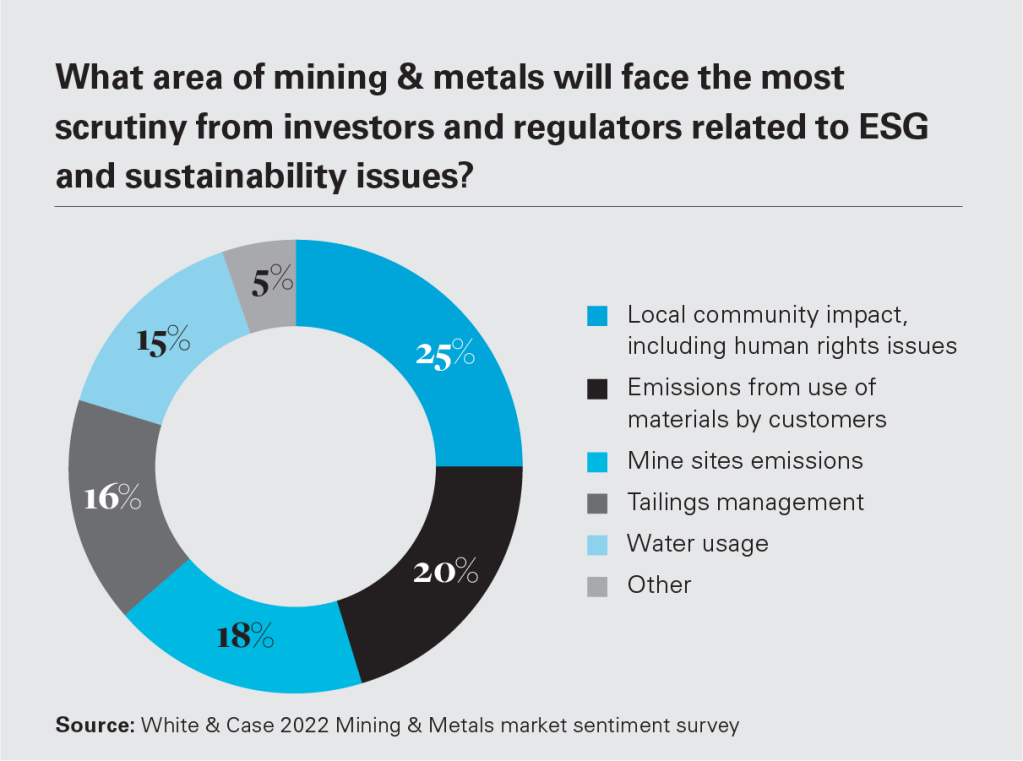
The electrification transition, aiming to shift dependence from fossil fuels to electricity, brings a surge in demand for minerals crucial for batteries, renewable energy infrastructure, and electric vehicles. In addition, the nascent small modular reactor (SMR) industry will carry much of the heavy lifting to replace coal-fired power plants with factory built nuclear reactors. This has significant implications for the mineral exploration industry, where Environmental, Social, and Governance (ESG) factors are gaining increasing importance. However, without an overhaul of current permitting processes in countries like the USA, these transitions will be greatly stymied if not completely deferred to jurisdictions that are agile enough to pivot in the face of a changing landscape.
Environmental:
Mining Activities: Exploration and extraction can cause environmental damage through land disturbance, water pollution, and greenhouse gas emissions. But this needn’t be true if that mining is conducted within jurisdictions where sustainable, clean, and regulated mining activities prevail. Companies are expected to minimize these impacts through responsible practices, like using renewable energy sources, mitigating water usage, and implementing effective land reclamation strategies. But most current mining for critical minerals and minerals needed for the electrification transition are happening in areas with little to no oversight or safe-guards for the environment.
Climate Change: The electrification transition aims to combat climate change, but mineral extraction itself can contribute to emissions. Companies need to demonstrate clear strategies to reduce their carbon footprint and operate sustainably throughout the value chain. One such avenue would be to use SMRs to provide carbon-free base-load power from nuclear power sources that can feed into electrically-powered fleets on the modern mine site. In this way mineral extraction could close the loop on electricity and mineral production achieved in a wholly carbon-less capacity. But this would require leaps and bounds in both permitting prowess and investor willpower.
Social:
Community Engagement: Exploration often occurs in remote areas with existing communities. Companies must engage with these communities transparently, respecting their rights and cultural heritage, and ensuring fair benefit sharing. Within the current framework here in the USA these systems have been in place for decades. However, self-serving NGOs that label themselves as ‘environmentalists’ find ever-unique ways to obstruct and corrupt a well-meaning regulatory system that provides better protections than anywhere else on the globe. All while China continues to forego any of these considerations to produce the consumer products we here in the West enjoy without a second thought.
Indigenous Rights: Indigenous communities may have specific rights and interests in the land where exploration takes place. Companies need to consult and collaborate with them throughout the process, respecting their rights and traditional knowledge. Many of these communities are able to provide a wealth of knowledge on how best to care for the land and nurture the native plants that must be protected.
Labor Standards: The mining industry has a history of labor abuses. Companies are expected to uphold fair labor practices, ensuring safe working conditions, living wages, and equal opportunities for all workers. On the modern stage of diversity and inclusion, today’s face of mining looks drastically different than those images found in Gold Rush museums and Prospector’s journals of a bygone era. Women in mining are having their day and this bulwark will continue to grow.
Governance:
Transparency and Accountability: Investors, communities, and other stakeholders are increasingly demanding transparency from mining companies regarding their ESG practices. Companies need robust reporting systems and accountable governance structures to demonstrate their commitment to sustainability. But ultimately, the narrative needs to change from one of villainy towards an understand that ‘minerals are life’ and each human life requires a certain base-amount of minerals to be extracted in order to sustain that life.
Regulations and Licensing: Governments are implementing stricter regulations to ensure responsible mining practices. Companies need to comply with these regulations and actively participate in shaping responsible mining policies. But more importantly, the regulatory agencies need to provide a clear path forward for companies and investors alike towards achieving extraction of the sorely needed mineral resources.
ESG and the Electrification Transition:
Responsible Sourcing: As demand for battery minerals like lithium, cobalt, and nickel increases, ensuring their responsible sourcing is crucial. Other minerals such as uranium, copper, silver, REEs, and many others will have a part to play in the coming dance for mineral extraction. Companies need to partner with suppliers who adhere to high ESG standards throughout the supply chain. And mid-stream processing and enrichment of extracted minerals need to feed the manufacturing industries on the self-same soil that the minerals were extracted. At this time, most raw material processes needs to circumnavigate the globe before it can be used to make anything.
Social License to Operate: Communities and stakeholders are becoming more vocal about the social and environmental impacts of mining. Companies that fail to uphold ESG standards risk losing their social license to operate, hindering their ability to access critical resources. However, the segmented nature of various mining activties divorce the outcry from the ability to impact the end product. In other words, it is nice to decry mining’s ill from the USA while having no direct impact on mining’s impact within China where these criticisms fall on deaf ears and have no real impact. After all, these are completely different nations.
Investor Scrutiny: Investors are increasingly integrating ESG factors into their investment decisions. Companies with strong ESG practices are likely to attract more investment and have a lower cost of capital. But even after nominally identifying the correct company, jurisdiction, or geologic setting, the regulatory hurdles to opening the doors at any “perfect mine” are still quite high and flanked by obstructionist NGOs that care little for the environment they claim to protect and more about the misguided, out-dated narrative they continue to espouse.
In Conclusion: ESG considerations are no longer optional for mineral exploration companies in the electrification transition. But understanding the challenges that mining companies face in this tumultuous terrain needs to be taken into consideration as well. By prioritizing responsible practices, companies can mitigate risks, secure community support, attract investors, and contribute to a sustainable future for the industry and the planet.
Current estimates might have humanity’s control of fire dating to nearly 1 million years ago. Carbon combustion, in all its various forms and sophistications, is still our main energy source today. The car you drive today, with all its bells and whistles, is still, quite simply, a very sophisticated campfire. And it is this burning of carbon-based fuel that seems to have run its course of usefulness, or more importantly its welcome… as we wrestle with climate change and the need to reduce CO2 in the atmosphere. Within this context, uranium and nuclear energy have the ability to give humanity a new fire, a new energy source… and one that is free from the carbon-cycle.
Uranium might have started its time with humanity in infamy, but its usefulness as a dense fuel source will redeem itself in due time. 1,000,000 : 1 is the ratio of energy per unit of uranium to unit of carbon-based fuel sources. For every unit of coal, natural gas, or petroleum it takes 1,000,000 more units of that fuel to equal just one unit of uranium. This math will win out all cost/benefit analysis thought experiments thrown at it. It is a monumental, gigantic, herculean (even) orders of magnitude greater fuel source than all carbon-based fuel and it is clean as well.
Nuclear energy is the cleanest form of baseload power that we already utilize as a reliable source of energy. Here in the US there is a fleet of 120 reactors that have been quietly producing 20% of our nation’s baseload power for decades. It is clean not only because it is carbon-free, but it also contains 100% of all its waste products within the reactor and this material can be stored safely long-term. The same cannot be said for coal-fired power plants that continually release not only CO2 into the atmosphere but many other toxins, volatiles, and yes, even naturally occurring uranium and other radioactive elements are emitted from coal-fired power plants.
This is not an unknown statistic for those that study these effects on the human population. In this regard it would be safer to live next to a nuclear power plant than to live next to a conventional, coal-fired power plant, where deaths are accounted for by the tera-watt per hour. In fact, by contrast, those living next to a nuclear power plant would receive their equivalent annual dose of radiation from that power plant by simply eating a banana (which has Potassium-40 in it, did you know?)
Ionizing radiation needs to be respected not feared. Radiation dose needs to be understood not irrationally demonized. And NORM (naturally occurring radioactive material) needs to be normalized, since anyone living in the Western US quite literally live atop ground that emits gamma radiation everyday. The uranium and its daughter products, that make up the majority of all radioactive isotopes, have been with us for millennia and will continue to be here long after we’ve decided to educate ourselves about it or not.
It is in our geology, our bones, and in our environment… down to a certain parts per billion in sea water. And it can be mined cleanly here in the US and processed to be put into modern, small modular reactors that address previous design short-comings to ensure 100% safe power for our future. These deposits come in many forms but most can be traced back to a granitic or volcanic source within the basement rock of the continent we live.
The most abundant source of uranium that is currently mined within the US is called “roll-front” uranium. These deposits occur in aquifers and fluvial sandstones beneath your feet in places like Central Wyoming and South Texas. You’ve probably driven by the “mines” that produce these ore bodies, but you probably wouldn’t have noticed. The in-situ mining method doesn’t move any dirt, it is a well field of injection and collection wells that add oxygen to the reduced aquifer environment to mobilize the uranium.
Roll-fronts were first called “geochemical” fronts, referring to the redox boundary within the aquifer that defines them. A roll-front uranium ore body is quite simply where the uranium found naturally within the aquifer drops out of solution due to a reducing environment. In cross-section the system is a “C-shape” due to natural permeability found within the middle of a fluvial sandstone, where the aquifer is able to ‘push’ the roll-front further into the reducing side. The lower and upper limbs (or the “tails”) of the roll-front are where the permeability decreased due to a facies change from fluvial sands to perhaps a mudstone, siltstone, or shale.
Between the 1950’s and 1980’s uranium production came from numerous mines in the Western US and supplied fuel for baseload power for decades. But these reserves have dwindled and new production will be needed to power the nuclear reactor fleet already in use. But what will happen as we continue to transition away from carbon-based fuel. Renewables will only be able to replace coal-fired power plants so far. In fact, renewable energy within the current energy mix can’t replace coal-fired power plants.
The future of energy production, transportation, and the electrification of our world requires an “all-of-the-above” energy mix. And uranium is a key component to that energy mix and should be considered as a ‘critical’ mineral (though it is not currently listed as such by the USGS). All of the elements required to implement the transition for the energy and transportation sectors need to be part of that list and we need to exploit each one of those resources that are found within our borders. Uranium, gold, silver, lithium, REEs, PGEs, base-metals (Cu, Co, Zn, Sn, etc.) will all be required to make the electrification transition a reality. And all of these elements are found right here in the US where domestic production of these minerals is not only possible but needed for our economic and energy security.
There is a global shift to the domestic production of minerals. This is happening across the world and is having ripple effects both up stream and down stream in this forward looking economy. It might seem somewhat backward to look inward for stable economic pillars for the global economy. But I might argue the opposite in the face of the ESG (economic social governance) paradigm we, as a species, seem to be self-implementing in this post-pandemic world. It is a natural step to draw from domestic natural resources, should we want to have a greater say in how those resources are produced. It might be the hallmark of the Dotcom boom that most of the materials that built it came from a supply chain wholly opaque to the consumer. And perhaps that system was built with the exact purpose of keeping such machinations obscured from the public eye. Nonetheless, it is perhaps an outdated mode given the current global climate. Imagine the backlash in today’s global economy. Imagine if all companies adhered closely to the transparent ESG paradigm.
As a quick re-cap, the Environmental/Social/Governance paradigm is a global movement for business to be conducted in a transparent way that responds to the socially responsible investor. But in reality it is a current day risk mitigation that takes into account “non-financial” factors when assessing sustainability. In a mineral industry context, the days of a mine’s sustainability equaling its mineral resource or mine life is long past. In truth, this reality has been long-coming and began decades ago here in the U.S. with NEPA (National Environmental Policy Act, 1970). While NEPA is a laudable step towards sustainability, it’s main problem is it’s scope; it only affected the U.S. In short, NEPA was one step forward, two steps back for domestic production of minerals here in the U.S. While the U.S. implemented what is known today as the “NEPA process” other jurisdictions, such as China or Russia, continued business as usual. In this way, the U.S. has continually become less a producer and more a consumer, not only when it comes to mining but across all sectors.
Why does this shift matter? And how could this global transparency and awareness bolster a budding domestic mineral industry? In a way, the ESG paradigm could be harnessed to level the playing field between the un-regulated, “Wild West” mineral producers and the well-regulated non-producers.
We stand at a crossroads. Should the U.S. source it’s resource needs from within or continue to push the social/environmental liability elsewhere? If COVID taught us anything, global supply chains can be swiftly eroded and being self-reliant, even within an ever-expanding global economy, will pay dividends. And in the context of the socially responsible investor & ESG, we should all be able to pull the veil back and see exactly how the sausage is made.
In the Kingdom of Saudi Arabia, as part of their Vision 2030 initiative, they are pivoting towards a future that is diversified to include domestic production of green metals, energy metals, and other precious & base metals production. The Kingdom is most obviously known for its hydrocarbon production, but there is a long history of gold and copper production as well. The Arabian Shield is geologically very old and host to untold riches that have yet to be exploited. In fact, the USGS during the 1950s thru 70s had numerous field mapping campaigns to try and encapsulate these resources outside of the scope of oil & gas.
If a key player within the supply of current fuels has the wherewithal to begin to pivot towards the future, surely the U.S. can find the backbone to do the same. But there is one question that would need to be answered before that could happen: Can we reconcile the fact that, in order to build the green future of the electrification transition, we will need to mine minerals? Current policy from the Biden administration seems keen to promote domestic production of minerals but actual investment from the Dept of Defense is looking beyond our borders to non-domestic mineral resources. This is quite discouraging given the vast endowment of natural resources the U.S. already has within its borders.
I’ve seen this bumper sticker, found in many a mining town, that goes something like: “If it’s not grown… it’s mined.” There’s nothing like some bumper sticker wisdom to solve any problem, right? Seriously though, this might seem like an over simplification of a complex problem, but is it? Resources, by their very definition, are something that must needs be exploited. Now. This exploitation can be done ethically, with all stakeholders at the table, or we can continue to allow other countries to do our dirty work for us. In short, if we don’t mine it cleanly (per our own NEPA regulations) then someone else will mine it however they see fit (without regulatory oversight, most likely). To be honest, unregulated mining is the most profitable (for the mining company)… that’s why it was done that way historically. So then, what is the point of ESG (or any set of standards, for that matter) if we are not all playing by the same rules?
The domestic production of minerals (aka, mining) is ultimately the logical conclusion of the green energy thought experiment. Don’t shoot the messenger when you find out that in order to transition away from carbon you will need to invite some other elements to the party. As Hunter S. Thompson encapsulated so eloquently, “Buy the Ticket… Take the Ride!” If the goal is to electrify our energy and transportation sector by means of transitioning away from carbon sources of fuel, then the only alternative is a suite of other elements/minerals. These minerals have be enumerated in the critical minerals list put out by the USGS. And here is the good news: all of the elements found on the critical minerals list can be found here within the U.S.
It’s no secret to those who’ve been paying attention. Minerals equal life. And in order to produce said minerals, they must be mined. The only true debate left is when, where, and how. When will we start to mine these minerals that are required to move forward? Where will we decide to mine these minerals so we can have a say in how they are produced? And how will we do so in an ethical, socially responsible, and sustainable way?
It’s not a giant feat by any stretch. Many of these questions can be answered by visiting your local phosphate, lithium, copper, or gold & silver mine found thought out the Western U.S. They have been quietly producing these vital minerals for decades. The problem now, of course, is there are precious few of them opening up anew. Many of these deposits have a long, battle-worn history of achieving the hard-won state of “in production,” and perhaps rightly so. But it’s it about time we found a more cooperative solution to guiding the mineral producer through the NEPA process and onto actual mineral production. I can see more opportunities to help the miner and the conservationist alike through cooperative permitting. But that sort of “kumbaya” moment doesn’t make for sexy headlines for the 24 hour media cycle to sell. And few environmental activist firms would be able to set up shop with that kind of business model.
Dating to 1865, this historic silver camp in the geographic center of the Silver State has an interesting history and continued interest in today’s silver mining legacy. Within the context of current electrification efforts, it is important to secure domestic silver production for the transition of the energy and transportation sectors. Silver’s single largest industrial consumer is photo-voltaic solar panels, raking in a total of 11% of annual silver supply. The Silver Institute estimates this figure could rise to 50% in the coming years.
Nevada will have a big role to play in mining domestic sources of critical minerals, and among those minerals critical to the transition is silver. Nevada has numerous historic and producing silver districts. Many of these precious metals systems can become metal-dominant to either gold or silver. Historically, the silver-dominant systems have been overlooked by the gold explorationist. So in a counter-intuitive way there is more silver to be exploited within the Silver State than ever before.
Archway doors of a historic bank building in Belmont, NV
Belmont is located 45 miles Northeast of Tonopah, NV in northern Nye County. It is located on the Southeastern flank of the Toquima Range of central Nevada; located 20 miles Southeast of Round Mountain gold mine. The historic mining district is centered within some Private Patented mining claims from the original mining in the late 1800’s.
There are 10 precious metal deposits across complex geology along the Northumberland – Tonopah Silver-Gold Belt. This Belt runs Northeast from Tonopah in the south to Manhattan, Round Mountain, and Northumberland mines in the North. Within this trend there are both gold and Silver-dominant systems that are hosted within both Tertiary volcanics and Paleozoic sediments.
Historic Belmont Courthouse served as Nye Co. seat from 1867 until 1905
There still stands today, the original Nye County seat courthouse in the middle of town at Belmont, NV. Established as the county seat in 1867, Belmont served that role for the county until 1905 when Tonopah was gathering more than a little attention. There are still several surviving store fronts and original buildings within Belmont town site today, such as the archways of an old bank building that you pass on your traverse thru town on NV State Route 82.
The Belmont silver mining district is attributed with 20 years of original production from 1865 thru 1885. This was during the height of the Nevada Silver Rush within such famed districts as the Comstock in Virginina City, NV. Other names for the Belmont district were: Philadelphia, Silver Bend, Barcelona, & Spanish Belt. It is commonly confused with the Belmont mine and mine-fire in Tonopah, NV. As is common in mining culture, successful names get re-used in other districts, such as the well-known name of ‘Belmont’ by the time Tonopah was coming on line after the turn of the century.
Original Caterpillar Model 20
There are various reports that publish estimated silver production numbers anywhere from $4 million to $15 million (citing Kral, 1951 & Lincoln, 1923, respectively). Ore was reportedly produced at $80 per ton and grades of 25 ounces per ton. With these numbers we can calculate the estimated amount of mined silver ounces between 1.5 and 4.7 million ounces. Considering that these numbers come from primitive underground drift and stope mining methods it is impressive nonetheless as this represents at least 50 tons of mine muck per day stretched over 20 years.
Monitor-Belmont Mining Co.’s Highbridge Flotation Mill, built around 1914
Continued interest over time saw revitalization of the Belmont district since first mining. The Monitor-Belmont Mining Co. built a 20 stamp flotation mill on the site of the old Highbridge Mill. Purportedly, these same bricks were used in the original mill or stolen from surrounding mill ruins such as the Combination Mill located closer to Belmont town site. Again in the 1960’s, Summa Corp., a subsidiary of Howard Hughes, backed exploration and sampling efforts at Belmont. Followed up by with a heap leach facility ran in the 1980’s to treat old mine dumps.
Until the 1860’s, silver was at a set price of $1.29 per ounce due to the Mint Act of 1792. At this time, the US was on a bimetallic monetary system that backed the dollar against both gold and silver. Civil War debt was the orginal stressor that saw silver price nearly triple within a short period of time. Even before this price spike there was a fair amount of gold and silver interest and mining within Nevada such as the Comstock. Several governmental policies successively undermined and drove down the price of silver such as the Coinage Act of 1873 that effectively demonetized silver. Followed up by the Sherman Act of 1890, that saw buying and minting of silver to the Federal government resulting in the Panic of 1893. And then the final nail in the coffin, the Gold Standard Act of 1900 where gold became the sole monetary precious metal.
There was a brief-lived rebound in silver price during war-time again with war debt from World War I. At Belmont, this saw the building of the new Highbridge mill and brought electicity in from Manhattan, NV to help dewater the old underground workings. Even still, the renewed effort was short-lived as silver price continued its slump until its nadir during the Great Depression. The first US-led effort that helped silver price was the Bretton Woods agreement of 1944, where President Franklin Roosevelt signed with other european nations to set the dollar as the world’s reserve currency, backed by gold. Gold price was set at $35 per ounce for this agreement, which was a devaluation of the metal by 70% at the time.
Historic Silver Price Chart
Several Nixon Era policies completely dissolved the Gold Standard and decoupled gold from backing the dollar. So by the time the Hunt Bros. caused a run on physical silver bullion in 1979, silver was long overdue a significant price increase and re-valuation. If you adjust for inflation, the silver price set during the Hunt Bros time is nearly $45 per ounce. This throughline of history for silver price can be seen through the lens of the Belmont silver district with it’s own ups and downs.
In the context of Belmont history some key take-aways can be summarized thus; producing years coincide with the Nevada Silver Rush, it was the Nye County seat from 1867 until 1905, the district mined in decline, constantly chasing down a declining silver price, the district was forced to mine more narrow & high-grade each subsequent year, all while using primitive mining methods with simple tools and manual labor.
USGS Topo Map for the Belmont District area (sections are one square mile)
The physical town site of Belmont is located Northwest of the mining district by about a mile or more. Some mill sites were located in Belmont itself, but most of the larger scale mills and all underground workings and mining occured in the main part of the district Southeast of the town. Geographically, the Belmont mining district runs along a North-South set of hills that defines the line between Ralston and Monitor Valleys. There are numerous adits, shafts, declines, and associated dumps and tails thru out the district. Additionally, there are several old stone-built cabins that presumably prospectors lived out of during mining or perhaps before the town of Belmont got fully established.
District Geology (Sections 25 & 36)
District geology consists of Cretaceous Granite and Paleozoic strata along a structurally complex axis bewteen two larger mountain ranges. The Belmont Pluton is the name of the Cretaceous Granite that lies in the Southwest of the Belmont District. This pluton underlies the Paleozoic carbonates, argillites, and quartzite of Ordovician age. These sedimentary rocks dip East to Northeast into Monitor Valley on the Southeast flank of the Toquima Range. In addition to complex structure, involving both thrust faults and basin & range normal faulting, the Belmont Pluton has associated contact metamorphism with the Paleozoic strata. Throughout the district can be found aplitic dikes and sills as well as base-metal porphyritic alteration in the southern end of the district.
The vein mineralization style at Belmont is a silver, lead, zinc quartz vein system. Other metals associated with the system is copper, antimony, and bismuth. Two historic vein trends extend North-South thru-out the district separated by about 1,000′ (1 kilometer). The Highbridge/Transylvania vein system is on the East side of the district, whereas the Arizona/Eldorado vein system sits on the West side of the district. Historic workings have relatively shallow workings in the North with progressively deeper workings going South. Presumably this progression correlates relative to time, with the earliest diggings in the North and the youngest shaft and headframe in the South (still “standing” today) that reaches 1,000′ (1 kilometer) deep into the earth. Initial mining focused on the supergene enriched silver ores found near surface. Vein width within the quartz vein system varied from 2 feet up to 30 feet wide.
Many of the quartz veins and “pay zones” were found in fault gouge parallel with the vein system. The syn-bedding structures and veining dip shallow to steep across the district from West to East. There is right-lateral vein offset along East-West striking faults, presumably youngest. This youngest set of faulting would most likely be associated with regional Walker Lane tectonic motion. Recent mapping in the district suggests that there could be isoclinal folding of the Paleozoic strata, especially on the Eastern side along the Highbridge/Transylvania vein system. The recent mapping also confirmed base-metal porphyry alteration in the south end. However, copper mineralization can be found along with quartz veins throughout the district.
Cerargyrite in core sample that ran 440 grams per ton Ag
The silver-bearing quartz veining carries silver chlorides such as cerargyrite. Sulfide, pyrite, and arsenopyrite along with other lead or zinc minerals are found throughout the system. One refractory copper mineral, Covelllite, was found in recent core drilling.
Nevada Silver Corp. conducted exploration work at the Belmont project area including: IP/Res geophysical survey, geologic & structural mapping, initial exploratory core drilling, and surface sampling. The IP survey identified twenty-four discreet targets across the project area. Mapping identified the vein system footprint and favorable geology. The first-pass drilling completed six core holes with an average depth of 550′ (180 meters). And the surface sampling collected 40 plus samples from old workings, dumps, vein outcrops, and open cuts.
IP/Res Survey voxelation brought into Leapfrog Geo with Targets (in red)
The IP/Res survey was collected on seven lines spaced 200 meters apart. The survey identified a potential zonation of altertion or differing host rocks. The twenty-four targets were chosen from the interplaying anomalies across the survey. The survey helped to highlight the vein systems at depth and the breadth of the mineralizing system.
The surface geologic & structural mapping included lithologic units such as: limestone, siltstone, sandstone, shale/schist, quartzite, as well as aplitic dikes and granite. The mapping includes detailed structural data for use to unravel the complex structural story. All of this information was brought into 3D modeling software to digitize the mapping, highlight the fault and vein trends, integrate with IP survey data, and visualize the system in 3D and at depth.
The recent exploration drilling is unwittingly the first exploratory core drilling completed on the property. All previous exploration was during original prospecting and mining efforts in the 1860’s, prior to any modern-style drilling or exploration. This was the first half dozen core holes to test ground that has seen an estimated 5 million ounces of silver produced within a precious metals belt (Northumberland – Tonopah Ag-Au Belt) that has nearby silver deposits of 50 million ounces or more.
Drilling results, logging, and assays posted in Leapfrog along with fault modeling and surface mapping
All drilling utilized private patented ground wherever possible and each hole was designed to intercept the vein system or IP survey target across a two square-kilometer area. The average dept of each hole was 550′ (180 meters), generally drilling West with a moderately steep dip to cross-cut the lithologic units. The entire hole, after logging, was sent to an assay lab for analysis. Each hole came back with silver mineralization. Two holes encountered bonanza grades at shallow depths (holes BS-22_002 & 003). Hole BS-22_003, located along the Highbridge vein system encountered silver mineralization from 0′ to 150′ deep at 28 grams per ton silver with 25′ of 90 grams per ton therein. Hole BS-22_002, located along the Transylvania vein system, encountered 20′ of 107 grams per ton silver with a high-grade core of 440 grams per ton silver at only 90′ deep.
In addition to the geophysics, detailed mapping, and core drilling program, there was also some surface sampling completed as well. The surface sampling effort makes up 40+ samples from vein outcrop, old mine dumps & tails, plus open cuts. About 25% of the samples came back with bonanza style silver mineralization. One sample in particular assayed to 1,061 ppm Ag (or nearly 35 ounces per ton silver). These results confirms the silver-dominant system with a base-metal signature. The bonanza grades also confirm the historic production reports that cited a grade of 25 ounce per ton.
In all, the recent exploration results at Belmont have been positive. Initial drilling has yielded positive results. The IP survey and mapping have illustrated a complex but favorable mineralizing system. Interpretation of drill results in 3D have put things in context such that follow-up targets can be developed going forward. In the coming years this old district could see a revitalization and reevaluation of the true size and scale of the silver-dominant metal system in place.
“Sleepy” Headframe at southern end of district above 1,000′ deep shaft
Leading up until the 1860’s silver had a set price, about $1.29 per ounce. And it had stayed that price since 1792 with the inception of the Mint Act. What changed in the 1860’s to bring about the first drastic price change? And what effect did that change have on the Western US?
Silver Price – keys events in the last one and a half century
Historically speaking, the price of precious metals has been a currency base and set price by the government. Of course, until Nixon fianlly floated the dollar and removed the gold standard altogether in the early 1970’s. But that is later on in the story, so let’s rewind to the start again.
The first significant change in silver price after setting it’s price with the Mint Act at $1.29/ounce was the US Civil War. The debt from war drove the price of silver up. In tandem with this was budding silver mining in Nevada, which became a state at the same time that the Comstock Lode in Virginia City was taking off. Seemingly over night, silver price had tripled ($2.94/ounce) and supergene silver ores in Nevada were ripe for the picking. Not only did Virginia City take off at this time but other towns such as Belmont, Eureka, and Austin in Central Nevada were getting their start during this era as well.
The bimetallic monetary system from the 1792 Mint Act began to unravel with Coinage Act of 1873 which effectively de-monetized silver. This in turn created weakness in demand and with increased silver production in the Comstock and elsewhere throughout Nevada this led to a steady declining price. Still more government policy, in the Sherman Silver Act of 1890, attempted to correct for a price that had dipped below its previous fiat of $1.29/ounce thru the purchase of silver and minting of coins. However, this policy ultimately resulted in the Panic of 1893.
The complete abandonment of silver within a bimetallic monetary system came about thru the Gold Standard Act of 1900. Gold became the sole precious metal where paper notes could be exchanged for gold on demand. Thus, silver continued its decline in price lasting nearly until the end of WWII but seeing a nadir during the Great Depression.
One noteworthy price rebound was a brief spike centered around the war debt from World War 1. During this time the Monitor Belmont Mining Company built a flotation mill on the site of the orginal Highbridge Mill at Belmont, NV (circa 1915). This brief episode capitalized on the price rebound of silver and reprocessed some of the old mine dumps as well as dewatered some old mine level for additional underground mining efforts.
Monitor-Belmont Mill, Belmont, NV (built 1915 on site of original Highbridge Mill)
The turning point for silver came about thru the Bretton Woods agreement in 1944, where countries adopted the dollar as the world’s reserve currency backed by gold, which was set at $35/ounce by FDR (a devaluation of the metal by 70% at that time). Again, throughout Nevada there was a brief lived interest in silver district such as Belmont, Tonopah, Austin, and Eureka during this war time era.
Interestingly enough, the majority of the silver mining that put Nevada, “the Silver State”, on the map, came from the period of time when silver price was at historic lows. Aside from the initial spike in price due to the Civil War, silver mining was continually chasing down a declining silver price until the Great Depression. Any and all silver mines and deposits from that time would have suffered from a continual need to mine more and more high grade ores. This continual pressure would have driven many out of business and forced many to leave much that is economic today still in place.
By the time Nixon completely dissolved the Gold Standard in the early 1970’s, silver had already benefited from several decades of rebound. So by the time the Hunt Brothers caused a run on physical silver bullion by 1979 we still haven’t seen its equal. When you adjust for inflation, peak silver price in 1979 is nearly $42/ounce in today’s money.
So it would seem that silver has seen a long-lived macro bull market from its nadir in Great Depression era. And this would be true at face value except for one important fact. Silver’s base price of $1.29/ounce, when adjusted for inflation, is closer to $6/ounce in today’s money. This means that since the end of the Civil War until the end of the Gold Standard was simply one big silbver price trough. And realistically, in today’s electrification future since the Dot Com era and now with solar panels and EVs becoming so much more prevalent, we are finally in an era where a) the government is not price fixing silver’s value and b) the industrial worth of the metal can be freely expressed in terms of it’s value outside of a monetary system.
Additionally, silver is mined moreso as a byproduct theses days; chiefly from gold mines that aren’t mining for the white-colored metal. In the Silver State there are several abandoned silver-dominant districts that has been entirely overlooked by gold exploration companies time and again. And as I’ve written in a previous article, these silver-dominant systems could also be an excellent source for other critical minerals.
Below are some charts for reference with links to the source of this data. Each chart is logrithmic and inflation adjusted with recessions marked out in grey. These are 100 year charts, so they don’t reach as far back as my original data set above, but they tell the story nonetheless.