Out in the field, the pattern reveals itself quietly.
Not with a headline—but with a hint. A subtle shift in structure. A geochemical whisper. A line of alteration that doesn’t quite belong unless something larger is at work beneath it. The kind of thing you don’t prove in a day… but you know in a moment.
You call it early.
You’re right.
…and nothing happens.
Weeks pass. Sometimes months. The market drifts, distracted by noise—rates, headlines, geopolitics, whatever storm happens to be passing overhead. Then, almost on cue, a note comes out from a major house. A strategist at Sprott or BlackRock or Goldman Sachs says the same thing you saw weeks ago.
Suddenly, it’s real.
Not because it’s new—but because it’s been authorized.
Two Economies, One Market
There are, in truth, two parallel systems operating beneath the surface of every commodity cycle.
The first is the signal economy—the domain of geologists, analysts, independent thinkers, and those willing to look across disciplines and timeframes. This is where insight forms before it is fully defensible. Where incomplete data still resolves into coherent patterns. Where cause is glimpsed before effect is measurable.
The second is the permission economy—the realm of institutions, funds, and capital allocators. Here, insight must be proven, repeatable, and survivable under scrutiny. It must pass through layers of risk committees, portfolio constraints, and reputational filters before a single dollar moves.
The signal economy asks: What is happening? The permission economy asks: Can we act on it without regret?
The market only moves when both agree.
Gold’s Recent Lesson in Liquidity
The recent drawdown in gold offers a clean case study.
As outlined by Sprott strategist Paul Wong, the selloff was not driven by failing fundamentals, but by a global liquidity squeeze—forced deleveraging, reserve flow disruptions, and a tightening financial environment. These are not new observations. Variations of this thesis have circulated among macro desks, independent analysts, and commodity specialists for months.
Yet it wasn’t until firms like Sprott formalized the narrative that the explanation began to anchor itself in broader market consciousness.
This is the critical distinction: The information did not change. The authority behind it did.
And with that authority comes consequence.
Because by the time the large houses publish:
Hedge funds have already begun unwinding leverage
Sovereign flows have already slowed or reversed
Liquidity stress has already expressed itself in price
The note doesn’t initiate the move.
It explains the move—often after the first act has already played out.
The Cost of Being Early
There is a quiet penalty for those who operate ahead of consensus.
Being early, in markets, carries the same outward appearance as being wrong. Positions move against you before they move for you. Narratives lag behind your thesis. Conviction is tested not by logic, but by time.
Institutions are structurally designed to avoid this phase.
A firm like Goldman Sachs is not rewarded for identifying a trend first. It is rewarded for allocating capital once that trend is sufficiently validated to absorb size without existential risk. Likewise, asset managers like BlackRock must operate within constraints that prioritize durability over discovery.
So they wait.
They wait for:
Data density across multiple indicators
Confirmation in positioning (derivatives, flows, leverage)
Narrative cohesion across markets
Only then do they step in—not as discoverers, but as amplifiers.
Narrative as Infrastructure
Markets do not move on truth alone. They move on shared belief.
A liquidity-driven selloff in gold is just a datapoint until it becomes a story that enough participants understand and accept. That story must be simple enough to travel, robust enough to withstand scrutiny, and credible enough to carry capital.
This is where institutional voices play an outsized role.
When Sprott frames gold’s decline as a liquidity event rather than a structural failure, it does more than interpret—it stabilizes expectation. It prevents a bearish spiral of misinterpretation and instead sets the stage for what may come next: policy response, monetary easing, and eventual reacceleration.
In this sense, narrative is not commentary.
It is infrastructure.
Positioning Before Permission
There is another layer—rarely discussed, but deeply felt by those paying attention.
By the time the narrative is published:
Positions have already been adjusted
Risk has already been transferred
Weak hands have often already been shaken out
The market has, in effect, already paid for the insight.
Just not to those who first articulated it.
This is the tension at the heart of the system.
The signal economy produces value early. The permission economy captures value later—with scale.
Why This Matters in Nevada
For those of us working in Nevada’s mineral systems—gold, silver, lithium, copper, and the broader suite of critical materials—this dynamic is not abstract. It is lived experience.
Nevada is, in many ways, the physical embodiment of the signal economy:
World-class geology long recognized before capital fully commits
Districts revisited multiple times before consensus aligns
Projects that oscillate between obscurity and prominence depending on macro narrative
Consider how long certain Carlin-type concepts, lithium claystones, or uranium roll-front models lingered in the background before capital cycles brought them back into focus. The rocks did not change.
The permission to act on them did.
Today, as global supply chains strain and the strategic importance of domestic resources becomes clearer, Nevada sits at the intersection of signal and permission once again. The geology is known. The endowment is proven. The expertise exists.
What remains variable is the timing of capital.
And that timing will not be dictated solely by geology—it will be dictated by when institutions collectively decide:
“Now is the moment.”
Where the Edge Lives
For those operating upstream—geologists, independent advisors, early-stage thinkers—the objective is not to wait for that moment.
It is to recognize the sequence:
Signal emerges
Market uncertainty
Institutional confirmation
Capital deployment
The opportunity resides between the first and the third step.
It is an uncomfortable space—low clarity, high risk, minimal validation. But it is also where asymmetry lives. Where positioning can occur before the narrative hardens. Where insight has not yet been arbitraged away by scale.
Closing Reflection
It is tempting, in moments like these, to view institutional confirmation as tardy. To see it as a delayed acknowledgment of what was already evident.
But that misses the deeper structure.
The prospector finds the vein. The syndicate funds the mine.
For the past several weeks, headlines in northern Nevada’s mining world have focused on the dispute between Barrick and Newmont over Nevada Gold Mines (NGM). A formal notice of default, questions over the Fourmile project, and the expiration of a 30-day cure period have fueled speculation about what comes next for the world’s largest gold-producing complex.
The corporate drama is real. But the boardroom fight between two global mining giants may not be the only force shaping what happens next in Elko County.
A quieter shift may be underway across the district itself.
And if it continues to develop, the most meaningful pressure on Nevada Gold Mines may not come from Denver or Toronto—but from right here in northern Nevada.
The Era of the NGM Super-Operator
When Barrick and Newmont formed Nevada Gold Mines in 2019, the joint venture consolidated the core of the Carlin Trend and surrounding districts into a single operational powerhouse.
Carlin. Cortez. Turquoise Ridge.
Combined under one management structure, NGM became something rarely seen in the mining industry: a single operator controlling the majority of a world-class gold district.
The scale of that consolidation was enormous. NGM quickly became the largest gold mining complex on Earth, producing millions of ounces annually and employing thousands of workers across northeastern Nevada.
The effect on the regional mining economy was equally significant.
For much of the past decade, Nevada Gold Mines became the gravitational center of the district’s workforce. Skilled miners, engineers, geologists, contractors, and service providers largely orbited around the operations of a single dominant employer.
In practical terms, if you worked in gold mining in northern Nevada, there was essentially one primary destination.
NGM set the tempo.
The Corporate Dispute
That stability is now being tested.
Earlier this year, Newmont issued a formal notice of default to Barrick regarding the Nevada Gold Mines joint venture, alleging that resources from the JV had been diverted to the Fourmile project—a high-grade gold discovery wholly owned by Barrick and located near existing NGM infrastructure.
Under the terms of the joint venture agreement, Barrick was given 30 days to remedy the alleged breach.
That deadline passed in early March.
Both companies have publicly emphasized that local operations are expected to remain unchanged while discussions continue. Barrick has stated that it does not anticipate impacts to staffing or day-to-day operations, while Newmont has framed the dispute as a governance matter intended to ensure the joint venture is managed according to the terms of the agreement.
For workers and contractors across Elko County, the message has been one of continuity.
And at the corporate level, that messaging makes sense. When large mining companies are in dispute, the last thing either side wants is instability in the workforce or uncertainty in the district.
But mining districts are dynamic systems.
And outside the walls of corporate negotiations, the ground may be shifting.
A District That May Be Waking Up Again
For years, Nevada Gold Mines has operated in a regional environment with relatively limited direct competition for labor.
That dynamic may be beginning to change.
Two developments in particular could reshape the labor landscape across northern Nevada in the coming years.
The first is Orla Mining’s South Railroad Project.
Located in the historic Pinion district south of Carlin, South Railroad is advancing toward production and represents one of the most significant new gold developments in the region in years. Construction, development, and eventual operations will require a full complement of skilled personnel—from equipment operators and maintenance crews to engineers, environmental specialists, and exploration geologists.
Even a few hundred additional jobs can meaningfully affect the labor dynamics of a community the size of Elko.
The second potential shift comes from the north.
First Majestic Silver has been evaluating pathways toward restarting the Jerritt Canyon gold mine complex. Once a major underground operation employing hundreds of workers, Jerritt Canyon has been idled in recent years as the company reassesses processing economics and operational strategy.
A restart would not simply reopen a mine—it would reactivate an entire ecosystem of underground mining expertise, processing personnel, contractors, and exploration teams.
Together, these developments suggest the possibility of something northern Nevada has not experienced in some time: renewed competition for skilled mining labor.
Why Competition Matters
Mining districts operate as interconnected systems.
When multiple mines are hiring simultaneously, labor markets tighten quickly. Skilled operators, experienced underground miners, metallurgists, engineers, and geologists become highly mobile. Contractors and drilling companies find their schedules filling faster. Equipment availability becomes more constrained.
For years, Nevada Gold Mines has had the advantage of scale. With multiple operations spread across the district and a workforce numbering in the thousands, the joint venture has been able to draw from and stabilize the region’s talent pool.
But if new mines begin hiring and older operations return to life, the district itself begins to diversify again.
And that changes the equation.
The Workforce Factor
Corporate statements about disputes tend to emphasize stability—and understandably so.
When negotiations are ongoing, companies have little incentive to introduce uncertainty into the workforce or alarm local communities whose economies depend on mining.
But historically, major corporate disputes and restructuring efforts have often produced operational changes once the dust settles.
Management structures shift. Planning responsibilities move. Cost pressures ripple through contractor networks. Technology and automation strategies evolve.
Those adjustments frequently appear first at the operational level.
This time, however, workers across northern Nevada may find themselves in a somewhat different position.
If competing operations are hiring, if exploration programs are expanding, and if previously dormant mines return to life, the workforce may have more options than it has had in years.
And options create leverage.
A District Larger Than Any One Company
Nevada Gold Mines remains the dominant force in northern Nevada gold production, and its scale is unlikely to be challenged anytime soon.
But mining districts are never static.
They expand. They contract. Mines open. Mines close. Ownership changes hands. Exploration brings new discoveries. Old assets find new life.
For years, NGM has defined the rhythm of the region’s mining economy.
Yet if new operators begin hiring and old ones reawaken, the district itself may start setting the tempo again.
Which raises an interesting possibility.
The most consequential challenge facing Nevada Gold Mines in the years ahead may not come from a corporate dispute between its owners.
It may come from the return of competition in the district it dominates.
In mining, we’re trained to notice subtle structural shifts long before the surface breaks open. A faint offset in bedding. A change in alteration intensity. A stress field rotating just enough to matter.
Corporate structures behave the same way.
Earlier this month, Newmont Corporation issued a formal notice of default to Barrick Gold Corporation under the Nevada joint venture agreement governing Nevada Gold Mines (NGM). The filing cited alleged mismanagement and diversion of resources, and confirmed that inspection and audit rights had been exercised.
On its face, this is a governance dispute. Production at NGM remains strong. Costs are stable. Nevada’s geology hasn’t changed.
But structurally? Something has shifted.
A Dispute That Didn’t Happen Overnight
Default notices in billion-dollar joint ventures do not appear spontaneously.
They follow:
Internal reviews
Board-level dialogue
Legal consultation
Documentation gathering
Strategic escalation
By the time a notice is filed, the stress has already been building.
Since late 2025, the major Nevada operators have been signaling broader portfolio thinking — including discussions around unlocking value through structural clarity in North American assets. Overlay that with a rising gold price environment and renewed supercycle conversations, and you have a combustible mix of incentive realignment and valuation pressure.
In downturns, synergy marriages are easy. In upcycles, ambition reawakens.
The Geometry of the Nevada JV
NGM is structured with:
Barrick holding a 61.5% economic interest and serving as operator
Newmont holding 38.5%
That structure worked exceptionally well when the joint venture was formed in 2019. The thesis was clear: operational integration across the Carlin, Cortez, and Turquoise Ridge complexes would drive cost efficiencies, optimize infrastructure, and extend district life.
And it largely did.
But majority operator and minority economic heavyweight structures always carry inherent tension. Incentives must remain aligned — not just operationally, but strategically.
When wholly owned growth assets exist outside the JV framework, capital allocation decisions become more sensitive. In a rising gold price environment, every ounce of development sequencing carries valuation implications.
This isn’t about personalities. It’s about geometry.
What a Default Notice Really Signals
It’s important to be precise here.
A notice of default:
Is a contractual mechanism
Does not automatically imply collapse
Often triggers formal remediation processes
Can lead to quiet resolution
It signals material disagreement — not necessarily structural failure.
Mining investors sometimes confuse operational performance with governance stability. They are related, but not identical. You can have excellent quarterly production numbers and still have deep philosophical differences about long-term capital allocation.
Governance stress testing often happens precisely when assets are most valuable.
The Supercycle Overlay
If gold is indeed entering a prolonged higher-price regime, governance clarity becomes more important — not less.
Upcycles amplify everything:
Capital competition between projects
Investor scrutiny
Executive ambition
Asset monetization strategies
Structural repositioning
Markets reward:
Transparent incentive alignment
Clean ownership narratives
Clear capital allocation discipline
They discount ambiguity.
If the major Nevada operators are repositioning for valuation optimization, strategic separation, or portfolio refinement, friction inside a joint venture of this scale becomes almost inevitable.
This may not be dysfunction. It may be transition.
What It Means for Nevada
For Nevada, the implications are layered.
Potential Upside:
Governance reset and clearer alignment
Renewed exploration intensity
Capital discipline sharpened
Structural clarity for long-term development
Potential Risk:
Short-term volatility
Delayed project sequencing
Workforce uncertainty
Investor hesitation during dispute resolution
Nevada’s rocks remain world-class. That doesn’t change.
What evolves is the structure around them.
Communities like Elko have lived alongside this joint venture since its formation. Integration reshaped contractor ecosystems, exploration pipelines, and employment patterns. Any structural shift — even if ultimately positive — will ripple outward.
Change in large mining systems is rarely quiet.
Governance as Decision Infrastructure
If there is a deeper lesson in this moment, it is this:
Mining success is not only geological. It is structural. It is financial. It is governance-driven.
Ore bodies don’t fail because of grade alone. They fail because of misaligned incentives, capital misallocation, or structural inefficiencies. Conversely, marginal deposits succeed when governance and strategy align.
The Nevada Gold Mines JV was a masterclass in integration during a downcycle. The question now is whether the next phase of the gold cycle demands a different structural configuration.
Are we witnessing a temporary shear zone that will anneal under pressure?
Or the early stages of a new structural regime in Nevada gold?
Either way, cycles reward clarity. And Nevada’s future will be shaped not just by what lies beneath the surface — but by how its stewards choose to structure, govern, and allocate the capital above it.
There is a peculiar disconnect in modern mineral markets.
Capital moves quickly. Geology does not.
On the TSX, ASX, and beyond, tens — sometimes hundreds — of millions of dollars rotate through exploration equities on the strength of narrative, jurisdiction, management credibility, and thematic momentum.
Sometimes that capital is deployed against excellent geological architecture.
Sometimes it is not.
The uncomfortable truth is this:
Most projects do not fail because the rocks were wrong. They fail because the question being asked of the rocks was wrong.
The Illusion of Due Diligence
A site visit is not due diligence.
A cross section is not due diligence.
A data room is not due diligence.
Due diligence is asking:
What decision is this capital meant to support?
What uncertainty actually matters right now?
What must be proven next — and what can wait?
Without those questions, drilling becomes habit. Budgets become momentum. Narratives harden before sequencing logic is clear.
The market may still reward that — for a time.
But geology always catches up.
The Silent Pipeline Question
There is ongoing debate about whether the industry’s discovery pipeline is starving.
Perhaps it is.
Perhaps it isn’t.
It is entirely possible that majors and mid-tiers are quietly consolidating land, reprocessing data, refining structural interpretations, and building optionality that the market does not yet see.
But optionality is not a discovery.
And acreage is not a decision.
The difference between positioning and progress is clarity around what must be proven next.
Capital Does Not Need More Enthusiasm
It needs cleaner sequencing.
Higher costs and tighter disclosure regimes have changed the environment. The penalty for misaligned drilling is no longer trivial.
When capital outruns geological framing:
Programs overshoot their objective.
Stopping rules are undefined.
Permitting constraints are discovered late.
Narratives drift away from defensible interpretation.
These are structural failures, not technical ones.
The Role That Rarely Gets Named
There is an unglamorous but essential function in this ecosystem:
Translating subsurface uncertainty into decision-ready clarity before capital commits.
Not peer review after the fact. Not execution management. Not promotional interpretation.
Just this:
Naming the decision.
Isolating the uncertainty that actually governs it.
Sequencing work so that spending reduces risk instead of decorating it.
In higher-cost cycles, that discipline compounds.
In euphoric cycles, it protects.
The Real Edge
Seeing further in the field is useful.
Seeing how that field story will be interpreted in a boardroom is more useful.
The edge does not come from louder narratives.
It comes from quieter questions:
What has to be true?
What would cause us to stop?
What would change the decision?
The companies that answer those early will not always be the loudest.
But they will be the ones that survive longer cycles — and convert optionality into value.
Closing Thought
Markets are not wrong.
They are simply built to price asymmetry, not certainty.
Geology, however, eventually demands certainty.
Bridging that gap — calmly, upstream, before momentum hardens — is where real leverage lives.
Why confidence is back in mining — and why restraint will determine what lasts
“Morale Is Sky High” — and Why That Signal Matters
When Robert Friedland told President Trump that morale in the mining sector is “sky high,” it landed because it rang true. Mining is not a business given to casual optimism. Confidence here is usually hard‑won, forged by capital returning, permits moving, and the sense that long‑standing constraints are finally easing.
Recent headlines reinforce that mood. Critical minerals are now framed as strategic infrastructure. Governments are speaking openly about domestic supply chains. Permits that once languished are clearing. Select projects are attracting real capital again.
This is not hype. It is a measurable shift in sentiment.
Periods of high confidence are double‑edged. They create opportunity, but they also invite excess.
Across North America, mining activity is accelerating alongside:
Permitting reform narratives
Critical‑minerals stockpiling initiatives
Re‑shoring and supply‑chain security efforts
Renewed political attention to domestic production
These forces are powerful, but they are blunt. They move quickly, often faster than geology, communities, infrastructure, or trust can keep up.
Mining history is clear on this point: when motion becomes the goal, outcomes become fragile. Projects race ahead of social license. Timelines outrun permitting reality. Capital prices in speed that the ground cannot deliver.
Momentum feels like progress — until it isn’t.
What the Current Headlines Are Really Telling Us
Read together, today’s news paints a more disciplined picture than raw optimism alone:
Smelter uncertainty in Quebec shows how industrial ambition without durable policy alignment leaves assets exposed.
Rare earths projects, even those backed by geopolitics, continue to slip on permitting and logistics — reminders that strategic intent does not suspend reality.
Markets now reward regulatory clarity more than drill results, signaling that permission has become a primary value driver.
M&A activity clusters around scale, longevity, and execution pathways, not conceptual upside.
The pattern is consistent: confidence is flowing toward projects that can withstand scrutiny, not just capture attention.
Judgment Is the Scarce Commodity
In moments like this, the industry’s greatest constraint is not capital or policy — it is judgment.
The hardest decisions are no longer about where to drill next. They are about:
When acceleration helps versus when it erodes trust
Which risks are technical, and which are social or regulatory
How much uncertainty capital can actually tolerate
Who must be part of the decision long before a permit or press release
These are not questions answered by momentum. They are answered by restraint, context, and experience.
Stakeholders Are the Load‑Bearing Structure
One quiet danger of high‑morale cycles is the temptation to treat stakeholders as friction.
In reality, communities, regulators, Indigenous groups, and long‑term investors are not obstacles — they are structural elements. When they are engaged early and honestly, projects slow down slightly and then endure. When they are bypassed, projects appear to move fast and then stall indefinitely.
Durable mining systems are built by:
Prioritizing certainty over shortcuts
Choosing credibility over urgency
Allowing technical teams the authority to pause or redirect
High morale is a gift. It opens doors that have been closed for years. It creates political and financial space to act.
The test now is how that space is used.
If confidence is spent chasing motion for its own sake, the cycle will shorten and the backlash will arrive on schedule. If confidence is paired with discipline — with clear geology, honest permitting paths, real stakeholder engagement, and capital that understands time — something more durable can emerge.
Mining does not fail because it moves too slowly.
It fails when it moves without understanding what must move with it.
The current moment offers more than momentum. It offers a chance to mature — to turn confidence into systems that survive policy shifts, election cycles, and market corrections.
Morale may be sky high.
Whether the outcomes last will depend on what we choose to do next.
There are moments in commodity markets when price ceases to be a conclusion and begins to function as a signal. Not the fleeting kind that flashes during a speculative frenzy or vanishes with the next headline, but something quieter and more consequential. A recognition embedded in the numbers themselves that the underlying rules have shifted.
This is not a story of a single spike or a short-lived squeeze. It is not the familiar choreography of hot money chasing momentum before slipping back out the side door. What we are seeing instead is a deeper reorientation, where pricing begins to reflect a change in how the world expects to operate—how it intends to power itself, secure itself, and hedge its own uncertainties.
As we look ahead to 2026, that reorientation is becoming increasingly difficult to dismiss. Gold, silver, copper, and uranium are not moving in perfect harmony, nor are they responding to the same immediate pressures. Each is rising for its own reasons, shaped by distinct demand drivers and structural constraints. Yet taken together, their trajectories form a recognizable pattern. Less a traditional boom-and-bust cycle, and more a system of parallel flows—multiple lanes advancing at different speeds, carrying different forms of value, all bound for the same horizon.
This is the multi-lane super cycle. And the prices flashing across the screen are not the destination. They are the dashboard lights, telling us that something fundamental is already in motion beneath the hood.
Gold: When Insurance Becomes Collateral
Gold’s move toward the $5,000-per-ounce range is not being driven by fear in the traditional sense. This is not a panic trade, nor a reflexive rush for safety. What is unfolding is better understood as a process of re-anchoring—a recalibration of what constitutes stability in an increasingly unstable financial landscape.
Central banks, in particular, are no longer approaching gold as a hedge reserved for moments of crisis. Instead, they are treating it as a structural reserve asset: a form of value that sits outside political alignment, credit risk, and fiscal experimentation. In a world where neutrality is difficult to find and trust is unevenly distributed, gold’s political indifference has become one of its most valuable attributes. Alongside this shift, private capital is rediscovering gold for similar reasons—not as an emotional refuge, but as a rational counterbalance to long-duration fiscal policies whose ultimate outcomes remain uncertain.
As prices push into the $4,800–$5,500 per ounce range, gold begins to behave differently within portfolios. It stops functioning as insurance you hope never to claim and starts acting as collateral you expect to rely on. That distinction matters. Collateral invites institutional participation, and institutions do not move on impulse. They allocate deliberately, often for long periods, embedding assets like gold more deeply into the financial architecture.
Viewed through this lens, gold’s role in 2026 is less about protection and more about positioning. It occupies the quiet lane of the multi-lane super cycle—steady, deliberate, and largely unglamorous, yet foundational to everything moving alongside it.
Silver: The Torque Beneath the Hood
Silver occupies a very different lane from gold, and it makes no effort to be subtle. Where gold moves with measured confidence, silver responds with acceleration. The long-standing notion that silver somehow belongs in the $20–$30 range has already been overtaken by events. Prices brushing $70 per ounce, with credible pathways toward $100, are not an anomaly so much as a long-delayed correction.
This is not simply a story of silver “catching up” to gold. It is silver being repriced for what it actually is: a metal that sits at the intersection of monetary psychology and industrial necessity. Unlike gold, silver is consumed. It is embedded in solar panels, power electronics, data infrastructure, and the physical systems required to electrify modern economies. These are not speculative end uses or distant forecasts; they are embedded in policy frameworks, capital budgets, and energy security strategies already being executed.
In this context, silver’s volatility is often misunderstood. It is not a weakness of the market, but a function of its structure. Thin markets move quickly when attention arrives, and silver has always been exquisitely sensitive to shifts in focus. When gold establishes a new price regime, it tends to pull silver into the conversation, and once that happens the response is rarely linear.
If gold serves as the anchor of the multi-lane super cycle, silver provides the torque. And torque, by its nature, does not move gently—it amplifies force, turning steady pressure into rapid motion.
Copper: Pricing the Physical World
Copper occupies the most load-bearing lane of the super cycle. It is heavier, louder, and far less forgiving than the metals moving alongside it. Where gold and silver trade on trust and attention, copper answers to something more basic: the physical requirements of a modern, electrified world.
At prices and forecasts ranging from $5.00 to $7.00 per pound, copper is no longer being priced on regional growth narratives or short-term manufacturing cycles. It is being priced on physics. Power grids, data centers, electric vehicles, renewable energy systems, and the expanding infrastructure behind artificial intelligence all depend on one unyielding constant—large volumes of conductive metal delivered reliably and at scale. There are no clever substitutes waiting in the wings.
In this environment, the price story cannot be separated from the supply story. Copper’s geology is becoming more difficult just as its demand profile steepens. Declining head grades, aging mine fleets, extended permitting timelines, and growing social and environmental constraints ensure that new supply arrives slowly, if at all. Recycling and scrap recovery provide important support, but they are incremental solutions in the face of structural demand growth, not cures.
By 2026, copper no longer fits comfortably into the category of a speculative commodity. It is a civilization input, being repriced to reflect the true cost—and growing difficulty—of keeping modern systems powered, connected, and running without interruption.
Uranium: When Time Becomes the Scarce Commodity
Uranium moves through the super cycle on a very different clock. It occupies the most unusual lane, governed less by daily sentiment and more by long planning horizons that suddenly compress when reality intrudes. Unlike most commodities, uranium does not trade continuously on mood or momentum. It reprices episodically—sometimes abruptly—when utilities recognize that time, rather than price, has become the binding constraint.
That recognition is no longer theoretical. Long-term contracting cycles are reasserting themselves as reactor life extensions, restarts, and new builds quietly reset demand expectations across the global fleet. At the same time, years of underinvestment in primary supply and fuel-cycle capacity have left the market with limited elasticity. When demand moves forward, supply struggles to follow, and the gap is measured not just in pounds, but in years.
Within a forecasted $90–$140 per pound range, uranium prices are signaling more than the cost of fuel. They are reflecting the value of security of supply, the friction points within conversion and enrichment, and a broader shift in how nuclear energy is perceived. Once politically fraught, nuclear power has become increasingly indispensable—particularly in a world that now depends on reliable, round-the-clock electricity to sustain digital infrastructure, data centers, and emerging technologies.
Uranium’s market remains thin, its signals easy to miss until they suddenly dominate the conversation. But when utilities act, they do so with urgency born of necessity. And urgency, as markets have learned repeatedly, has little patience for yesterday’s price anchors.
Price as Prelude
Taken together, the price trajectories of gold, silver, copper, and uranium do not point to a synchronized peak or a speculative crescendo poised to collapse under its own enthusiasm. They point instead to something far more durable: a broad repricing of materials that sit at the foundation of monetary trust, electrification, and energy security. Each metal is moving for its own reasons, within its own lane, yet all are responding to the same underlying signal—the growing recognition that the systems we depend on are materially constrained.
What matters is not that prices are higher, but that they are staying higher, settling into new ranges that reflect structural realities rather than temporary dislocations. Markets are beginning to internalize the cost of complexity: the time it takes to permit, to build, to finance, and to operate in a world where friction is no longer an exception but a baseline condition. Price, in this context, becomes less a verdict and more a messenger, carrying information about what can no longer be taken for granted.
And that message does not stop at the trading desk.
Once prices move into these new regimes, they begin to alter behavior. Capital reallocates. Risk tolerances shift. Projects once considered marginal suddenly warrant a second look, while others are re-evaluated not on headline grade or scale, but on deliverability. The conversation moves away from “Is there demand?” and toward “Can this actually be built, permitted, financed, and processed in time to matter?”
This is where the repricing radiates outward—into exploration strategies, permitting pathways, processing decisions, and even national policy. Higher prices validate effort, but sustained prices justify commitment. They encourage drilling programs that would have seemed premature a few years ago, accelerate timelines that were once comfortably elastic, and force a reckoning with bottlenecks that markets previously ignored.
In that sense, price is not the story’s climax. It is the opening note. What follows is the reshaping of an industry—and a set of strategic priorities—around the physical realities those prices now reflect.
The Ripple Effects: What Follows Price
When price regimes shift, behavior follows. Not immediately, and not uniformly—but inevitably. Capital is patient until it isn’t. And as we look toward 2026, the second half of this story is already coming into focus, shaped by decisions made quietly over the past year and validated by the successes of 2025.
What is emerging is not a frenzy, but a recalibration.
Exploration activity, particularly drilling, is re-accelerating—not in euphoric waves, but in disciplined, data-driven programs aimed squarely at near-term relevance. This is not the return of “drill everything everywhere.” It is a more selective revival, guided by price signals that have proven durable enough to justify effort, but not so frothy as to reward indiscretion. Grassroots targets are being dusted off where geology and access align. Brownfields are being re-examined with fresh eyes. Districts once dismissed as “too complex” are being revisited as processing technology, infrastructure, and policy alignment begin to converge.
Permitting, long regarded as the immovable choke point of Western mining, is also beginning to show signs of selective thaw. Not a wholesale loosening, but a meaningful shift in tone. The regulatory temperature is changing—not because standards have disappeared, but because priorities have sharpened. High-profile approvals and procedural milestones achieved in 2025 have done something subtle but powerful: they have reintroduced precedent.
FAST-41, in particular, has made permit timelines to matter again—not as a slogan, but as a framework. Projects that align clearly with national supply-chain priorities, energy security, and critical-minerals objectives are finding pathways that were previously opaque. The message from regulators is no longer “nothing moves,” but rather “some things now move faster than others.” That distinction changes behavior across the entire development pipeline.
The most telling ripple, however, is the elevation of processing and metallurgy from afterthought to strategy.
When governments, defense agencies, and industrial planners begin investing directly in mills, refineries, and modular processing solutions, they are acknowledging a hard truth that markets long preferred to ignore: raw materials without processing capacity are liabilities, not assets. Concentrates trapped behind geopolitical bottlenecks or absent domestic refining pathways offer little real security, regardless of how impressive the resource looks on paper.
This recognition is already reshaping priorities across the sector:
Processing is becoming policy, not just engineering
Metallurgy is moving upstream, influencing exploration decisions earlier
Modular and distributed milling concepts are gaining traction where centralized capacity is constrained
Defense and energy security frameworks are now intersecting directly with mine planning
As a result, exploration itself is being reframed. Ore quality, mineralogy, and metallurgical behavior are gaining weight relative to sheer tonnage. Proximity to infrastructure and processing options is no longer a footnote—it is central to valuation. Complexity, once a reason to walk away, is increasingly viewed as a source of optionality in a world willing to invest in solutions.
In this environment, the winners are not simply those with the biggest deposits, but those whose projects can move—through permitting, through processing, and ultimately into supply chains that now care deeply about origin, reliability, and timing.
Price opened the door. 2025 proved that it could stay open. 2026 is shaping up to be the year the industry walks through it.
Beyond the Rocks
The multi-lane super cycle does not end at the edge of a pit or the closing bell of a market. It extends outward, shaping decisions far beyond mines and balance sheets. It is already visible in geopolitics and defense planning, in energy strategy and industrial policy, and even in the cultural conversation about what progress costs and what restraint truly means. These metals are not just inputs; they are signals of intent.
What is unfolding is not a scramble for resources in the old sense. It is a reprioritization—a quiet but consequential recognition that materials underpin systems, and that systems, in turn, underpin societies. Reliability now matters as much as efficiency. Origin matters alongside price. Time, once treated as flexible, has reasserted itself as a constraint. In this environment, price becomes the first language these realities speak, but it is not the last.
By the time 2026 fully arrives, the question will no longer be whether gold, silver, copper, or uranium deserved higher prices. That debate will feel quaint. The more pressing question will be whether sufficient groundwork was laid while prices were still doing the explaining—whether exploration was advanced, permits secured, processing capacity built, and supply chains reinforced before urgency replaced deliberation.
Because once the super cycle moves from the dashboard to the roadway, change accelerates. Capital commits. Policies harden. Timelines compress. The landscape reshapes itself not in theory, but in practice.
And through it all, the rocks remain patient witnesses. They do not argue. They do not persuade. They simply record the choices we make and the signals we choose to heed.
Gold gets the spotlight. Silver gets the surprise attack.
Lately, a quiet tremor has been running through the metals market — not quite a roar, not yet a stampede, but a shift that’s caught the attention of those who know how to listen for the deeper rumble.
As gold flirts with all-time highs and physical inventory on the Comex continues to dwindle, another metal has slipped into position behind it: silver. And if history is any guide, that’s when things get interesting.
The Ratio That Roars
The gold-to-silver ratio, currently hovering around 99:1, is a flashing signal to seasoned metals watchers. This ratio — how many ounces of silver it takes to buy one ounce of gold — has only breached these levels a handful of times in modern history. Each time, it preceded a violent correction. Not in gold. In silver.
In 2008, the ratio hit 84. Within a year, silver doubled. In 2020, it breached 125 during peak COVID panic. Silver exploded shortly after.
Now, with gold becoming harder to lease, roll, or deliver — and silver still relatively available — some speculate that a shift is coming. Not gradually. Not politely. But kinetically.
Kinetic Capital: The Role Reversal
Gold is the store of value. The deep reserve. The static capital.
Silver? Silver is the pressure valve. When trust in paper markets frays, when delivery fails or premiums spike — silver moves. And when it moves, it doesn’t ask permission.
In 2011, silver went from $18 to nearly $50 in under a year. Not because gold led, but because belief cracked. Demand shifted. Leverage unwound. And the second fiddle started swinging like a saber.
We may be seeing echoes of that now:
Inventories are falling.
Delivery pressure is building.
Central banks are stocking up gold — and the shadow trade is sniffing around silver.
Not a Conspiracy — a Cycle
Let’s be clear: this isn’t about silver being “suppressed” by some nefarious cabal. That narrative is worn thin.
But structurally, silver is smaller, more industrially consumed, and thinner in liquidity than gold. That makes it volatile — and volatility is where opportunity lives, especially for investors and explorers who know how to ride the rip.
This isn’t just about prices. It’s about positioning. If gold is the safe bet for a nervous world, silver is the swing trade for a restless one.
What It Means for Explorers
For those of us in the trenches — geologists, explorers, financiers of the rocks that power our world — this is a blinking green light. Investors love a comeback story, and silver’s got one written into its veins.
The question is not if silver will run again. The question is: are we staked, staffed, and ready when it does?
Final Thought
If gold is the sentinel guarding wealth, silver is the insurgent — underestimated, undervalued, and when the moment is right… unleashed.
So tighten your boots, dust off the maps, and maybe—just maybe—rethink that silver project you shelved in 2016.
Because when the pressure releases, it won’t be polite.
The United States Bullion Depository at Fort Knox has long been a symbol of economic stability and confidence. Housing approximately 147.3 million troy ounces of gold, Fort Knox represents a significant portion of the US Treasury’s gold reserves. However, the secrecy surrounding the depository has fueled speculation and conspiracy theories about the actual quantity of gold stored within its vaults. Verifying these reserves is crucial for several reasons, and the potential impacts on the market and gold spot price are profound.
Market Confidence and Stability
The perception that Fort Knox houses one of the largest gold reserves in the world underpins confidence in the US financial system. If a full audit were to reveal that the reserves are lower than reported, it could send shockwaves through global markets, prompting a selloff of US assets and creating a ripple effect across international markets. This could lead to a loss of investor confidence and increased market volatility.
Impact on the US Dollar
Although the US dollar is no longer backed by gold, the presence of a substantial gold reserve provides an implicit assurance of stability. If Fort Knox were found to contain less gold than expected, confidence in the dollar could erode, leading to depreciation. This decline would make US imports more expensive, contributing to inflation, while making exports more competitive. While some policymakers have suggested that selling US gold reserves could weaken the dollar intentionally to promote trade advantages, an uncontrolled drop in confidence would be a far riskier outcome.
Gold Prices and Central Banks
Doubts about US reserves could fuel increased demand from investors and central banks. Emerging markets, which have been stockpiling gold in recent years, would likely accelerate their acquisitions, exacerbating price spikes. Higher gold prices could benefit existing gold holders but might also make the metal less accessible for those seeking to hedge against economic uncertainty.
The Role of Transparency
Transparency in verifying the gold reserves at Fort Knox is essential to maintaining market confidence. The last full audit of the depository was in 1953, and since then, only routine vault seal checks have occurred. Opening the vaults to a comprehensive audit would dispel rumors and provide assurance to investors. It will be rather interesting to see what becomes of this push to audit the US gold reserves at Fort Knox. Stay tuned!
The uranium mining sector has been experiencing significant volatility and growth over the past few years. A key factor driving this volatility is the difference between the spot price and the term price of uranium. Understanding how these prices affect stock prices and what this means for future exploration is crucial for investors and industry stakeholders.
Spot Price vs. Term Price
The spot price of uranium is the price at which uranium is traded for immediate delivery. It is influenced by short-term market conditions, such as supply and demand fluctuations, geopolitical events, and investor sentiment. On the other hand, the term price is the price agreed upon for future delivery, typically through long-term contracts between uranium producers and utilities. Term prices are generally more stable and reflect long-term market expectations.
Impact on Stock Prices
The disparity between spot and term prices has had a notable impact on the stock prices of uranium mining companies. When the spot price is high, it often leads to increased investor interest and higher stock prices. Conversely, when the spot price falls, it can result in a decline in stock prices. However, the term price, being more stable, provides a more reliable indicator of long-term market conditions and can help mitigate some of the volatility seen in stock prices.
For example, in recent years, the spot price of uranium has experienced significant fluctuations, with a cumulative increase of 212.25% over five years. Despite short-term declines, the long-term bullish trend has supported strong performance in uranium mining equities. The Northshore Global Uranium Mining Index, for instance, posted a 29.23% gain over the same period.
Future Exploration in the Uranium Sector
The current market dynamics suggest a positive outlook for future exploration in the uranium sector. The growing global demand for nuclear energy, driven by the need for clean and reliable power sources, is expected to continue supporting the uranium market. Additionally, geopolitical factors, such as supply uncertainties in major uranium-producing countries like Kazakhstan and Russia, are likely to drive further exploration and production.
Companies like Nuclear Fuels Inc. are actively exploring new uranium deposits, with projects in premier uranium jurisdictions. The potential for discovering new high-grade uranium deposits and the existing infrastructure for production make these projects attractive for future exploration.
In conclusion, the uranium mining sector is poised for continued growth, with the spot price and term price playing crucial roles in shaping stock prices and influencing future exploration efforts. Investors and industry stakeholders should keep a close eye on these market dynamics to make informed decisions and capitalize on the opportunities presented by the evolving uranium market.
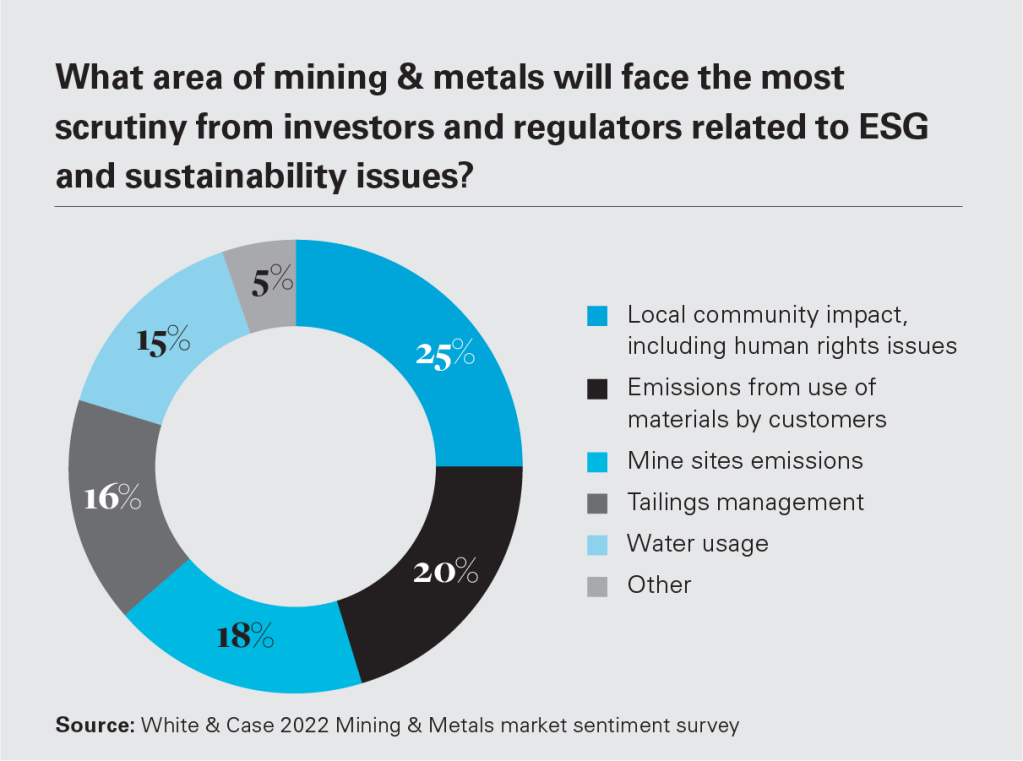
The electrification transition, aiming to shift dependence from fossil fuels to electricity, brings a surge in demand for minerals crucial for batteries, renewable energy infrastructure, and electric vehicles. In addition, the nascent small modular reactor (SMR) industry will carry much of the heavy lifting to replace coal-fired power plants with factory built nuclear reactors. This has significant implications for the mineral exploration industry, where Environmental, Social, and Governance (ESG) factors are gaining increasing importance. However, without an overhaul of current permitting processes in countries like the USA, these transitions will be greatly stymied if not completely deferred to jurisdictions that are agile enough to pivot in the face of a changing landscape.
Environmental:
Mining Activities: Exploration and extraction can cause environmental damage through land disturbance, water pollution, and greenhouse gas emissions. But this needn’t be true if that mining is conducted within jurisdictions where sustainable, clean, and regulated mining activities prevail. Companies are expected to minimize these impacts through responsible practices, like using renewable energy sources, mitigating water usage, and implementing effective land reclamation strategies. But most current mining for critical minerals and minerals needed for the electrification transition are happening in areas with little to no oversight or safe-guards for the environment.
Climate Change: The electrification transition aims to combat climate change, but mineral extraction itself can contribute to emissions. Companies need to demonstrate clear strategies to reduce their carbon footprint and operate sustainably throughout the value chain. One such avenue would be to use SMRs to provide carbon-free base-load power from nuclear power sources that can feed into electrically-powered fleets on the modern mine site. In this way mineral extraction could close the loop on electricity and mineral production achieved in a wholly carbon-less capacity. But this would require leaps and bounds in both permitting prowess and investor willpower.
Social:
Community Engagement: Exploration often occurs in remote areas with existing communities. Companies must engage with these communities transparently, respecting their rights and cultural heritage, and ensuring fair benefit sharing. Within the current framework here in the USA these systems have been in place for decades. However, self-serving NGOs that label themselves as ‘environmentalists’ find ever-unique ways to obstruct and corrupt a well-meaning regulatory system that provides better protections than anywhere else on the globe. All while China continues to forego any of these considerations to produce the consumer products we here in the West enjoy without a second thought.
Indigenous Rights: Indigenous communities may have specific rights and interests in the land where exploration takes place. Companies need to consult and collaborate with them throughout the process, respecting their rights and traditional knowledge. Many of these communities are able to provide a wealth of knowledge on how best to care for the land and nurture the native plants that must be protected.
Labor Standards: The mining industry has a history of labor abuses. Companies are expected to uphold fair labor practices, ensuring safe working conditions, living wages, and equal opportunities for all workers. On the modern stage of diversity and inclusion, today’s face of mining looks drastically different than those images found in Gold Rush museums and Prospector’s journals of a bygone era. Women in mining are having their day and this bulwark will continue to grow.
Governance:
Transparency and Accountability: Investors, communities, and other stakeholders are increasingly demanding transparency from mining companies regarding their ESG practices. Companies need robust reporting systems and accountable governance structures to demonstrate their commitment to sustainability. But ultimately, the narrative needs to change from one of villainy towards an understand that ‘minerals are life’ and each human life requires a certain base-amount of minerals to be extracted in order to sustain that life.
Regulations and Licensing: Governments are implementing stricter regulations to ensure responsible mining practices. Companies need to comply with these regulations and actively participate in shaping responsible mining policies. But more importantly, the regulatory agencies need to provide a clear path forward for companies and investors alike towards achieving extraction of the sorely needed mineral resources.
ESG and the Electrification Transition:
Responsible Sourcing: As demand for battery minerals like lithium, cobalt, and nickel increases, ensuring their responsible sourcing is crucial. Other minerals such as uranium, copper, silver, REEs, and many others will have a part to play in the coming dance for mineral extraction. Companies need to partner with suppliers who adhere to high ESG standards throughout the supply chain. And mid-stream processing and enrichment of extracted minerals need to feed the manufacturing industries on the self-same soil that the minerals were extracted. At this time, most raw material processes needs to circumnavigate the globe before it can be used to make anything.
Social License to Operate: Communities and stakeholders are becoming more vocal about the social and environmental impacts of mining. Companies that fail to uphold ESG standards risk losing their social license to operate, hindering their ability to access critical resources. However, the segmented nature of various mining activties divorce the outcry from the ability to impact the end product. In other words, it is nice to decry mining’s ill from the USA while having no direct impact on mining’s impact within China where these criticisms fall on deaf ears and have no real impact. After all, these are completely different nations.
Investor Scrutiny: Investors are increasingly integrating ESG factors into their investment decisions. Companies with strong ESG practices are likely to attract more investment and have a lower cost of capital. But even after nominally identifying the correct company, jurisdiction, or geologic setting, the regulatory hurdles to opening the doors at any “perfect mine” are still quite high and flanked by obstructionist NGOs that care little for the environment they claim to protect and more about the misguided, out-dated narrative they continue to espouse.
In Conclusion: ESG considerations are no longer optional for mineral exploration companies in the electrification transition. But understanding the challenges that mining companies face in this tumultuous terrain needs to be taken into consideration as well. By prioritizing responsible practices, companies can mitigate risks, secure community support, attract investors, and contribute to a sustainable future for the industry and the planet.













 Mineral Exploration Geology - finding value in the world around us