

The U.S. Nuclear Regulatory Commission is reorganizing.
On the surface, that sounds bureaucratic. Org charts. Reporting lines. Internal memos.
But don’t be fooled.
This may be one of the most consequential structural signals for nuclear energy — and uranium — in decades.
What’s Actually Happening?
The U.S. Nuclear Regulatory Commission is restructuring around three core business lines:
- New Reactors
- Operating Reactors
- Nuclear Materials & Waste
Licensing and inspection functions will be integrated.
Accountability will be centralized within each line.
Decision velocity is the objective.
This is not deregulation.
This is reorganization for efficiency.
And efficiency, in nuclear, has historically been the missing variable.
From Fear to Function
There was a time when America built reactors.
Under the United States Atomic Energy Commission, nuclear power was both regulated and promoted — sometimes imperfectly, but with ambition.
Then came the era of public fear, media amplification, and institutional risk aversion.
The China Syndrome premiered.
Three Mile Island accident followed.
Permitting paradigms hardened.
Timelines stretched.
Capital retreated.
The industry didn’t die.
It slowed.
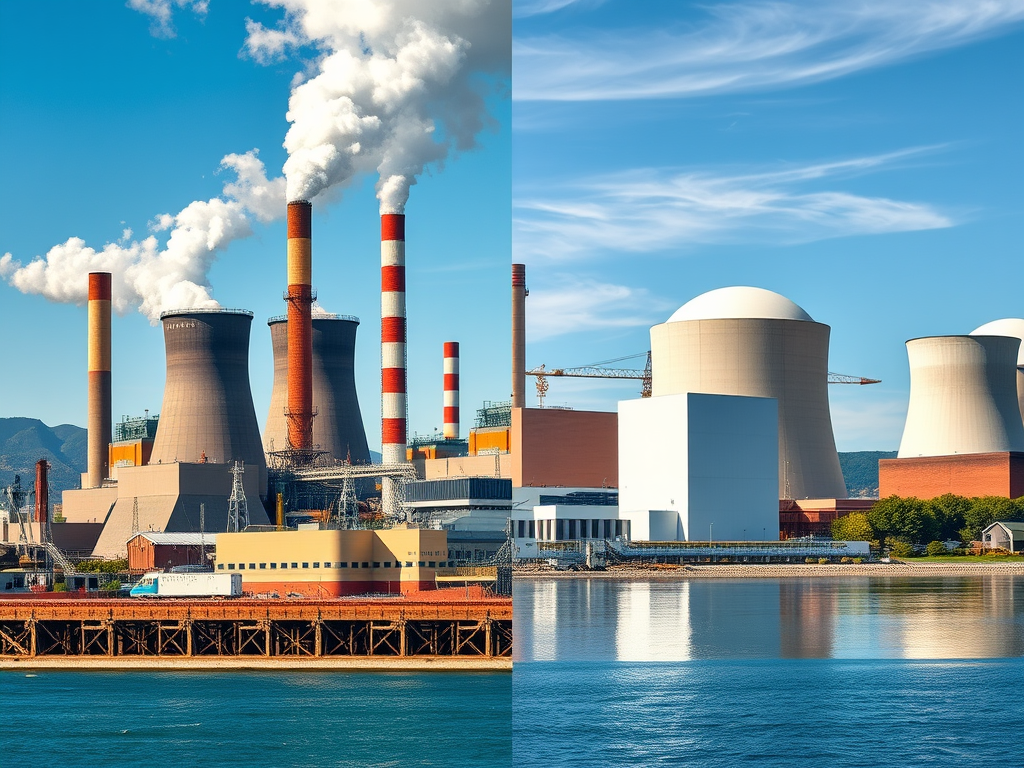
This reorganization signals something different:
A regulator aligning itself with national deployment goals — without abandoning safety.
That distinction is everything.
The Elephant in the Room: Uranium
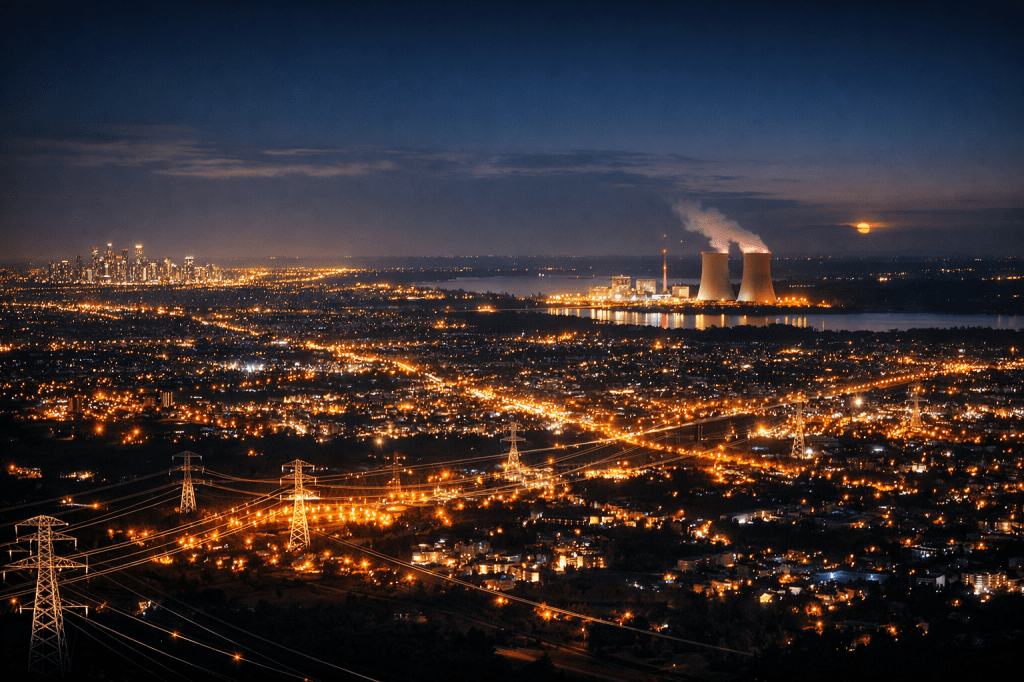
If the NRC becomes faster, clearer, and more accountable in licensing new reactors, the consequences ripple upstream immediately.
Reactor build-out → Utility contracting → Fuel cycle expansion → Uranium demand certainty.
Uranium does not respond to headlines.
It responds to structural deployment credibility.
And that is what this moment could represent.
Amir Adnani, CEO of UEC, has floated the possibility of $1,000/lb U₃O₈ in a true supply squeeze (at a recent talk given in Vancouver (VRIC 2026)).
Is that the base case? No.
But the direction of travel matters more than the ceiling.
When regulatory friction decreases, capital confidence increases.
When capital confidence increases, projects move.
When projects move, supply tightens against accelerating demand.
This is how structural bull markets are born.
Unlocking the Upstream
For uranium producers and explorers, a credible acceleration in nuclear deployment does several things:
- Unlocks equity financing for restarts and greenfields
- Encourages long-term utility contracts
- Justifies domestic enrichment and conversion build-out
- De-risks jurisdictional narratives
But here’s the deeper layer:
Regulatory reform does not just unlock production.
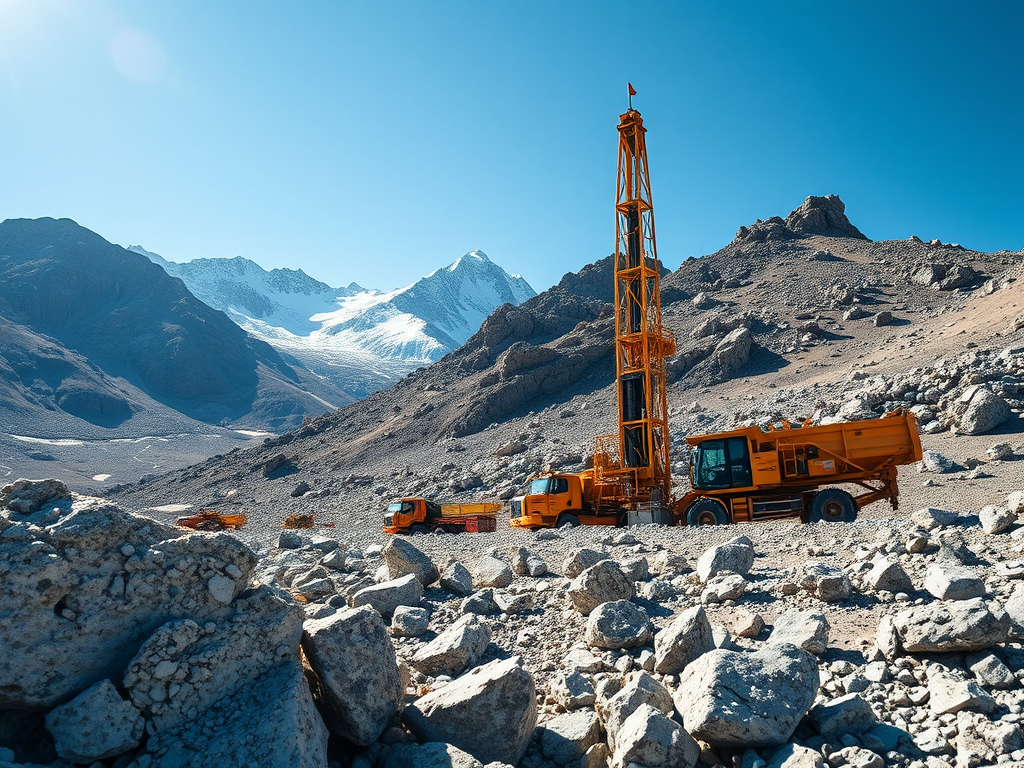
It unlocks exploration.
And exploration is where the real asymmetry lives.
Humanity’s New Fire
Nuclear energy is not just another commodity cycle.
It is 3,000,000-to-1 energy density.
It is grid stability in an AI-powered century.
It is geopolitical leverage.
It is decarbonization without fragility.
It is Prometheus without smoke.
If the NRC reorganization proves durable — if it translates into measurable timeline compression — then we are not witnessing a bureaucratic shuffle.
We are witnessing the quiet removal of a bottleneck.
And when bottlenecks disappear, abundance flows.
Where I Stand
In a world where regulatory velocity meets capital discipline, the most valuable role is not the driller or the promoter.
It is the translator.
The one who stands between geology, permitting, and capital and asks:
- Is this technically real?
- Is this jurisdictionally viable?
- Is this capital-ready?
- Is this timed correctly within the cycle?
That’s the lane I operate in.
Because when humanity reaches again for its new fire,
someone must ensure the spark lands where it can actually burn.
This NRC reorganization may seem administrative.
But to those watching the full arc — from regulator to reactor to uranium to discovery —
it looks a lot like ignition.












 Mineral Exploration Geology - finding value in the world around us