Why confidence is back in mining — and why restraint will determine what lasts
“Morale Is Sky High” — and Why That Signal Matters
When Robert Friedland told President Trump that morale in the mining sector is “sky high,” it landed because it rang true. Mining is not a business given to casual optimism. Confidence here is usually hard‑won, forged by capital returning, permits moving, and the sense that long‑standing constraints are finally easing.
Recent headlines reinforce that mood. Critical minerals are now framed as strategic infrastructure. Governments are speaking openly about domestic supply chains. Permits that once languished are clearing. Select projects are attracting real capital again.
This is not hype. It is a measurable shift in sentiment.
Periods of high confidence are double‑edged. They create opportunity, but they also invite excess.
Across North America, mining activity is accelerating alongside:
Permitting reform narratives
Critical‑minerals stockpiling initiatives
Re‑shoring and supply‑chain security efforts
Renewed political attention to domestic production
These forces are powerful, but they are blunt. They move quickly, often faster than geology, communities, infrastructure, or trust can keep up.
Mining history is clear on this point: when motion becomes the goal, outcomes become fragile. Projects race ahead of social license. Timelines outrun permitting reality. Capital prices in speed that the ground cannot deliver.
Momentum feels like progress — until it isn’t.
What the Current Headlines Are Really Telling Us
Read together, today’s news paints a more disciplined picture than raw optimism alone:
Smelter uncertainty in Quebec shows how industrial ambition without durable policy alignment leaves assets exposed.
Rare earths projects, even those backed by geopolitics, continue to slip on permitting and logistics — reminders that strategic intent does not suspend reality.
Markets now reward regulatory clarity more than drill results, signaling that permission has become a primary value driver.
M&A activity clusters around scale, longevity, and execution pathways, not conceptual upside.
The pattern is consistent: confidence is flowing toward projects that can withstand scrutiny, not just capture attention.
Judgment Is the Scarce Commodity
In moments like this, the industry’s greatest constraint is not capital or policy — it is judgment.
The hardest decisions are no longer about where to drill next. They are about:
When acceleration helps versus when it erodes trust
Which risks are technical, and which are social or regulatory
How much uncertainty capital can actually tolerate
Who must be part of the decision long before a permit or press release
These are not questions answered by momentum. They are answered by restraint, context, and experience.
Stakeholders Are the Load‑Bearing Structure
One quiet danger of high‑morale cycles is the temptation to treat stakeholders as friction.
In reality, communities, regulators, Indigenous groups, and long‑term investors are not obstacles — they are structural elements. When they are engaged early and honestly, projects slow down slightly and then endure. When they are bypassed, projects appear to move fast and then stall indefinitely.
Durable mining systems are built by:
Prioritizing certainty over shortcuts
Choosing credibility over urgency
Allowing technical teams the authority to pause or redirect
High morale is a gift. It opens doors that have been closed for years. It creates political and financial space to act.
The test now is how that space is used.
If confidence is spent chasing motion for its own sake, the cycle will shorten and the backlash will arrive on schedule. If confidence is paired with discipline — with clear geology, honest permitting paths, real stakeholder engagement, and capital that understands time — something more durable can emerge.
Mining does not fail because it moves too slowly.
It fails when it moves without understanding what must move with it.
The current moment offers more than momentum. It offers a chance to mature — to turn confidence into systems that survive policy shifts, election cycles, and market corrections.
Morale may be sky high.
Whether the outcomes last will depend on what we choose to do next.
There are moments in commodity markets when price ceases to be a conclusion and begins to function as a signal. Not the fleeting kind that flashes during a speculative frenzy or vanishes with the next headline, but something quieter and more consequential. A recognition embedded in the numbers themselves that the underlying rules have shifted.
This is not a story of a single spike or a short-lived squeeze. It is not the familiar choreography of hot money chasing momentum before slipping back out the side door. What we are seeing instead is a deeper reorientation, where pricing begins to reflect a change in how the world expects to operate—how it intends to power itself, secure itself, and hedge its own uncertainties.
As we look ahead to 2026, that reorientation is becoming increasingly difficult to dismiss. Gold, silver, copper, and uranium are not moving in perfect harmony, nor are they responding to the same immediate pressures. Each is rising for its own reasons, shaped by distinct demand drivers and structural constraints. Yet taken together, their trajectories form a recognizable pattern. Less a traditional boom-and-bust cycle, and more a system of parallel flows—multiple lanes advancing at different speeds, carrying different forms of value, all bound for the same horizon.
This is the multi-lane super cycle. And the prices flashing across the screen are not the destination. They are the dashboard lights, telling us that something fundamental is already in motion beneath the hood.
Gold: When Insurance Becomes Collateral
Gold’s move toward the $5,000-per-ounce range is not being driven by fear in the traditional sense. This is not a panic trade, nor a reflexive rush for safety. What is unfolding is better understood as a process of re-anchoring—a recalibration of what constitutes stability in an increasingly unstable financial landscape.
Central banks, in particular, are no longer approaching gold as a hedge reserved for moments of crisis. Instead, they are treating it as a structural reserve asset: a form of value that sits outside political alignment, credit risk, and fiscal experimentation. In a world where neutrality is difficult to find and trust is unevenly distributed, gold’s political indifference has become one of its most valuable attributes. Alongside this shift, private capital is rediscovering gold for similar reasons—not as an emotional refuge, but as a rational counterbalance to long-duration fiscal policies whose ultimate outcomes remain uncertain.
As prices push into the $4,800–$5,500 per ounce range, gold begins to behave differently within portfolios. It stops functioning as insurance you hope never to claim and starts acting as collateral you expect to rely on. That distinction matters. Collateral invites institutional participation, and institutions do not move on impulse. They allocate deliberately, often for long periods, embedding assets like gold more deeply into the financial architecture.
Viewed through this lens, gold’s role in 2026 is less about protection and more about positioning. It occupies the quiet lane of the multi-lane super cycle—steady, deliberate, and largely unglamorous, yet foundational to everything moving alongside it.
Silver: The Torque Beneath the Hood
Silver occupies a very different lane from gold, and it makes no effort to be subtle. Where gold moves with measured confidence, silver responds with acceleration. The long-standing notion that silver somehow belongs in the $20–$30 range has already been overtaken by events. Prices brushing $70 per ounce, with credible pathways toward $100, are not an anomaly so much as a long-delayed correction.
This is not simply a story of silver “catching up” to gold. It is silver being repriced for what it actually is: a metal that sits at the intersection of monetary psychology and industrial necessity. Unlike gold, silver is consumed. It is embedded in solar panels, power electronics, data infrastructure, and the physical systems required to electrify modern economies. These are not speculative end uses or distant forecasts; they are embedded in policy frameworks, capital budgets, and energy security strategies already being executed.
In this context, silver’s volatility is often misunderstood. It is not a weakness of the market, but a function of its structure. Thin markets move quickly when attention arrives, and silver has always been exquisitely sensitive to shifts in focus. When gold establishes a new price regime, it tends to pull silver into the conversation, and once that happens the response is rarely linear.
If gold serves as the anchor of the multi-lane super cycle, silver provides the torque. And torque, by its nature, does not move gently—it amplifies force, turning steady pressure into rapid motion.
Copper: Pricing the Physical World
Copper occupies the most load-bearing lane of the super cycle. It is heavier, louder, and far less forgiving than the metals moving alongside it. Where gold and silver trade on trust and attention, copper answers to something more basic: the physical requirements of a modern, electrified world.
At prices and forecasts ranging from $5.00 to $7.00 per pound, copper is no longer being priced on regional growth narratives or short-term manufacturing cycles. It is being priced on physics. Power grids, data centers, electric vehicles, renewable energy systems, and the expanding infrastructure behind artificial intelligence all depend on one unyielding constant—large volumes of conductive metal delivered reliably and at scale. There are no clever substitutes waiting in the wings.
In this environment, the price story cannot be separated from the supply story. Copper’s geology is becoming more difficult just as its demand profile steepens. Declining head grades, aging mine fleets, extended permitting timelines, and growing social and environmental constraints ensure that new supply arrives slowly, if at all. Recycling and scrap recovery provide important support, but they are incremental solutions in the face of structural demand growth, not cures.
By 2026, copper no longer fits comfortably into the category of a speculative commodity. It is a civilization input, being repriced to reflect the true cost—and growing difficulty—of keeping modern systems powered, connected, and running without interruption.
Uranium: When Time Becomes the Scarce Commodity
Uranium moves through the super cycle on a very different clock. It occupies the most unusual lane, governed less by daily sentiment and more by long planning horizons that suddenly compress when reality intrudes. Unlike most commodities, uranium does not trade continuously on mood or momentum. It reprices episodically—sometimes abruptly—when utilities recognize that time, rather than price, has become the binding constraint.
That recognition is no longer theoretical. Long-term contracting cycles are reasserting themselves as reactor life extensions, restarts, and new builds quietly reset demand expectations across the global fleet. At the same time, years of underinvestment in primary supply and fuel-cycle capacity have left the market with limited elasticity. When demand moves forward, supply struggles to follow, and the gap is measured not just in pounds, but in years.
Within a forecasted $90–$140 per pound range, uranium prices are signaling more than the cost of fuel. They are reflecting the value of security of supply, the friction points within conversion and enrichment, and a broader shift in how nuclear energy is perceived. Once politically fraught, nuclear power has become increasingly indispensable—particularly in a world that now depends on reliable, round-the-clock electricity to sustain digital infrastructure, data centers, and emerging technologies.
Uranium’s market remains thin, its signals easy to miss until they suddenly dominate the conversation. But when utilities act, they do so with urgency born of necessity. And urgency, as markets have learned repeatedly, has little patience for yesterday’s price anchors.
Price as Prelude
Taken together, the price trajectories of gold, silver, copper, and uranium do not point to a synchronized peak or a speculative crescendo poised to collapse under its own enthusiasm. They point instead to something far more durable: a broad repricing of materials that sit at the foundation of monetary trust, electrification, and energy security. Each metal is moving for its own reasons, within its own lane, yet all are responding to the same underlying signal—the growing recognition that the systems we depend on are materially constrained.
What matters is not that prices are higher, but that they are staying higher, settling into new ranges that reflect structural realities rather than temporary dislocations. Markets are beginning to internalize the cost of complexity: the time it takes to permit, to build, to finance, and to operate in a world where friction is no longer an exception but a baseline condition. Price, in this context, becomes less a verdict and more a messenger, carrying information about what can no longer be taken for granted.
And that message does not stop at the trading desk.
Once prices move into these new regimes, they begin to alter behavior. Capital reallocates. Risk tolerances shift. Projects once considered marginal suddenly warrant a second look, while others are re-evaluated not on headline grade or scale, but on deliverability. The conversation moves away from “Is there demand?” and toward “Can this actually be built, permitted, financed, and processed in time to matter?”
This is where the repricing radiates outward—into exploration strategies, permitting pathways, processing decisions, and even national policy. Higher prices validate effort, but sustained prices justify commitment. They encourage drilling programs that would have seemed premature a few years ago, accelerate timelines that were once comfortably elastic, and force a reckoning with bottlenecks that markets previously ignored.
In that sense, price is not the story’s climax. It is the opening note. What follows is the reshaping of an industry—and a set of strategic priorities—around the physical realities those prices now reflect.
The Ripple Effects: What Follows Price
When price regimes shift, behavior follows. Not immediately, and not uniformly—but inevitably. Capital is patient until it isn’t. And as we look toward 2026, the second half of this story is already coming into focus, shaped by decisions made quietly over the past year and validated by the successes of 2025.
What is emerging is not a frenzy, but a recalibration.
Exploration activity, particularly drilling, is re-accelerating—not in euphoric waves, but in disciplined, data-driven programs aimed squarely at near-term relevance. This is not the return of “drill everything everywhere.” It is a more selective revival, guided by price signals that have proven durable enough to justify effort, but not so frothy as to reward indiscretion. Grassroots targets are being dusted off where geology and access align. Brownfields are being re-examined with fresh eyes. Districts once dismissed as “too complex” are being revisited as processing technology, infrastructure, and policy alignment begin to converge.
Permitting, long regarded as the immovable choke point of Western mining, is also beginning to show signs of selective thaw. Not a wholesale loosening, but a meaningful shift in tone. The regulatory temperature is changing—not because standards have disappeared, but because priorities have sharpened. High-profile approvals and procedural milestones achieved in 2025 have done something subtle but powerful: they have reintroduced precedent.
FAST-41, in particular, has made permit timelines to matter again—not as a slogan, but as a framework. Projects that align clearly with national supply-chain priorities, energy security, and critical-minerals objectives are finding pathways that were previously opaque. The message from regulators is no longer “nothing moves,” but rather “some things now move faster than others.” That distinction changes behavior across the entire development pipeline.
The most telling ripple, however, is the elevation of processing and metallurgy from afterthought to strategy.
When governments, defense agencies, and industrial planners begin investing directly in mills, refineries, and modular processing solutions, they are acknowledging a hard truth that markets long preferred to ignore: raw materials without processing capacity are liabilities, not assets. Concentrates trapped behind geopolitical bottlenecks or absent domestic refining pathways offer little real security, regardless of how impressive the resource looks on paper.
This recognition is already reshaping priorities across the sector:
Processing is becoming policy, not just engineering
Metallurgy is moving upstream, influencing exploration decisions earlier
Modular and distributed milling concepts are gaining traction where centralized capacity is constrained
Defense and energy security frameworks are now intersecting directly with mine planning
As a result, exploration itself is being reframed. Ore quality, mineralogy, and metallurgical behavior are gaining weight relative to sheer tonnage. Proximity to infrastructure and processing options is no longer a footnote—it is central to valuation. Complexity, once a reason to walk away, is increasingly viewed as a source of optionality in a world willing to invest in solutions.
In this environment, the winners are not simply those with the biggest deposits, but those whose projects can move—through permitting, through processing, and ultimately into supply chains that now care deeply about origin, reliability, and timing.
Price opened the door. 2025 proved that it could stay open. 2026 is shaping up to be the year the industry walks through it.
Beyond the Rocks
The multi-lane super cycle does not end at the edge of a pit or the closing bell of a market. It extends outward, shaping decisions far beyond mines and balance sheets. It is already visible in geopolitics and defense planning, in energy strategy and industrial policy, and even in the cultural conversation about what progress costs and what restraint truly means. These metals are not just inputs; they are signals of intent.
What is unfolding is not a scramble for resources in the old sense. It is a reprioritization—a quiet but consequential recognition that materials underpin systems, and that systems, in turn, underpin societies. Reliability now matters as much as efficiency. Origin matters alongside price. Time, once treated as flexible, has reasserted itself as a constraint. In this environment, price becomes the first language these realities speak, but it is not the last.
By the time 2026 fully arrives, the question will no longer be whether gold, silver, copper, or uranium deserved higher prices. That debate will feel quaint. The more pressing question will be whether sufficient groundwork was laid while prices were still doing the explaining—whether exploration was advanced, permits secured, processing capacity built, and supply chains reinforced before urgency replaced deliberation.
Because once the super cycle moves from the dashboard to the roadway, change accelerates. Capital commits. Policies harden. Timelines compress. The landscape reshapes itself not in theory, but in practice.
And through it all, the rocks remain patient witnesses. They do not argue. They do not persuade. They simply record the choices we make and the signals we choose to heed.
Just days ahead of what should’ve been a bullish bonanza — the looming August 1 implementation of a 50% U.S. tariff on imported copper — prices fell sharply. COMEX futures dropped nearly 3%, pulling back from last week’s near-$6/lb. euphoria, while the London Metal Exchange saw a similar retreat.
Now, if you’re scratching your head wondering why copper’s pulling back when tariffs typically restrict supply and boost prices, you’re not alone. But this is no anomaly — it’s classic commodity market psychology. And as we all know in exploration and resource markets: expectations drive the drill, but uncertainty drills the nerves.
Let’s unpack what’s really going on here, rock hammer in hand.
📉 The Market Moved Before the Tariff Did
Prices already surged earlier this month in anticipation of the tariff. Traders, speculators, and procurement teams raced to get their metal booked, shipped, and landed before the August deadline. It’s the age-old adage in the markets: buy the rumor, sell the news — or, in this case, sell the uncertainty.
That run-up pushed U.S. copper prices well above global benchmarks. But when the details of the tariff still weren’t confirmed by late July — no clarity on origin exemptions, product classes, or how incoming shipments would be treated — many market participants decided they’d rather not play roulette with that kind of policy fog.
⛴️ A Glut Before the Gate
In the scramble to beat the tariff clock, global traders sent a wave of copper across the seas to U.S. ports. Warehouses are fuller than usual. End users and suppliers alike stocked up while they could, which means…
Short-term supply is high, and immediate demand is low. The buyers already bought. And the sellers? They’re now looking for the next cue — and a price correction was inevitable once that panic buying wave receded.
So while the long-term logic of tariffs suggests upward pressure on prices, the short-term reality is a copper pile-up, not a copper pinch.
📉 Dislocation and Arbitrage: LME vs. COMEX
The difference between U.S. and global copper prices widened during the July run. Smart money — and quick hands — are now playing that gap, selling into the higher-priced U.S. contracts, or waiting for post-tariff clarity before betting on further upside.
We’re seeing a market pause, not a policy reversal. Call it a breath before the next sprint.
🪙 Enter the Fed: When Macroeconomics Muddy the Metal
Layer on top of all this the Federal Reserve’s upcoming policy meeting. Rates are expected to stay flat, but every trader knows the real action is in the tone of the Fed’s language. If they lean hawkish, the dollar strengthens — and a stronger dollar makes commodities more expensive for the rest of the world, cooling demand.
That macro undertow adds to copper’s momentary slip, even with tariffs looming like a guillotine over future imports.
🎯 The Takeaway for Exploration Geologists and Critical Mineral Investors
This is a perfect case study in why price volatility doesn’t always follow supply logic. Emotion, expectation, and market structure shape the narrative — and short-term jitters often misrepresent long-term fundamentals.
For those of us in the rocks-and-rebar world of copper exploration and development, this moment is a gift in disguise:
If you’re advancing a domestic copper project, this tariff cycle could set the stage for future premiums.
If you’re investing, this dip might be your window before tariffs create sustained dislocation.
If you’re lobbying, point to this disjointed response as more reason to shore up North American supply chains.
The ground may be stable under our boots, but the market’s a tightrope — and it pays to read the wind.
Let me know what you’re seeing out there — from porphyry prospects to policy posturing. The copper game isn’t cooling off; it’s just shifting gears.
“There are decades where nothing happens; and there are weeks where decades happen.” – Vladimir Lenin (and, let’s be honest, every energy sector analyst this month)
For years, the phrase “American uranium renaissance” has lingered in industry headlines like the smell of a diesel rig that never quite fired up. Promising starts faded. Policy support came in fits and starts. And those of us in the trenches—operators, geologists, engineers—held on to a vision of domestic nuclear revival that never quite made it out of committee.
Until now.
The last few weeks have delivered something different: not just press releases, but permits, production, and political will—aligned, accelerating, and actively reshaping the landscape of uranium in the United States. From Wyoming to Utah to Texas, major players are pushing forward with restarts, expansions, and acquisitions, emboldened by a rare trifecta: market fundamentals, government policy, and infrastructure readiness.
Let’s take a tour of the sector’s seismic shifts.
🚨 Policy First: Washington Opens the Gates
It started at the top.
In April and May, the Trump administration rolled out a flurry of Executive Orders aimed at reviving the nuclear fuel cycle. These included:
Emergency Declarations identifying uranium as a strategic national asset
A ban on Russian uranium imports (signed into law in May 2024)
Federal directives to streamline permitting for domestic uranium and vanadium projects
The creation of the National Energy Dominance Council brought policy coordination to a new level, explicitly calling out uranium as an “amazing energy asset.” That might sound like political theater, but in an industry as permit-constrained as ours, it’s hard to overstate what a signal like this does to capital flows and operational confidence.
And the results? Almost immediate.
⛏️ Anfield Energy: Permitted at the Speed of Policy
On May 27, Anfield’s Velvet-Wood Project in San Juan County, Utah, became the first uranium mine approved under the new emergency declaration. The U.S. Department of the Interior wrapped environmental review in just 14 days—a process that once took years. This was not a pilot or demonstration; this was the green light to go.
Anfield’s position is even stronger when you consider their Shootaring Canyon Mill, one of only three licensed conventional uranium mills in the U.S. With mill capacity in place and a $238 million pre-tax NPV (PEA combined with Slick Rock), Anfield’s production pipeline is now a strategic national asset.
In June, Uranium Energy Corp (UEC) doubled down, acquiring 170 million Anfield shares and boosting its stake to over 37% (partially diluted). In doing so, UEC is anchoring itself not just as a producer, but as a portfolio architect of the American fuel cycle.
🛠️ IsoEnergy: Restart Plans with a Permit-First Strategy
Also on May 27, IsoEnergy Ltd. announced it had kicked off technical optimization programs at its fully permitted Tony M Mine in Utah. These included:
Ore sorting with Steinert’s sensor-based technology
High-Pressure Slurry Ablation (HPSA) for improved uranium recovery
Enhanced evaporation to speed up dewatering and reduce pond buildout costs
All of IsoEnergy’s mines in Utah—Tony M, Daneros, and Rim—are fully permitted. With a toll milling agreement already in place with Energy Fuels’ White Mesa Mill, IsoEnergy is poised to become a low-capex, near-term producer with minimal regulatory hurdles.
A restart decision is anticipated by the end of 2025. From where I sit, that’s not just likely—it’s inevitable.
🧭 Ur-Energy: Expansion Secured, Basin Rising
In early May, Ur-Energy received final approval from both Wyoming DEQ and the EPA to expand its Lost Creek ISR project by six additional mine units. While production in those areas is several years out, the regulatory legwork is now done—a rare luxury in our industry.
More immediately, Ur-Energy’s focus is on the Shirley Basin Project, with construction underway and startup expected in early 2026. When combined with Lost Creek, Shirley Basin increases Ur-Energy’s licensed production capacity by 83%.
And just in case you missed it: according to EIA data, Ur-Energy was the top U.S. uranium producer in 2024.
🧮 Production Reawakens: The Data Don’t Lie
Fourth-quarter 2024 U.S. uranium production reached 375,401 pounds U₃O₈—the highest since 2018. Here’s how the key players stacked up:
Company
Q4 2024 U₃O₈ Output
Notables
Energy Fuels
157,525 lbs
White Mesa Mill + Pinyon Plain (AZ)
EnCore Energy
127,293 lbs
Alta Mesa ISR (TX)
Ur-Energy
74,006 lbs
Lost Creek ISR (WY)
UEC
Restarted 2024
Christensen Ranch ISR + Irigaray processing
Peninsula Energy
2,669 lbs
Lance ISR (WY), full output expected mid-2025
UEC also added Rio Tinto’s Sweetwater Mill to its portfolio—a massive 4.1 million lb/year licensed facility. Plans are underway to retrofit it for resin-based recovery from ISR feedstock, creating a centralized processing solution for Wyoming’s next chapter.
🔮 What It All Means
We’ve crossed a threshold. These aren’t speculative PEA-stage juniors poking around the desert. These are licensed facilities, operational mines, and full-cycle infrastructure moving into motion under the influence of:
Strong uranium prices
A domestic supply crisis
And now—at last—unified federal support
The combination of ISR assets (UEC, EnCore, Ur-Energy) and conventional mine-mill pairs (Anfield, IsoEnergy, Energy Fuels) represents a diversified, scalable, and increasingly de-risked supply base.
More importantly, this isn’t a rerun of 2010s false starts. The Russian ban is real. The mills are licensed. The ore is moving. The politics are aligned.
✍️ Final Thoughts: The Clock Is Ticking—and We’re Finally Ticking With It
For years, the U.S. uranium industry has been a paradox—essential, but ignored; strategic, but unsupported. Today, that paradox is breaking.
What’s emerging is not just a domestic comeback. It’s a structural reawakening—where geology, capital, and policy are syncing into rhythm. As a geologist and project manager in this space, I’ve never seen the lines on the map feel so alive.
From drill rigs in Wyoming to boardrooms in Toronto, the message is clear:
The uranium engine is no longer idling. It’s revving. And this time, we’re going somewhere.
Mark Travis, CPG is a consulting geologist, writer, and uranium exploration advocate based in Nevada and Wyoming. He is President of Arkenstone Exploration and serves as Acting Vice President of the Nevada Mineral Exploration Coalition.
If you’ve been watching the metals markets lately—and let’s be honest, in this line of work, who isn’t—you might’ve caught the sharp glint of tungsten flashing across the headlines. Prices have just hit a 12-year high, and the story behind it reads like a geopolitical thriller with economic veins running straight through defense, tech, and green energy.
The Numbers Don’t Lie Let’s start with the basics: tungsten concentrate prices in China have surged 26% since January, reaching $20,400 per tonne, while ammonium paratungstate (APT) prices in Europe have climbed 18% since February. This isn’t a fluke—it’s a flare.
The core issue? Supply dominance meets strategic vulnerability. China controls over 80% of global tungsten production, and they’ve begun reining in exports with tightened quotas in response to U.S. tariffs and mounting international tensions. When the world’s tungsten tap gets turned down, the rest of us scramble for buckets.
The Critical Metal Nobody’s Talking About Tungsten doesn’t get the fanfare of lithium or rare earths, but it should. With the highest melting point of any metal and a density comparable to gold, tungsten is irreplaceable in a range of mission-critical applications:
Armor-piercing projectiles and aerospace components in defense
High-performance alloys in manufacturing and electronics
Heat-resistant electrodes and filaments in energy technologies
Oh, and if you’re building wind turbines, tungsten’s there too—making it quietly indispensable in the renewable revolution.
Meanwhile, in the U.S.… a familiar refrain Domestic tungsten mining ceased in 2015, and despite its designation as a critical mineral, the U.S. still leans heavily on imports—primarily from China and Russia. Sound familiar? It’s a play we’ve seen before in uranium, rare earths, and battery metals. Rinse, repeat, regret.
The U.S. is now signaling intentions to cut its dependence on adversarial suppliers, but that pivot takes time. Infrastructure must be rebuilt, permitting streamlined, and domestic production incentivized. Until then, we’re flying with foreign fuel in our tanks.
A Glimmer of Supply Security: Almonty Industries Enter Almonty Industries, a name suddenly in bright lights. The company has inked a key offtake agreement to supply tungsten oxide for U.S. defense applications, sending its stock soaring 140% this year with a current valuation of $709 million. It’s a big move—but not big enough to fix the global crunch.
Even with Almonty ramping up, the supply/demand imbalance remains stark. Strategic stockpiles are thin. New mines take years. And demand? It’s only growing—driven not just by bullets and blades, but by circuit boards and solar arrays.
What’s Next? Building Resilience, One Drill Hole at a Time This tungsten tale isn’t isolated—it’s part of a larger mineral awakening. As we push into the energy transition, shore up our defense base, and modernize infrastructure, we are being reintroduced—perhaps rudely—to the fact that you can’t digitize a drill rig.
We need to explore. We need to invest. And we need to rethink how and where our mineral lifelines begin.
For those of us on the ground floor of exploration and policy, this is a call to action. Let’s not wait for the next squeeze to tell us what should’ve been obvious all along: strategic metals deserve strategic attention.
💬 What’s your take? Have you been tracking tungsten’s rise or working with it in your own projects? What lessons can we draw from this for the broader critical minerals landscape? Let’s dig in—pun intended.
Nestled within Panama’s lush tropical forests lies Cobre Panama, a remarkable testament to modern mining engineering and geological wealth. Operated by First Quantum Minerals, this massive copper mine once contributed an impressive 1.5% of global copper output. Since its start of operations in 2019, it stood as an example of what contemporary porphyry copper mines could achieve. However, for the past 18 months, it has been eerily silent—halted by a combination of legal rulings, widespread public protests, and political turbulence in Panama. This article delves deeper into the mine’s significance, its challenges, and what its future may hold.
The Geological and Economic Significance of Cobre Panama
Cobre Panama is no ordinary mine. It holds not just immense copper reserves but also deposits of gold, silver, and molybdenum, making it one of the most promising polymetallic orebodies discovered in recent decades. In 2023, the mine had just hit record production levels before its operations were forcibly ceased. To put its scale into perspective, Cobre Panama produced enough copper annually to surpass the total output of some copper-producing nations.
Economically, the mine had a profound impact on Panama’s economy, contributing 5% to the nation’s GDP at its peak. Its fiscal contributions, including wages, taxes, and domestic procurement, totaled $1.8 billion in 2023, according to the International Monetary Fund (IMF). Beyond direct economic benefits, the mine supported 54,000 direct and indirect jobs and accounted for a staggering 75% of Panama’s export earnings (source: IMF, 2024 report).
However, this pause in production comes at a high cost. The company has been spending approximately $15 million per month on maintenance, while valuable deposits remain untapped. A stockpile of 120,000 tonnes of copper concentrate sits at a port, awaiting clearance to be shipped—an unprecedented logistical dilemma.
Environmental Concerns and Social Unrest
Mining, by its nature, often finds itself at odds with environmentalists and local communities. In Cobre Panama’s case, these tensions reached a boiling point. Environmental NGOs and prominent figures like Greta Thunberg and Leonardo DiCaprio have criticized the mine, claiming it poses risks to Panama’s fragile ecosystems. However, First Quantum Minerals has staunchly defended its operations, emphasizing that the mine’s flotation circuits rely purely on gravity-based separation rather than harmful chemicals like cyanide or mercury.
The mine’s closure has had ripple effects far beyond its gates. In nearby communities, informal mining has proliferated as local residents struggle to make ends meet, often resorting to rudimentary and environmentally unsound mining practices. Organized crime has also taken advantage of the void left by the mine’s shutdown, infiltrating unauthorized mining operations. Furthermore, tourism operators in the region, once buoyed by the economic activity brought by the mine, have seen their businesses suffer.
Rust and Ruin: The Challenge of Restarting Operations
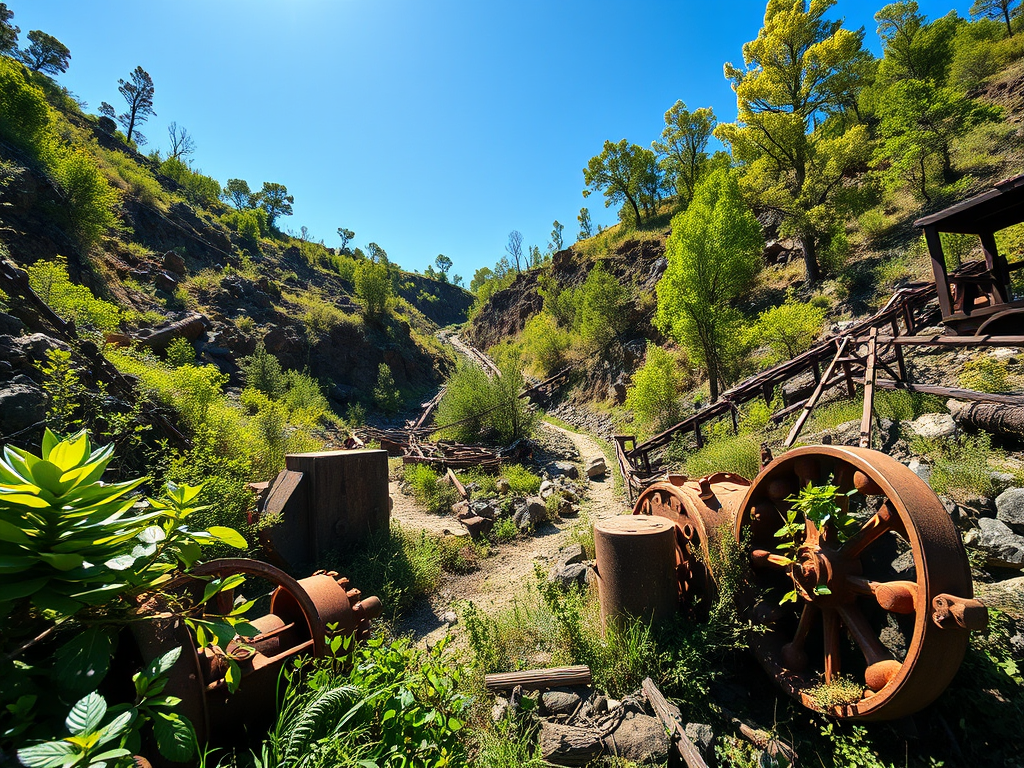
While the geological promise of Cobre Panama remains intact, the mine itself paints a grim picture. Equipment worth millions lies rusting in the damp jungle air, and conveyor belts sit idle, their heaped ore baking under the tropical sun. Only a third of the workforce remains on-site, maintaining what they can and preparing for a potential restart. However, bringing the mine back online is no small feat.
According to industry analysts, the longer a mine stays inactive, the more challenging it becomes to restart. In the case of Cobre Panama, logistical hurdles such as re-recruiting skilled labor, repairing infrastructure, and renegotiating contracts loom large. The mine may technically be “shovel-ready,” but operational readiness will require months of preparation.
Global Dynamics: A Copper Mine in a Shifting World
Cobre Panama’s closure isn’t just a local issue; it underscores broader global dynamics in the resource sector. Copper’s designation as a critical mineral by the U.S. in 2024 highlights its strategic importance in modern technologies, including renewable energy systems and electric vehicles. The U.S. has moved swiftly to reassert influence over Panama, replacing Chinese operators in its ports with American firms like BlackRock.
At the same time, Panama itself has experienced significant political and social upheaval. The fallout from the Panama Papers scandal, coupled with the economic effects of the pandemic, has eroded public trust in the government. These tensions have contributed to the controversies surrounding Cobre Panama, as politicians weigh the economic benefits of the mine against public opposition and environmental concerns.
Conclusion: The Road Ahead for Cobre Panama
The story of Cobre Panama is one of immense promise and equally immense challenges. Its reopening remains uncertain, contingent on navigating complex political, social, and economic landscapes. For geologists and industry professionals, the mine’s tale serves as a case study in the intricate interplay between natural resource extraction and human factors.
As the world continues to demand copper for its transition to green energy, the stakes for Cobre Panama have never been higher. Whether it becomes a cautionary tale or a comeback story will depend on the decisions made in the months and years ahead.
What are your thoughts on the challenges and opportunities surrounding Cobre Panama? Share your perspective in the comments below or reach out to discuss further!
Mineral Exploration Geology: Unlocking the Earth’s Potential
Mineral exploration is the foundation of the critical minerals supply chain. Geologists play a pivotal role in identifying deposits of rare earth elements, lithium, cobalt, and uranium—materials essential for modern technology and national security. Recent advancements in geophysical and geochemical techniques have accelerated the discovery of these resources. For instance, the U.S. Geological Survey (USGS) has identified 50 critical minerals vital to the economy, many of which remain untapped.
The Trump administration’s executive orders have emphasized the need to prioritize exploration on federal lands. By streamlining permitting processes and reducing regulatory bottlenecks, the government aims to encourage private-sector investment in exploration projects. This approach not only accelerates discovery but also reduces reliance on foreign imports, particularly from nations like China, which currently dominate the global supply chain.
Domestic U.S. Mineral Production: Building a Resilient Supply Chain
The United States has vast reserves of critical minerals, yet domestic production has historically lagged due to regulatory and economic challenges. In 2023, U.S. mineral production contributed over $105 billion to the economy, with crushed stone leading the way. However, the nation remains 100% import-reliant for at least 15 critical minerals.
The Trump administration’s policies aim to reverse this trend by leveraging the Defense Production Act to boost domestic production. Federal lands with known mineral deposits are being prioritized for development, and new funding mechanisms are being introduced to support mining and processing projects. For example, the Brook Mine in Wyoming is set to become a significant source of gallium, germanium, and scandium, reducing dependence on Chinese imports.
Investment Opportunities: A New Frontier
The push for critical minerals has created a fertile ground for investment. The establishment of a dedicated critical minerals fund through the U.S. International Development Finance Corporation is a game-changer. This fund aims to attract private capital to projects that enhance domestic production capabilities.
Uranium production, in particular, has seen renewed interest. Energy Fuels, a leading U.S. company, is ramping up operations to meet growing demand for nuclear energy. The company is also diversifying into rare earth elements processing, creating a comprehensive critical minerals hub. These initiatives align with the “America First” policy, which seeks to strengthen national security and economic independence.
Challenges and Opportunities
While the outlook is promising, challenges remain. The high cost of developing new mines, coupled with environmental concerns, poses significant hurdles. Additionally, China’s dominance in the midstream processing of critical minerals creates vulnerabilities in the supply chain.
However, the U.S. has the tools to overcome these obstacles. By fostering public-private partnerships, investing in research and development, and leveraging its vast natural resources, the nation can build a resilient and sustainable critical minerals industry.
Conclusion: A Path Forward
The Trump administration’s focus on critical minerals represents a bold step toward securing America’s economic and national security. By prioritizing exploration, boosting domestic production, and creating investment opportunities, the U.S. is well-positioned to lead in this vital sector. While challenges persist, the potential rewards far outweigh the risks, making this an exciting time for the industry and the nation as a whole.
The global bismuth market is currently experiencing unprecedented turbulence, with prices in Europe skyrocketing from $6 per pound in late January to $40 per pound in March 2025. U.S. prices have climbed even higher, reaching $55 per pound. This surge reflects not only tight supply dynamics but also the significant impact of geopolitics on critical mineral markets.
Let’s explore the drivers behind this price escalation and the broader implications for the mineral exploration sector.
China’s Export Curbs and Global Market Disruption
China, which produces over 80% of the world’s mined bismuth, recently imposed export controls on five key metals: bismuth, tungsten, tellurium, molybdenum, and indium. These restrictions, introduced in response to U.S. tariffs, have sent shockwaves through global supply chains. With limited alternative sources, China’s policy decisions underscore the critical importance of securing diversified supply routes for such minerals.
The current lack of replacement sources outside of China has created a volatile market environment. Analysts from CRU Group warn that without significant new capacity development, supply constraints could persist, further driving price instability.
Market Volatility and Supply Chain Risks
The rapid price escalation has created challenges for traders and manufacturers alike. Shipping delays, typically taking around two months, add to the risk of speculative stockpiling as buyers grapple with uncertainty over where prices might land in the near future. Additionally, low inventory levels internationally are pushing the cost of prompt materials to extraordinary levels.
On the Wuxi Stainless Steel Exchange, bismuth contracts have surged 105% since the beginning of the year, trading at 163,800 yuan ($22,677) per metric ton as of mid-March. Such rapid changes highlight the sensitivity of the bismuth market to geopolitical disruptions.
Permitting Hurdles Hampering Domestic Exploration
One of the most significant barriers to ramping up domestic production in regions such as the U.S. is the complex and time-intensive permitting process for new mining projects. Exploration companies often face regulatory delays spanning several years before receiving approval to commence operations. While regulatory oversight is crucial for environmental stewardship, streamlined permitting processes could enable faster responses to supply crises like the current bismuth shortage.
Permitting challenges also discourage potential investors, as the long lead times create uncertainty around project viability. Addressing these hurdles will be essential for fostering domestic investment in critical minerals.
Opportunities for Domestic Investment and Exploration
The current bismuth market volatility presents a unique opportunity for nations to reduce reliance on imports. The U.S., for instance, has significant untapped bismuth reserves that could contribute to a more resilient supply chain if development hurdles are overcome. Enhanced incentives for exploration and production, such as tax breaks or government-backed investment programs, could attract private sector interest and accelerate domestic capacity.
Countries such as Japan, South Korea, and Laos, which also produce bismuth, may similarly see heightened exploration and development activities as global stakeholders seek to diversify sourcing.
Implications for the Future of Mineral Exploration
The bismuth supply crunch serves as a stark reminder of the volatility inherent in critical mineral markets. Geopolitical tensions, policy changes, and regulatory barriers all play a role in shaping supply dynamics. For mineral exploration professionals, this underscores the importance of forward-thinking strategies to identify and develop alternative sources.
From streamlined permitting processes to increased domestic investment, the path to a stable and diversified supply chain for bismuth and other critical minerals requires collaboration between government bodies, private sector players, and international stakeholders.
The lessons from this crisis extend beyond bismuth, highlighting the broader need for innovative solutions to meet the rising global demand for critical minerals. As the industry navigates these challenges, agility and resilience will be key to seizing the opportunities ahead.
Cobalt prices have skyrocketed following the Democratic Republic of Congo’s (DRC) recent suspension of cobalt exports, alongside Eurasian Resources Group (ERG) declaring force majeure on deliveries from its Metalkol operations. This pivotal development has sent shockwaves through global markets, creating both challenges and opportunities for domestic mining and exploration sectors.
Unpacking the Supply Shock The DRC, responsible for over 70% of the world’s cobalt production, holds immense influence over this critical mineral market. With exports temporarily banned to address oversupply and falling prices, the global cobalt supply chain faces significant disruption. As prices surge, reaching $12.25 per pound in Europe and climbing nearly 12% in China, stakeholders across industries are re-evaluating strategies to secure supply stability.
A Window of Opportunity for Domestic Projects For U.S.-based mining companies, the current crisis presents an opportunity to capitalize on rising prices and growing demand. The suspension highlights the risks of over-reliance on foreign supply chains, particularly for battery metals critical to clean energy technologies and electric vehicles. Domestic cobalt exploration projects now stand in a favorable position to attract investment and advance development.
Exploration firms focused on battery metals can leverage this moment to push for accelerated permitting and financing. Heightened demand, coupled with geopolitical uncertainty, underscores the necessity of establishing a resilient and diversified supply base. However, it’s crucial to note that domestic projects often face long lead times due to permitting and operational challenges. Strategic planning will be key to bridging the gap between current market needs and future production.
Long-Term Implications for the Mining Sector The DRC’s ban on cobalt exports may serve as a wake-up call for policymakers and industry leaders alike. It emphasizes the importance of fostering domestic capabilities in critical mineral production to reduce exposure to global supply disruptions. While export restrictions and volatile pricing present immediate challenges, they also signal a shift toward localized supply chains, creating opportunities for new players in the mining sector.
This moment calls for an alignment of national priorities with industry capabilities, ensuring that domestic exploration and mining can thrive while supporting sustainable development goals. As the world transitions to a clean energy future, a secure and ethical supply of battery metals like cobalt will be indispensable.
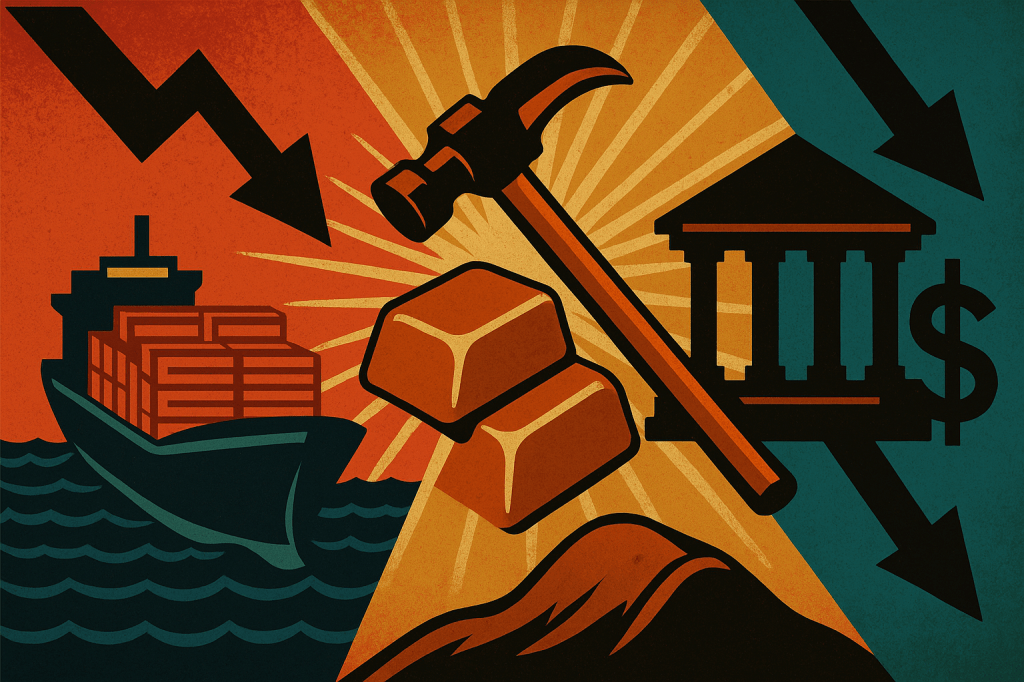
The Ripple Effect of Trump Tariffs on Metal Commodity Prices
The Trump administration’s recent tariff policies have sent shockwaves through the global metal markets, particularly impacting commodities like copper. These tariffs, aimed at bolstering domestic production, have created a unique interplay of short-term opportunities and long-term economic challenges.
The Arbitrage Opportunity for Metal Traders
The mere announcement of potential tariffs on copper imports has already sparked a frenzy among metal traders. With the U.S. copper market experiencing unprecedented price dislocations, traders are exploiting the widening gap between domestic (CME) and international (LME) copper prices. For instance, CME copper contracts are trading at a significant premium over their LME counterparts, creating a lucrative arbitrage opportunity. This has led to a surge in copper imports as traders rush to stockpile the metal before tariffs take effect.
A Short-Term Boon for Domestic Mines and Explorers
This run on copper and other metals has inadvertently benefited domestic mines and explorers. As the market braces for higher import costs, domestic producers find themselves in a favorable position to meet the rising demand. This short-term boon could lead to increased investment in domestic mining projects, potentially accelerating the development of new mines. However, the timeline for such projects to become operational often spans years, meaning the immediate benefits may be limited.
The Long-Term Economic Implications
While the short-term effects of tariffs may appear beneficial for certain sectors, the long-term consequences paint a more complex picture. Tariffs act as a double-edged sword: they protect domestic industries but also disrupt global supply chains and inflate costs for consumers and businesses alike. Over time, these stop/start economic mechanisms can lead to reduced productivity, strained trade relationships, and a less competitive domestic market.
Moreover, the uncertainty surrounding tariff policies can deter investment and innovation, as businesses grapple with fluctuating costs and market instability. Retaliatory measures from trading partners further exacerbate these challenges, potentially leading to a downward spiral of reduced trade and economic growth.
Conclusion
The Trump tariffs on metals like copper highlight the intricate balance between short-term gains and long-term economic stability. While they may provide a temporary boost to domestic industries, the broader implications underscore the need for a more nuanced approach to trade policy—one that fosters both domestic growth and global cooperation. The question remains: can the U.S. navigate these turbulent waters without capsizing its economic ship? Only time will tell.













 Mineral Exploration Geology - finding value in the world around us