
By Mark Travis | July 28, 2025
The copper market blinked.
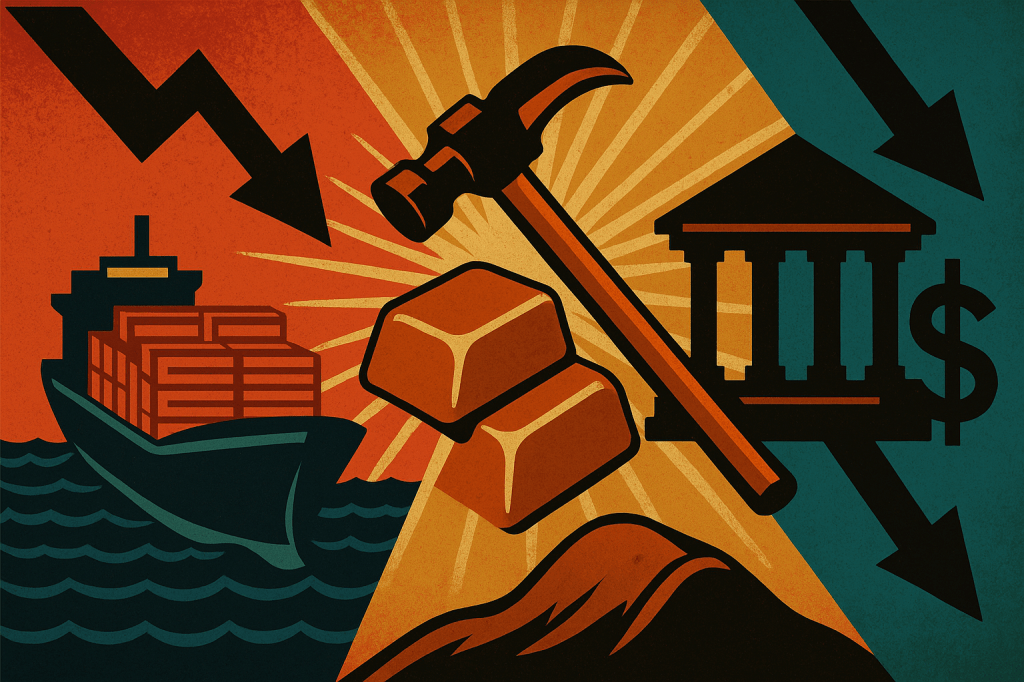
Just days ahead of what should’ve been a bullish bonanza — the looming August 1 implementation of a 50% U.S. tariff on imported copper — prices fell sharply. COMEX futures dropped nearly 3%, pulling back from last week’s near-$6/lb. euphoria, while the London Metal Exchange saw a similar retreat.
Now, if you’re scratching your head wondering why copper’s pulling back when tariffs typically restrict supply and boost prices, you’re not alone. But this is no anomaly — it’s classic commodity market psychology. And as we all know in exploration and resource markets: expectations drive the drill, but uncertainty drills the nerves.
Let’s unpack what’s really going on here, rock hammer in hand.
📉 The Market Moved Before the Tariff Did
Prices already surged earlier this month in anticipation of the tariff. Traders, speculators, and procurement teams raced to get their metal booked, shipped, and landed before the August deadline. It’s the age-old adage in the markets: buy the rumor, sell the news — or, in this case, sell the uncertainty.
That run-up pushed U.S. copper prices well above global benchmarks. But when the details of the tariff still weren’t confirmed by late July — no clarity on origin exemptions, product classes, or how incoming shipments would be treated — many market participants decided they’d rather not play roulette with that kind of policy fog.
⛴️ A Glut Before the Gate
In the scramble to beat the tariff clock, global traders sent a wave of copper across the seas to U.S. ports. Warehouses are fuller than usual. End users and suppliers alike stocked up while they could, which means…
Short-term supply is high, and immediate demand is low. The buyers already bought. And the sellers? They’re now looking for the next cue — and a price correction was inevitable once that panic buying wave receded.
So while the long-term logic of tariffs suggests upward pressure on prices, the short-term reality is a copper pile-up, not a copper pinch.
📉 Dislocation and Arbitrage: LME vs. COMEX
The difference between U.S. and global copper prices widened during the July run. Smart money — and quick hands — are now playing that gap, selling into the higher-priced U.S. contracts, or waiting for post-tariff clarity before betting on further upside.
We’re seeing a market pause, not a policy reversal. Call it a breath before the next sprint.
🪙 Enter the Fed: When Macroeconomics Muddy the Metal
Layer on top of all this the Federal Reserve’s upcoming policy meeting. Rates are expected to stay flat, but every trader knows the real action is in the tone of the Fed’s language. If they lean hawkish, the dollar strengthens — and a stronger dollar makes commodities more expensive for the rest of the world, cooling demand.
That macro undertow adds to copper’s momentary slip, even with tariffs looming like a guillotine over future imports.
🎯 The Takeaway for Exploration Geologists and Critical Mineral Investors
This is a perfect case study in why price volatility doesn’t always follow supply logic. Emotion, expectation, and market structure shape the narrative — and short-term jitters often misrepresent long-term fundamentals.
For those of us in the rocks-and-rebar world of copper exploration and development, this moment is a gift in disguise:
- If you’re advancing a domestic copper project, this tariff cycle could set the stage for future premiums.
- If you’re investing, this dip might be your window before tariffs create sustained dislocation.
- If you’re lobbying, point to this disjointed response as more reason to shore up North American supply chains.
The ground may be stable under our boots, but the market’s a tightrope — and it pays to read the wind.
Let me know what you’re seeing out there — from porphyry prospects to policy posturing. The copper game isn’t cooling off; it’s just shifting gears.
– Mark

 Mineral Exploration Geology - finding value in the world around us