
There is a global shift to the domestic production of minerals. This is happening across the world and is having ripple effects both up stream and down stream in this forward looking economy. It might seem somewhat backward to look inward for stable economic pillars for the global economy. But I might argue the opposite in the face of the ESG (economic social governance) paradigm we, as a species, seem to be self-implementing in this post-pandemic world. It is a natural step to draw from domestic natural resources, should we want to have a greater say in how those resources are produced. It might be the hallmark of the Dotcom boom that most of the materials that built it came from a supply chain wholly opaque to the consumer. And perhaps that system was built with the exact purpose of keeping such machinations obscured from the public eye. Nonetheless, it is perhaps an outdated mode given the current global climate. Imagine the backlash in today’s global economy. Imagine if all companies adhered closely to the transparent ESG paradigm.
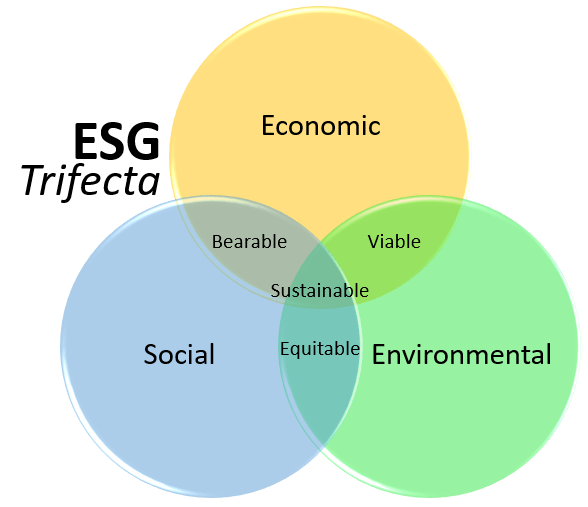
As a quick re-cap, the Environmental/Social/Governance paradigm is a global movement for business to be conducted in a transparent way that responds to the socially responsible investor. But in reality it is a current day risk mitigation that takes into account “non-financial” factors when assessing sustainability. In a mineral industry context, the days of a mine’s sustainability equaling its mineral resource or mine life is long past. In truth, this reality has been long-coming and began decades ago here in the U.S. with NEPA (National Environmental Policy Act, 1970). While NEPA is a laudable step towards sustainability, it’s main problem is it’s scope; it only affected the U.S. In short, NEPA was one step forward, two steps back for domestic production of minerals here in the U.S. While the U.S. implemented what is known today as the “NEPA process” other jurisdictions, such as China or Russia, continued business as usual. In this way, the U.S. has continually become less a producer and more a consumer, not only when it comes to mining but across all sectors.
Why does this shift matter? And how could this global transparency and awareness bolster a budding domestic mineral industry? In a way, the ESG paradigm could be harnessed to level the playing field between the un-regulated, “Wild West” mineral producers and the well-regulated non-producers.
We stand at a crossroads. Should the U.S. source it’s resource needs from within or continue to push the social/environmental liability elsewhere? If COVID taught us anything, global supply chains can be swiftly eroded and being self-reliant, even within an ever-expanding global economy, will pay dividends. And in the context of the socially responsible investor & ESG, we should all be able to pull the veil back and see exactly how the sausage is made.

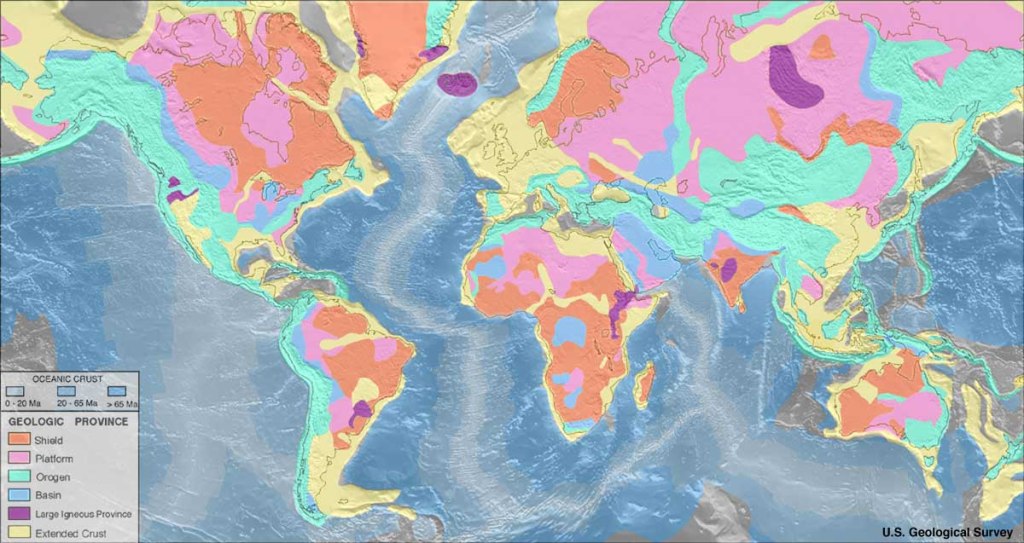
In the Kingdom of Saudi Arabia, as part of their Vision 2030 initiative, they are pivoting towards a future that is diversified to include domestic production of green metals, energy metals, and other precious & base metals production. The Kingdom is most obviously known for its hydrocarbon production, but there is a long history of gold and copper production as well. The Arabian Shield is geologically very old and host to untold riches that have yet to be exploited. In fact, the USGS during the 1950s thru 70s had numerous field mapping campaigns to try and encapsulate these resources outside of the scope of oil & gas.
If a key player within the supply of current fuels has the wherewithal to begin to pivot towards the future, surely the U.S. can find the backbone to do the same. But there is one question that would need to be answered before that could happen: Can we reconcile the fact that, in order to build the green future of the electrification transition, we will need to mine minerals? Current policy from the Biden administration seems keen to promote domestic production of minerals but actual investment from the Dept of Defense is looking beyond our borders to non-domestic mineral resources. This is quite discouraging given the vast endowment of natural resources the U.S. already has within its borders.

I’ve seen this bumper sticker, found in many a mining town, that goes something like: “If it’s not grown… it’s mined.” There’s nothing like some bumper sticker wisdom to solve any problem, right? Seriously though, this might seem like an over simplification of a complex problem, but is it? Resources, by their very definition, are something that must needs be exploited. Now. This exploitation can be done ethically, with all stakeholders at the table, or we can continue to allow other countries to do our dirty work for us. In short, if we don’t mine it cleanly (per our own NEPA regulations) then someone else will mine it however they see fit (without regulatory oversight, most likely). To be honest, unregulated mining is the most profitable (for the mining company)… that’s why it was done that way historically. So then, what is the point of ESG (or any set of standards, for that matter) if we are not all playing by the same rules?

The domestic production of minerals (aka, mining) is ultimately the logical conclusion of the green energy thought experiment. Don’t shoot the messenger when you find out that in order to transition away from carbon you will need to invite some other elements to the party. As Hunter S. Thompson encapsulated so eloquently, “Buy the Ticket… Take the Ride!” If the goal is to electrify our energy and transportation sector by means of transitioning away from carbon sources of fuel, then the only alternative is a suite of other elements/minerals. These minerals have be enumerated in the critical minerals list put out by the USGS. And here is the good news: all of the elements found on the critical minerals list can be found here within the U.S.
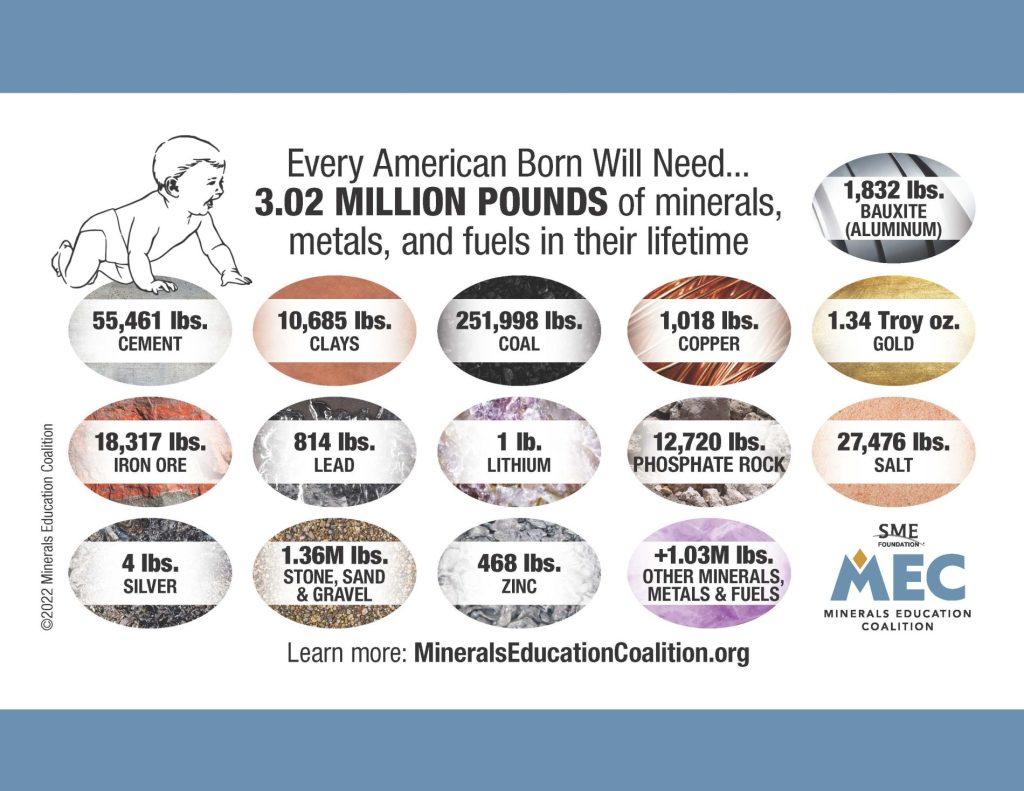
It’s no secret to those who’ve been paying attention. Minerals equal life. And in order to produce said minerals, they must be mined. The only true debate left is when, where, and how. When will we start to mine these minerals that are required to move forward? Where will we decide to mine these minerals so we can have a say in how they are produced? And how will we do so in an ethical, socially responsible, and sustainable way?
It’s not a giant feat by any stretch. Many of these questions can be answered by visiting your local phosphate, lithium, copper, or gold & silver mine found thought out the Western U.S. They have been quietly producing these vital minerals for decades. The problem now, of course, is there are precious few of them opening up anew. Many of these deposits have a long, battle-worn history of achieving the hard-won state of “in production,” and perhaps rightly so. But it’s it about time we found a more cooperative solution to guiding the mineral producer through the NEPA process and onto actual mineral production. I can see more opportunities to help the miner and the conservationist alike through cooperative permitting. But that sort of “kumbaya” moment doesn’t make for sexy headlines for the 24 hour media cycle to sell. And few environmental activist firms would be able to set up shop with that kind of business model.
 Mineral Exploration Geology - finding value in the world around us