
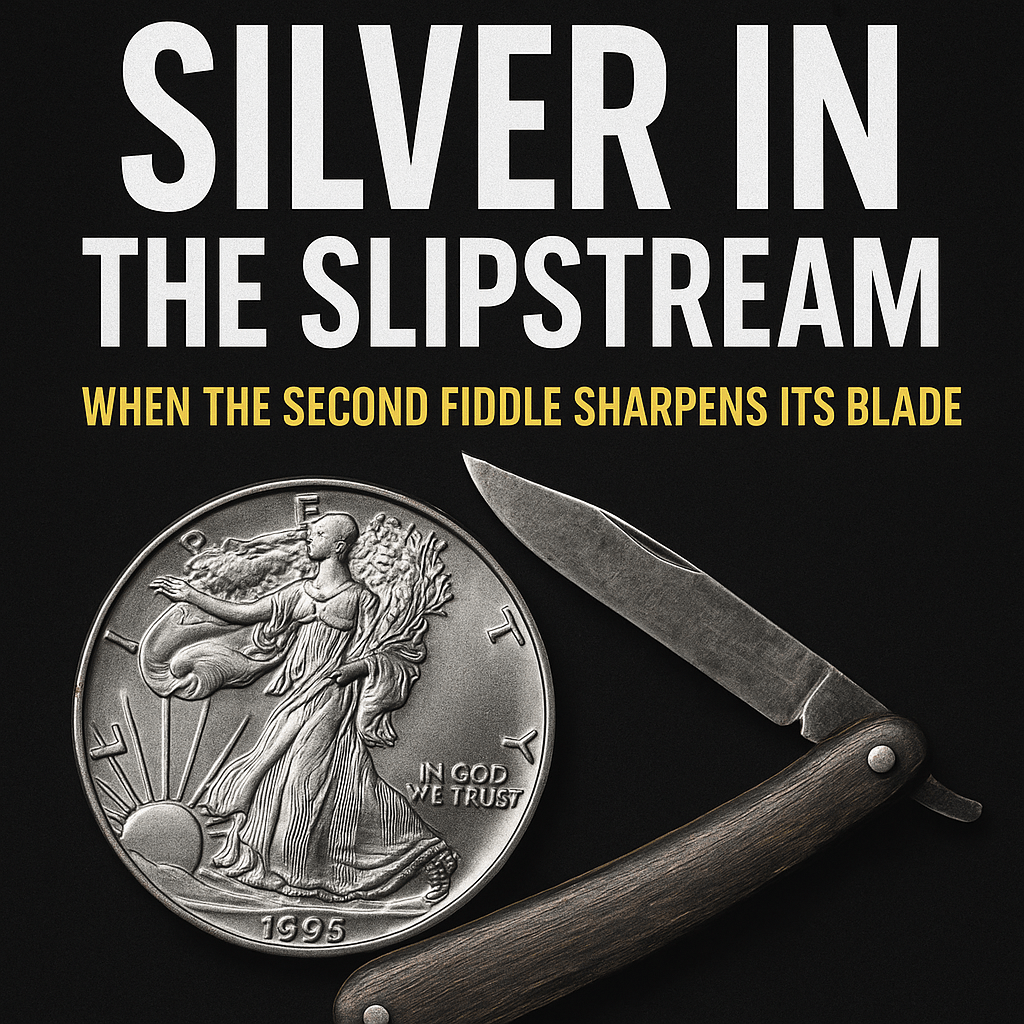
Gold gets the spotlight. Silver gets the surprise attack.
Lately, a quiet tremor has been running through the metals market — not quite a roar, not yet a stampede, but a shift that’s caught the attention of those who know how to listen for the deeper rumble.
As gold flirts with all-time highs and physical inventory on the Comex continues to dwindle, another metal has slipped into position behind it: silver. And if history is any guide, that’s when things get interesting.
The Ratio That Roars
The gold-to-silver ratio, currently hovering around 99:1, is a flashing signal to seasoned metals watchers. This ratio — how many ounces of silver it takes to buy one ounce of gold — has only breached these levels a handful of times in modern history. Each time, it preceded a violent correction. Not in gold. In silver.
In 2008, the ratio hit 84. Within a year, silver doubled.
In 2020, it breached 125 during peak COVID panic. Silver exploded shortly after.
Now, with gold becoming harder to lease, roll, or deliver — and silver still relatively available — some speculate that a shift is coming. Not gradually. Not politely. But kinetically.
Kinetic Capital: The Role Reversal
Gold is the store of value. The deep reserve. The static capital.
Silver? Silver is the pressure valve. When trust in paper markets frays, when delivery fails or premiums spike — silver moves. And when it moves, it doesn’t ask permission.
In 2011, silver went from $18 to nearly $50 in under a year. Not because gold led, but because belief cracked. Demand shifted. Leverage unwound. And the second fiddle started swinging like a saber.
We may be seeing echoes of that now:
- Inventories are falling.
- Delivery pressure is building.
- Central banks are stocking up gold — and the shadow trade is sniffing around silver.
Not a Conspiracy — a Cycle
Let’s be clear: this isn’t about silver being “suppressed” by some nefarious cabal. That narrative is worn thin.
But structurally, silver is smaller, more industrially consumed, and thinner in liquidity than gold. That makes it volatile — and volatility is where opportunity lives, especially for investors and explorers who know how to ride the rip.
This isn’t just about prices. It’s about positioning. If gold is the safe bet for a nervous world, silver is the swing trade for a restless one.
What It Means for Explorers
For those of us in the trenches — geologists, explorers, financiers of the rocks that power our world — this is a blinking green light. Investors love a comeback story, and silver’s got one written into its veins.
The question is not if silver will run again.
The question is: are we staked, staffed, and ready when it does?
Final Thought
If gold is the sentinel guarding wealth, silver is the insurgent — underestimated, undervalued, and when the moment is right… unleashed.
So tighten your boots, dust off the maps, and maybe—just maybe—rethink that silver project you shelved in 2016.
Because when the pressure releases, it won’t be polite.
 Mineral Exploration Geology - finding value in the world around us